Boulders, wallabies, and a quick stop that earns its place
Granite Gorge Nature Park is a privately owned patch of land west of Mareeba, in the drier country of the Atherton Tablelands, where a jumble of enormous granite boulders has been left to wallabies rather than farmed. A short walking trail threads between the rocks, and along it live a colony of wild Mareeba rock wallabies that have grown used to visitors offering a handful of feed from the kiosk at the entrance. They are not caged, not trained, and not guaranteed to appear — but on almost any visit, several will come right up to hands and feet, which is the entire reason the park exists as a stop on the Tablelands circuit.
It is a small, unpretentious place: a car park, an entrance hut selling wallaby food and cold drinks, a shaded picnic area, a short loop trail, and the boulders themselves, some the size of a house, balanced against each other in the way granite tends to weather. There is no interpretive centre, no guided commentary, and no reason to plan more than an hour or two around it. That is by design — this page treats Granite Gorge as exactly what it is, a short, worthwhile detour on a longer Tablelands day, not a headline destination in its own right.
Getting there from Cairns
Granite Gorge sits a little west of Mareeba, which itself is about an hour from Cairns on the Kennedy Highway. Add another 15 to 20 minutes of quieter back roads past Mareeba to reach the park, and the total drive from Cairns runs close to a 1 hour 15 minutes, covering roughly 70 km. A hire car is genuinely useful for this part of the Tablelands: there is no organised public transport to Granite Gorge, and the appeal of the Tablelands generally is stitching together several small, spread-out stops in a single day, so see do you need a car in Cairns if you are still deciding whether to hire one.
Most visitors reach Granite Gorge as one stop on a wider loop that also takes in Mareeba Wetlands, a coffee farm or two along the Mareeba coffee and farm trail, and often Yungaburra or Atherton further along the plateau.
If you would rather not plan the route yourself, the Cairns: Atherton Tablelands Day Tour with Tastings covers this ground with a driver-guide and usually folds in produce tastings along the way, which removes the navigation problem entirely. For the fuller shape of a Tablelands day, including where Granite Gorge fits against the waterfalls and lakes, see the Atherton Tablelands day trip guide.
What actually happens when you visit
At the entrance you buy a small bag of wallaby feed — a few dollars, cash or card depending on the day — and walk in past the kiosk. The wallabies cluster loosely around the start of the trail and the picnic tables, having learned exactly where the food comes from, and most will approach an outstretched hand without hesitation. Crouching down and holding the feed flat on your palm gets the calmest response; holding it up high or moving suddenly tends to spook them. Handlers or signage on site will remind you of the same basic etiquette that applies to any wild-animal encounter: let the wallaby choose to approach, don’t chase or corner one for a photo, and don’t try to pick one up.
Beyond the feeding area, a walking trail loops through and around the granite boulders themselves — climbing, weaving, and in places squeezing between rock faces that have split and tumbled over tens of millions of years. The full loop takes 30 to 45 minutes at an easy pace, longer if you stop often for photos, and covers uneven but manageable ground; sturdy shoes are worth it, sandals are not. Away from the feeding zone the wallabies are shyer and harder to spot, but the boulders alone are worth the walk, especially in the soft light of early morning or late afternoon.
The park also runs a small kiosk and shaded seating area suited to a packed lunch, and on some visits a resident python or other reptile is kept on display near the entrance — check current signage on the day, since this varies. Budget 1 to 2 hours total: enough for the walk, the feeding, and a coffee or cold drink, not so much that it eats into the rest of a Tablelands day.
The wallabies, and why they are here
The animals at Granite Gorge are Mareeba rock wallabies (Petrogale mareeba), a species adapted to exactly this kind of terrain — granite outcrops with crevices to shelter in and grass nearby to graze. They are genuinely wild, not park-owned livestock, and the population has simply settled around a reliable, low-effort food source, the way wildlife does anywhere humans offer food consistently. That distinction matters for expectations: numbers and boldness can vary from one visit to the next, and on a hot afternoon many will retreat into shaded rock crevices and be harder to coax out, so an early or late visit generally produces better sightings and better light for photos.
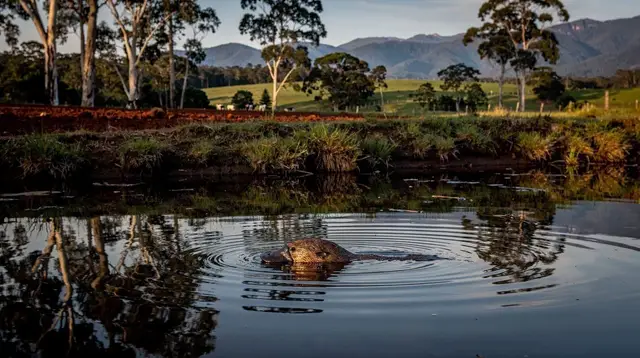
If a close-up wallaby encounter is the specific goal of your day and Granite Gorge’s hours or route do not fit, the Mutchilba Farm Animal Feeding experience, further west on the Tablelands, offers a comparable hands-on feeding stop with a different mix of animals. For the Tablelands’ other well-known wildlife moment — spotting a wild platypus rather than feeding one — see seeing a platypus in Queensland, which points to Peterson Creek at Yungaburra rather than Granite Gorge; the two are unrelated stops and easy to conflate when planning a single day.
It is noticeably cooler up here — plan for it
This is worth stating plainly, because it catches visitors who assume the whole region shares Cairns’ tropical heat. Granite Gorge sits on the Atherton Tablelands at several hundred metres of elevation, and the plateau runs noticeably cooler and drier than the coast year-round — it is the escape locals in Cairns drive up to precisely because of that difference. Mornings and evenings in the dry season (May to October) can feel genuinely cool, sometimes requiring a light jacket, which surprises travellers who packed only for Cairns’ humidity. Do not assume the Tablelands climate matches the coast: dress in layers, and expect the granite boulders themselves to hold heat in the afternoon sun even when the air feels mild.
The dry season, May to October, is the best window for a visit: comfortable walking temperatures, low rainfall, and wallabies more willing to come out and forage in the cooler hours. The wet season (November to April) is not a reason to skip the Tablelands generally — the region’s waterfalls run fuller and the landscape turns a deeper green — but a Granite Gorge visit specifically is a fair-weather activity best done outside the heaviest downpours, since the boulder trail becomes slippery and the wallabies are less inclined to venture out in the rain.
Where Granite Gorge fits in a Tablelands day
Granite Gorge is a short stop, not a destination that justifies its own trip from Cairns, so it works best folded into a longer plateau itinerary. A common pairing looks like this:
| Stop | Typical time | Distance from Cairns |
|---|---|---|
| Mareeba town and coffee stop | 30–45 min | ~65 km |
| Granite Gorge Nature Park | 1–2 hours | ~70 km |
| Mareeba Wetlands | 1–2 hours | ~75 km |
| Yungaburra and the Curtain Fig Tree | 1–2 hours | ~90 km |
| Malanda or Atherton | 30–60 min | ~85–95 km |
This is not the only sequence that works, and the full Atherton Tablelands day trip guide lays out several route options depending on whether you prioritise coffee farms, wildlife, or the crater lakes. What matters is not trying to add the waterfalls or the crater lakes to the same loop as Granite Gorge without a very early start — the plateau is bigger than it looks on a map, and each stop tends to run longer than planned once you factor in driving between them.
Granite Gorge does not overlap with two of the Tablelands’ other signature half-days, and this page deliberately leaves them to their own guides rather than repeating them here. The waterfall loop near Millaa Millaa — including the country’s most photographed cascade — is covered in the waterfall circuit guide, and the volcanic crater lakes at Lake Barrine and Lake Eacham have their own dedicated crater lakes guide. Treat Granite Gorge, the waterfalls, and the lakes as three separate half-day building blocks and combine no more than two of them comfortably in a single day.
Nearby stops worth combining
Because Granite Gorge sits close to Mareeba, it pairs naturally with the region’s other low-key attractions rather than requiring a special trip. The Mareeba coffee and farm trail covers the working farms and cellar-door-style stops scattered around town, useful if you want a produce-focused morning before or after the wallabies.
History-minded travellers sometimes continue on to Herberton and its restored mining-era streetscape — the Herberton: Historic Village entrance ticket covers admission — or to the underground formations at Atherton, where the Atherton: Crystal Caves Self Guided Tour makes for a very different kind of rock formation on the same day as the outdoor granite boulders at Granite Gorge.
If your Tablelands day is part of a longer itinerary rather than a single day trip, the two-day Atherton Tablelands itinerary spreads these stops, plus the waterfalls and lakes, across a more relaxed schedule with an overnight on the plateau. Travellers deciding between the Tablelands and the other classic day trip out of Cairns can compare the two in Kuranda vs Atherton Tablelands.
Practical notes
Granite Gorge is a for-profit private park with an entrance fee, separate from national park land, so it is not covered by any Queensland parks pass. Bring cash as a backup for the entry gate and wallaby food in case card facilities are down, wear closed shoes for the boulder trail, and carry water — the granite reflects heat even when the air feels mild. Mobile reception around Mareeba is generally reliable, unlike the more remote stretches of the Tablelands further west, so it is not a place that requires downloading maps in advance.
The park keeps regular daytime hours but, being privately run, can close for maintenance or adjust hours without much notice; if Granite Gorge is the one fixed point in your day’s plan, a quick check before setting out is worth the two minutes it takes.
Granite Gorge Nature Park: frequently asked questions
Is Granite Gorge Nature Park worth visiting?
Yes, as a short, inexpensive stop on a wider Tablelands day. It is not worth a dedicated trip from Cairns on its own, but combined with Mareeba, the Wetlands, or Yungaburra it adds a reliable, close-up wildlife encounter that most of the Tablelands’ other attractions don’t offer.
How much does it cost to enter?
Entry is a modest per-person fee, with wallaby feed sold separately in small bags at the kiosk. Budget roughly A$15–40 per person for entry, food, and a drink, treated as an estimate rather than a fixed price.
How long should I spend at Granite Gorge?
One to two hours covers the wallaby feeding area and the full boulder walking loop at an easy pace. It is not a half-day destination on its own.
Are the wallabies tame or captive?
They are wild Mareeba rock wallabies that have grown accustomed to visitors offering food, not captive or trained animals. Sightings and boldness vary by time of day and weather.
Is Granite Gorge suitable for young children?
Yes, hand-feeding wallabies is a gentle, low-risk activity that suits families, though the boulder trail itself has uneven, sometimes steep sections that need supervision for very young walkers.
Do I need a car to get there?
Effectively yes. There is no public transport to Granite Gorge, so visitors arrive either in a hire car or on a guided Tablelands day tour that includes it as a stop.
Is it much cooler than Cairns up on the Tablelands?
Yes, noticeably. The plateau sits at elevation and runs cooler and drier than the tropical coast year-round, especially in the early morning and evening — pack a light layer even in the dry season.
Can I combine Granite Gorge with the waterfalls or crater lakes in one day?
It’s possible but tight. Granite Gorge, the Millaa Millaa waterfall circuit, and the crater lakes at Barrine and Eacham are each worth a half-day on their own; most visitors combine Granite Gorge with Mareeba-area stops and save the waterfalls or lakes for a separate loop.