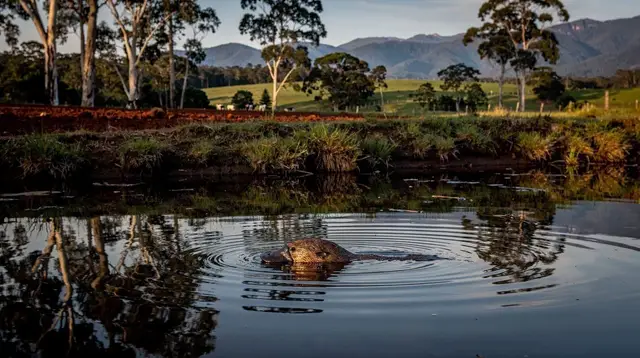
Lake Barrine and Lake Eacham: The Atherton Tablelands' Crater Lakes
What is the difference between Lake Barrine and Lake Eacham?
Both are volcanic crater lakes (maars) in the Crater Lakes National Park on the Atherton Tablelands. Lake Eacham, known to the Ngadjon-Jii as Yidyam, is the region's main freshwater swimming spot, with no crocodile risk. Lake Barrine is built around a scenic boat cruise, a teahouse and a rainforest walk past 1,000-year-old kauri pines, rather than swimming.
Two crater lakes, one very different afternoon
The Atherton Tablelands hide two almost perfectly circular lakes inside old volcanic craters, sitting less than 10 minutes apart, and travelers routinely mix up what each one is for. Lake Eacham, known to the Ngadjon-Jii people as Yidyam, is where you swim. Lake Barrine is where you cruise, drink tea, and walk beneath rainforest giants that were already centuries old when Europeans first reached this coast.
Both sit inside the Crater Lakes National Park on the Atherton Tablelands, inside the Wet Tropics of Queensland World Heritage Area, the same 1988-listed rainforest zone that runs from the Daintree down through these highlands. Treat them as a pair, plan half a day for both, and you get one of the most satisfying short stops on the whole plateau.
This guide covers only these two lakes. For the separate cluster of waterfalls nearby — Millaa Millaa, Zillie and Ellinjaa Falls — see our Waterfall Circuit guide. And if you’re hoping to spot a platypus, that happens at Peterson Creek near Yungaburra, not at either crater lake — our platypus-watching guide covers where and when.
How two volcanic explosions became lakes
Lake Barrine and Lake Eacham are both maars: craters left behind when rising magma met groundwater and blew out steam and rock in a violent explosion, rather than building a classic cone. Geologists put the eruptions at somewhere around 10,000 to 13,000 years ago, making these lakes young by volcanic standards and ancient by human ones. Without an inlet or outlet stream, both lakes are fed and drained mostly by rainfall and groundwater, which is part of why the water sits so still and so clear on a calm morning.
The rainforest that has grown back around both craters since is part of the wider Wet Tropics, the same lineage of forest that includes the Daintree further north, though these particular stands are cooler, highland rainforest rather than lowland tropical forest. At around 750 metres above sea level, the air here is noticeably fresher than on the coast — a detail that matters more than it sounds on a hot, humid day trip up from Cairns.
Lake Eacham: the Tablelands’ freshwater swim
Lake Eacham is the crater lake people actually get in. A cleared, sandy-edged swimming area with a floating platform sits a short walk from the car park, and on a warm afternoon it’s genuinely one of the best swims in the region — clear, cool, still water framed by dense rainforest, with none of the saltwater crocodile risk that rules out swimming in almost every river, creek and estuary nearer the coast. That contrast is worth sitting with for a second: at sea level around Cairns, the standing rule is that you don’t swim in any river, estuary or mangrove because saltwater crocodiles live in all of them. Up here, at altitude, away from tidal water, Lake Eacham is one of the handful of places where that rule simply doesn’t apply.
The lake is home to saw-shelled turtles that often surface near swimmers, and to the Lake Eacham rainbowfish, a small, colourful fish found naturally nowhere else on Earth and considered endangered after introduced species reduced its original population. A picnic area with barbecues, tables and shaded lawn sits right by the swimming platform, making Lake Eacham an easy lunch stop as well as a swim.
A circuit walking track loops the full shoreline of Lake Eacham, roughly 3 kilometres and about an hour at an easy pace, mostly flat, shaded, and threading through buttress-rooted rainforest trees the whole way. It’s a good leg-stretch before or after the swim, and quiet enough on weekday mornings that you’ll likely have long stretches of it to yourself.
Lake Barrine: the cruise, the teahouse and the kauris
Lake Barrine is set up differently. Its shoreline centres on a heritage teahouse — scones, tea and lake views on a deck built decades ago — and a small tour boat that runs a guided cruise of around 45 minutes across the water. The cruise is the reason most people come: it passes a pair of ancient kauri pines standing right at the water’s edge, estimated at close to 1,000 years old, among the oldest living things you’ll see on the entire Tablelands, plus a chance at spotting waterbirds and turtles from the water rather than the shore.
Lake Barrine also has its own walking track, longer than Eacham’s at roughly 5 kilometres and closer to two hours around the full loop, through denser, less-visited forest. Swimming isn’t the point here — the shoreline and facilities are built around the cruise and teahouse rather than a swimming platform, so most visitors treat Barrine as the walk-and-cruise stop and keep Eacham for the actual swim.
| Lake Eacham (Yidyam) | Lake Barrine | |
|---|---|---|
| Best for | Swimming | Boat cruise, teahouse, ancient kauris |
| Walking track | ~3 km, ~1 hour | ~5 km, ~2 hours |
| Facilities | Swimming platform, picnic area, BBQs | Teahouse, cruise jetty |
| Notable feature | Endemic Lake Eacham rainbowfish, saw-shelled turtles | Kauri pines estimated at ~1,000 years old |
| Typical time needed | 1.5–2 hours | 1.5–2.5 hours with the cruise |
No crocodiles, but still take the usual care
The absence of saltwater crocodiles at these two lakes is a genuine and useful fact, not a reason to drop your guard entirely. Read any signage at the car park before you swim, keep an eye on children near the platform edge, and treat the walking tracks with the same basic bushwalking sense you’d use anywhere in tropical rainforest — sturdy shoes, water, and sun protection even under canopy, since UV on the Tablelands is still strong. For a wider look at where crocodile risk genuinely does and doesn’t apply across the region, our guide to seeing crocodiles safely lays out the whole picture, including the rivers and estuaries where the opposite rule holds.
Getting there from Cairns and Port Douglas
Both lakes sit just off the Gillies Range Road, about 90 minutes’ drive from Cairns and closer again from Yungaburra or Malanda, only around 10 minutes apart from each other by car. There’s no public transport link direct to either lake, so this is a self-drive or organised-tour destination rather than something to plan around a bus timetable.
If you’re driving yourself, the classic loop pairs Lake Eacham and Lake Barrine with a stop at the Curtain Fig Tree just outside Yungaburra, and often continues on to the Waterfall Circuit near Millaa Millaa in the same day. If you’d rather not drive the Tablelands’ winding roads yourself, a guided day tour covers the same ground with a local driver-guide, and several also work in the region’s cafés, cheese and coffee stops along the way.
a full-day Tablelands tour built around the crater lakes and nearby waterfalls is the most direct match for this exact stop, while a Tablelands day tour with local tastings pairs the same lakes with coffee, cheese and produce stops from Cairns.
Pairing the crater lakes with the rest of the Tablelands
Neither lake needs a full day on its own, which is exactly why they work best as part of a longer loop. From Lake Eacham or Lake Barrine, it’s a short hop to Yungaburra for lunch and the Curtain Fig Tree, on to Malanda for its dairy history, or out toward Lake Tinaroo if you want a larger body of water for kayaking or fishing rather than a swim. Coffee lovers often continue toward Mareeba — our Mareeba coffee and farm trail guide covers that route in detail.
Travelers building a longer Tablelands stay rather than a single day trip should look at our two-day Atherton Tablelands itinerary, which slots both crater lakes in alongside the waterfalls, the Curtain Fig Tree and an overnight up on the plateau — a noticeably cooler, quieter change of pace from a coastal Cairns base.
If a longer chain of waterfalls, gorges and rainforest lookouts appeals more than a crater lake, the same region also has Josephine Falls and Behana Gorge further toward the coast, both freshwater swimming spots in their own right, though outside the scope of this particular guide.
Practical details: fees, timing and what to bring
Entry to Crater Lakes National Park is free at both lakes; the only costs you’ll run into are optional ones — the Lake Barrine cruise, the teahouse menu, or parking at a handful of privately run facilities nearby. Both lakes are open during daylight hours and best visited earlier in the day, when the water is calmest and the light through the canopy is at its best for photos.
Because you’re at altitude, mornings and evenings on the Tablelands can feel genuinely cool compared with Cairns, so pack a light layer even in the dry season. Bring a swimsuit and a towel for Lake Eacham regardless of season — the lake stays swimmable year-round — insect repellent for the shaded walking tracks, and cash or a card for the Lake Barrine teahouse if you plan to stop there. Reef-safe sunscreen is still worth applying before either walk, since UV exposure on the Tablelands is just as strong as on the coast, even when the temperature feels milder.
a combined day tour taking in Paronella Park, Lake Barrine and Millaa Millaa Falls is worth considering if you want the crater lakes bundled with one of the region’s more unusual historic sites rather than repeated on a separate day. For travelers extending into the western Tablelands, a self-guided visit to the Crystal Caves in Atherton makes an easy, air-conditioned add-on for a hot afternoon.
Frequently asked questions about Lake Barrine and Lake Eacham
Can you swim in both Lake Barrine and Lake Eacham?
Lake Eacham has a signed swimming platform and is the crater lake people actually swim in. Lake Barrine’s shoreline is set up around its boat cruise and teahouse rather than swimming, so most visitors treat it as a walk-and-cruise stop and save the swimsuit for Eacham.
Are there crocodiles in Lake Barrine or Lake Eacham?
No. Both lakes sit at around 750 metres elevation on the Atherton Tablelands, well above and away from the tidal rivers and estuaries where saltwater crocodiles live on the coast. This is exactly why they are treated as a safe freshwater swimming option, unlike any river or creek nearer the coast.
How long does it take to walk around Lake Eacham?
The circuit track around Lake Eacham is about 3 kilometres and takes roughly an hour at an easy pace, mostly flat and shaded under rainforest canopy. It’s an easy add-on before or after a swim.
Can you see a platypus at Lake Barrine or Lake Eacham?
Not reliably. The Tablelands’ well-known platypus-watching spot is Peterson Creek near Yungaburra, a short drive away, not either crater lake. See our dedicated platypus guide before you plan around a sighting here.
How far are Lake Barrine and Lake Eacham from Cairns?
Both lakes are around 90 minutes’ drive from Cairns via the Gillies Range or Kuranda, and only about 10 minutes apart from each other, which is why most visitors do both in the same half-day.
Is there an entry fee for the Crater Lakes National Park?
No, entry to the national park and both lakes is free. The only costs are optional, such as the Lake Barrine boat cruise, the teahouse menu, or parking at some private facilities nearby.
What is the Lake Barrine boat cruise?
It’s a guided cruise of around 45 minutes on the lake aboard a small tour boat, passing a pair of ancient kauri pines estimated at roughly 1,000 years old and stopping for birdlife along the shoreline, departing from near the teahouse.
Atherton Tablelands waterfalls, lakes and villages on GetYourGuide
Verified deep-linked GetYourGuide tours. Book through these links and we earn a small commission at no cost to you.
GetYourGuide does not provide a product photo for this activity — the image shows the meeting point, photographed by us.