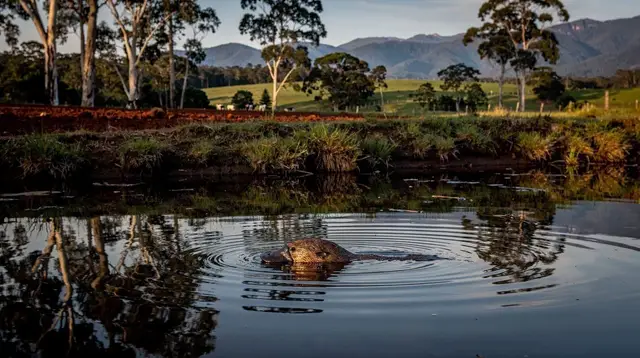
A farm town at altitude, not a stop on the waterfall route
Most visitors reach Atherton on the way to somewhere photogenic — the Waterfall Circuit, the crater lakes, Yungaburra — and treat the town itself as a fuel stop. That undersells it. Atherton is the commercial heart of the Atherton Tablelands, a working agricultural town that sits at roughly 750 metres above sea level, about 90 minutes inland from Cairns by road.
It grew up around timber and tin mining in the 1880s and became, over the following century, one of the most productive farming districts in tropical Australia. Coffee, avocados, mangoes, dairy, macadamias and a handful of small distilleries all trace back to the volcanic red soil around this one town.
The other reason Atherton matters on a Tablelands trip is temperature. Cairns sits at sea level in the tropics; Atherton sits thirty-odd kilometres inland and several hundred metres up, and the difference is immediate. Mornings that are muggy on the coast are genuinely cool here, and locals from Cairns drive up on weekends specifically to feel it. If your idea of the Tablelands so far is a list of waterfalls seen from a car window, Atherton is where you get out, walk around a town centre, and understand why people who live in Far North Queensland treat this plateau as a second climate zone rather than a scenic detour.
Getting there and getting your bearings
Atherton is reached from Cairns via the Gillies Range Road or the Kennedy Highway, both of which climb steeply off the coastal plain — the Gillies Range Road in particular is a long, winding ascent through rainforest that is worth doing slowly rather than as an afterthought. Most people drive themselves; excursions and organised tours to the Tablelands almost always include Atherton as one stop among several, since it sits close to Lake Eacham, Lake Barrine and Herberton.
If you are not driving, see do you need a car in Cairns before assuming you can reach Atherton independently — public transport up here is limited, and most visitors who skip the rental car join a guided Tablelands day tour instead.
The town itself is compact: a main street, a produce market, a small museum, and a scatter of cafés and cellar doors within walking distance of each other. It is not a base for reef trips or rainforest lodges — for that, look at Yungaburra or Mareeba — but it is an easy, low-effort stop to break up a day of driving between the coast and the plateau’s lakes and waterfalls.
Why the air feels different up here
The Atherton Tablelands range from about 500 to 1,100 metres in elevation, and Atherton sits comfortably within that band. The volcanic soil that makes the district so fertile came from a chain of extinct shield volcanoes and crater lakes, including the maars now known as Lake Eacham and Lake Barrine. Combined with the altitude, that geology produces a genuinely different microclimate from the coast: cooler nights, lower humidity, and a growing season suited to crops that would struggle in the tropical heat around Cairns. It is this climate, more than any single attraction, that explains why Atherton became a farming town rather than a beach town, and why it remains the district’s commercial centre today.
The Crystal Caves
Atherton’s best-known single attraction sits right in the town centre and has nothing to do with agriculture. The Crystal Caves is an underground museum built into a purpose-made cave system, housing a private collection of crystals, minerals, fossils and gemstones gathered over decades. It is an unusual thing to find in a small farming town, and that is precisely the appeal — it is indoors, air-conditioned, and works just as well on a wet-season downpour day as on a clear one, which makes it one of the more reliable rainy-day options anywhere on the Tablelands.
a self-guided ticket to the Crystal Caves lets you move through the cave system and displays at your own pace, which suits families with children who want to linger over the more dazzling specimens and skip past the rest. Budget half an hour to an hour depending on interest, and pair it with a coffee stop on the main street afterwards — it is an easy add-on to a morning in town rather than a destination that needs its own day.
A working farm town: what actually grows here
The single fact worth carrying into any visit to Atherton is that this is agricultural country first and a tourist stop second. The volcanic soil and cooler climate support a genuinely broad range of produce, and much of what ends up on menus across Far North Queensland — including in Cairns restaurants two hours away — is grown within a short drive of Atherton’s main street.
| Product | What to know |
|---|---|
| Coffee | Grown across the district; the deeper coffee-farm experience and roastery visits are concentrated around Mareeba, not Atherton itself |
| Avocados | A major local crop, sold fresh at Atherton’s produce market and roadside stalls, especially in the cooler months |
| Mangoes | Seasonal (roughly October to January), sold locally and used in produce-market stalls and small food businesses |
| Dairy and cheese | Small dairy farms and boutique cheesemakers supply local cafés and specialty shops around town |
| Macadamias | Grown across the Tablelands and sold roasted, raw or pressed into oil at local outlets |
| Distilleries | A handful of small producers use local sugar cane, coffee and macadamia to make spirits and liqueurs, with tastings by appointment |
None of this is packaged into a single flashy attraction — it shows up instead as a produce market, a cheese counter, a distillery cellar door, a roadside avocado stall with an honesty box. The most efficient way to sample a cross-section of it in one visit is a guided tour built specifically around tastings. a full-day Tablelands tour from Cairns that includes tastings typically works through several of these small producers in one loop, which saves the guesswork of tracking down which farms are open, which take walk-ins, and which require booking ahead.
For coffee specifically, treat Atherton as the town you pass through rather than the destination — the working coffee farms, roasteries and the dedicated route through the growing region are covered on Mareeba and in the Mareeba coffee and farm trail guide. Atherton’s role in the coffee story is as the market town where the produce is sold and served, not where it is grown at scale.
Markets, food and the town centre
Atherton’s produce market runs on a set day each week and is the best single window into what the district actually grows — stalls sell avocados, mangoes in season, macadamias, honey, cut flowers and small-batch preserves directly from the farms that produce them, usually at a fraction of coastal prices. Around the main street, a cluster of cafés, bakeries and a pub or two make Atherton a comfortable lunch stop between the crater lakes and the waterfalls further south. None of it is dressed up for tourists in the way Kuranda’s village strip is — Atherton still functions primarily as a service town for the surrounding farms, which is part of what makes it feel authentic rather than curated.
The Hou Wang Miau Chinese temple, a heritage-listed site from the district’s tin-mining and market-gardening history in the late 1800s, is a reminder that Atherton’s economy has always drawn on more than one community — Chinese market gardeners were instrumental in developing the district’s early agriculture, well before the coffee and avocado industries took their current form.
Herberton and a two-day loop
Fifteen minutes further along the Tablelands from Atherton sits Herberton, a former tin-mining town now preserved as a historic village of more than sixty original buildings furnished as they were a century ago. It pairs naturally with a day based in Atherton, since the drive between the two is short and the two attractions — a mineral museum in a working town, a preserved mining town in miniature — complement rather than repeat each other.
an entrance ticket to Herberton’s Historic Village covers the full walk-through village and is worth two to three hours on its own. If you want to see both Atherton and the wider Tablelands properly rather than rushing a single afternoon, consider building the visit around a two-day tour that combines the Atherton Tablelands with Cape Tribulation, which spreads the plateau and the Daintree across a single guided itinerary and removes the need to plan the driving yourself.
Rainy season, dry season, and why Atherton works either way
The Tablelands run on the same broad seasonal split as the coast — a dry season from roughly May to October and a wet season from November to April — but the effect on a visit to Atherton is milder than it is on the coast or in the Daintree. The dry season brings cool, clear mornings that make Atherton’s climate advantage most obvious, and it is the easier season for combining the town with an outdoor day at the crater lakes or the waterfalls.
The wet season brings heavier, more frequent rain and a greener landscape, but because Atherton’s main attractions — the Crystal Caves, the cafés, the produce market, Herberton’s indoor village halls — are largely indoors or under cover, it holds up as a day trip even when a downpour rules out the lookouts and swimming holes further along the Waterfall Circuit. See Cairns in the wet season for how that plays out across the wider region, and best time to visit Cairns for the seasonal picture overall.
Where Atherton fits in a Tablelands trip
Atherton works best as a hub rather than a headline. From the town centre you are close to the crater lakes, within easy reach of Yungaburra for its fig tree and platypus-watching, a short drive from Herberton, and on the direct route between Cairns and Ravenshoe further south.
Treat a full Tablelands day as a loop that includes Atherton for lunch and the Crystal Caves rather than a destination you drive to and back from on its own — the Atherton Tablelands day trip guide and the Atherton Tablelands 2-day itinerary both lay out sensible ways to sequence the stops.
Compared with Kuranda, which is smaller, closer to Cairns and built around a single scenic-railway-and-cableway day trip, Atherton is a real working town spread across a genuine agricultural district — see Kuranda vs the Atherton Tablelands if you are trying to choose between the two on a tight schedule. If time only allows one, Kuranda suits travellers who want a self-contained half-day experience close to Cairns; Atherton suits those who want to understand where the region’s food actually comes from, and who don’t mind a slightly longer drive to get there.
FAQ: visiting Atherton on the Tablelands
Is Atherton just a stop on the way to the waterfalls?
No. Atherton is the commercial centre of the Atherton Tablelands, a working farm town built on coffee, avocados, dairy, mangoes and macadamias, with its own attractions — chiefly the Crystal Caves — independent of the waterfalls further south. Treating it purely as a drive-through stop misses most of what makes the town worth the detour.
How far is Atherton from Cairns, and how long does it take?
Atherton is roughly 90 minutes from Cairns by road, via either the Gillies Range Road or the Kennedy Highway. Both routes climb from sea level to around 750 metres, and the Gillies Range Road in particular is a slow, winding drive worth allowing extra time for.
What is there to do in Atherton itself?
The main draw is the Crystal Caves, an underground mineral and fossil museum in the town centre. Beyond that, Atherton’s produce market, cafés, cheese and coffee outlets, a small heritage Chinese temple, and its role as a base for day trips to Herberton and the crater lakes make up the rest of a visit.
Is Atherton the same as the Atherton Tablelands?
No. Atherton is one town within the wider Atherton Tablelands, which also includes Mareeba, Yungaburra, Malanda, Millaa Millaa and Ravenshoe. For the region as a whole, see the Atherton Tablelands destination page and the Atherton Tablelands day trip guide.
Where do I go for coffee farms and coffee tastings?
For working coffee farms and a dedicated coffee route, head to Mareeba, not Atherton — see the Mareeba coffee and farm trail guide. Atherton sells and serves the district’s coffee but is not where the farms themselves are concentrated.
Is Atherton worth visiting in the wet season?
Yes, more reliably than most outdoor Tablelands stops. The Crystal Caves, the produce market stalls, cafés and Herberton’s historic village buildings are largely indoors or under cover, which makes Atherton a sound wet-season option even when rain rules out swimming holes and lookouts elsewhere on the plateau.
Can I visit Atherton without a rental car?
It is difficult. Public transport to the Tablelands is limited, and almost everyone who visits Atherton either drives themselves or joins an organised tour that includes it as one stop among several. See do you need a car in Cairns before ruling out a guided option.
How much time should I set aside for Atherton?
Half a day covers the town centre comfortably: an hour or two for the Crystal Caves, time for lunch and the produce market, and a short walk around the main street. If you are combining Atherton with Herberton, the crater lakes or an overnight on the Tablelands, allow a full day or more.