Tropical Fruit of Far North Queensland: The Atherton Tablelands Produce Trail
Where do you find tropical fruit farms near Cairns?
On the Atherton Tablelands, a volcanic plateau roughly 1.5 hours inland from Cairns, centred on Mareeba. Its cooler, drier climate suits mango, papaya, avocado, macadamia and dairy farming, and much of it is best explored self-drive or on a tastings-focused day tour rather than as a single named trail.
A plateau built for growing things
Most visitors reach Cairns for the reef and the rainforest and never think about what grows behind the coast. But an hour and a half inland, the land climbs onto the Atherton Tablelands, a volcanic plateau sitting roughly 500 to 1,100 metres above sea level. The air is drier and noticeably cooler than at the coast, the soil is deep red basalt from old volcanic activity, and the combination has made this one of Australia’s more productive food-growing regions — mango and papaya orchards, avocado groves, macadamia plantations, and a growing cluster of dairies and cheesemakers, most of it centred on and around the town of Mareeba.
This guide is about that produce — not about coffee, which is grown in the same general area but is its own separate story, and not about where to buy the finished product back in Cairns city, which is a market guide, not a farm guide.
Two routes, one overlapping map
It’s easy to conflate the tropical fruit side of the Tablelands with the region’s coffee industry, because geographically they sit close together, and a day trip out of Cairns can genuinely take in both. But they are not the same product, and treating them as one “trail” misses the point of each.
Mareeba’s coffee growing is a dedicated, single-crop industry — coffee needs specific conditions, is processed on-site at estates built around that one crop, and has its own tasting and touring culture built around roasting, cupping and the story of a plant that’s unusual to see thriving in Australia at all. That side of things has its own guide: Mareeba coffee and farm trail.
The fruit and produce side is broader and less singular. It’s mango orchards, papaya plantations, avocado groves, macadamia farms, and small dairies making cheese — different crops, different seasons, different farms, often not the same properties that grow coffee at all. A visitor who plans a single afternoon expecting to “do the coffee and fruit trail” as one stop is usually disappointed by one half or the other. Plan them as two itineraries that happen to share the same stretch of the Atherton Tablelands, and you’ll get more out of both.
What actually grows up here
Mango
Mango is arguably the fruit most associated with Far North Queensland’s growing season, and the Tablelands’ warm days and cooler nights suit it well. Orchards are scattered around Mareeba and the surrounding lowland fringes of the plateau. This guide doesn’t hold a specific harvest calendar or farm-by-farm ripening dates — those shift year to year and are best confirmed locally or through a current farm listing rather than repeated as fixed fact here.
Papaya
Papaya (often sold locally as “pawpaw”) is another Far North Queensland staple, grown in similar conditions to mango and often on neighbouring or overlapping land. It’s one of the crops most visitors associate with the tropical north generally, though the growing operations themselves sit inland on the Tablelands rather than right on the coast.
Avocado
Avocado has expanded significantly on the Tablelands in recent years, taking advantage of the same volcanic red soil and the cooler plateau climate that favours a longer, steadier growing cycle than the humid coast allows.
Macadamia
Macadamia is Australia’s native nut crop, and Queensland is one of its main growing states. Plantations on the Tablelands sit alongside the fruit orchards, and macadamia products — raw nuts, roasted nuts, macadamia oil — turn up widely in local produce shops and at Rusty’s Markets back in Cairns.
Dairy and cheese
The Tablelands’ cooler climate also supports dairy farming in a way the humid coast doesn’t, and a small but genuine artisan cheese scene has grown up around Mareeba, Malanda and Yungaburra — small producers rather than large-scale dairy operations, generally selling through local outlets and markets rather than big retail chains.
Why the climate matters more than the map suggests
None of this produce mix is an accident of geography — it’s a direct result of altitude. Cairns and the coastal strip sit in tropical, humid, high-rainfall conditions well suited to rainforest and to crops like sugar cane. The Tablelands, 500 to 1,100 metres higher, run cooler and drier, closer to a subtropical or even temperate climate on the coldest mornings. That shift is what makes mango, avocado, macadamia and dairy viable in a way they simply aren’t at sea level a short drive away. It’s the same climate shift that makes the Tablelands the place locals go to cool off, and the same reason the region also grows coffee, a crop with its own separate climate needs and its own guide.
Getting there and getting around
The Tablelands sit roughly 1.5 hours from Cairns by road, reached by the range roads climbing up through Smithfield or via Kuranda and on to Mareeba and Atherton. A rental car gives the most flexibility, since farms and small producers are spread across a wide area of plateau rather than clustered in one walkable strip, and public transport across the region is limited. This is one of the parts of Tropical North Queensland where hiring a car for a day genuinely pays off — see do you need a car in Cairns if you’re weighing that decision for the whole trip.
If you’d rather not drive, a guided day tour that bundles tastings with transfers removes the planning entirely. A full-day Atherton Tablelands tour with produce tastings typically covers several stops in one trip, with pickup from Cairns accommodation, which suits visitors who don’t want to self-drive the range roads or plan a farm-by-farm route themselves.
For families or anyone who wants a slower, hands-on stop rather than a tasting-only visit, a session of farm animal feeding at Mutchilba adds a different kind of stop to a Tablelands day — closer to a working farm visit than a produce-tasting one, and a good match for younger kids.
Pairing the fruit trail with the rest of the Tablelands
Because the drive up is roughly 1.5 hours each way, most visitors build a full day around the produce side of the Tablelands rather than treating it as a quick detour. A few stops sit naturally alongside a fruit and farm-focused day:
- The crater lakes, Lake Eacham and Lake Barrine, volcanic maars a short drive from Malanda and Yungaburra, and one of the region’s best freshwater swimming spots.
- The Curtain Fig Tree at Yungaburra, and nearby Peterson Creek, one of the more reliable spots in Queensland to see a wild platypus at dawn or dusk.
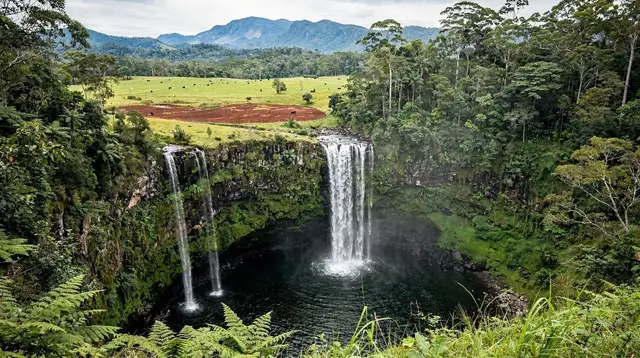
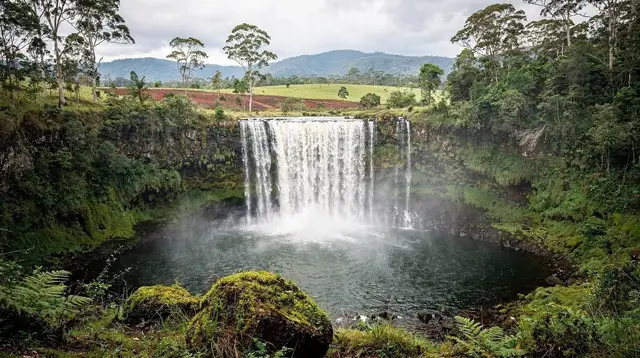
- The Waterfall Circuit near Millaa Millaa, including Australia’s most photographed waterfall.
- Granite Gorge near Mareeba, where you can hand-feed wild rock wallabies.
- Mareeba Wetlands, a drier-country birdwatching reserve unlike the rainforest habitats near the coast.
- The historic mining township of Herberton — the Herberton Historic Village entrance ticket covers a restored 19th-century mining town, a change of pace from farm stops.
- The Crystal Caves at Atherton, a self-guided underground mineral and fossil collection — a self-guided Crystal Caves visit works well as a short indoor stop between farm visits if the weather turns.
For a structured plan that ties several of these together, see Atherton Tablelands day trip or the dedicated two-day Atherton Tablelands itinerary if you want to slow the pace down and stay overnight on the plateau rather than driving up and back in one day.
What to expect versus what this guide won’t promise
Farm tourism on the Tablelands is genuine working agriculture, not a manufactured attraction, and that comes with real limits worth knowing before you go:
| What to expect | What varies too much to promise here |
|---|---|
| A cooler, drier climate than coastal Cairns | Exact harvest dates for mango, papaya or avocado |
| Orchards, groves and small dairies spread across a wide plateau | Specific farm names, opening hours or entry prices |
| A genuinely different landscape and crop mix from the coast | Guaranteed tastings or produce-stand availability on any given day |
| Two related but separate industries — coffee and fruit/dairy | A single combined “trail” covering both in one stop |
Because farms, stalls and opening hours change from season to season, this guide deliberately avoids naming specific properties, listing prices or promising a fixed itinerary of stops. Confirm current details locally, through a farm’s own listing, or by booking a tastings-inclusive tour where someone else handles that logistics for you.
If you’d rather buy the produce than visit the farms
Not every visitor has a spare day for the drive up and back. If your trip is centred on Cairns city and a Tablelands day trip doesn’t fit the schedule, Rusty’s Markets in Cairns sells a wide range of Tablelands and coastal tropical produce without the trip — see the Rusty’s Markets guide for what to expect there. It’s a genuinely different experience from standing in an orchard on the plateau, but it’s a fair substitute if time is tight, and a good complement even if you have visited the Tablelands, since coastal tropical fruit varieties differ from what grows at altitude.
Practical notes before you go
- Distance and time: roughly 1.5 hours from Cairns to the Mareeba area by road, more if you’re adding stops at Kuranda, the crater lakes or Yungaburra along the way.
- Climate: pack a light layer. Mornings on the Tablelands can be genuinely cool compared to the coast, especially outside the warmer months.
- Self-drive vs tour: a rental car suits visitors who want to choose their own stops and pace; a tastings-inclusive day tour suits visitors who’d rather not navigate the range roads or plan a farm-by-farm route themselves.
- Don’t combine this with the coffee trail on autopilot: the two overlap geographically but are different products with different farms — treat Mareeba’s coffee route as a separate half-day or day, not an add-on to a fruit-focused itinerary.
- Confirm before you drive: farm opening hours, tasting availability and seasonal produce change often enough that this guide won’t guess at specifics — check current listings before setting out.
Tropical fruit and Tablelands produce: your questions answered
Is the tropical fruit trail the same as the Mareeba coffee route?
No. They overlap around the same stretch of the Tablelands near Mareeba, but they are two different products: coffee is a single crop grown on dedicated estates, while the fruit and produce side covers mango, papaya, avocado, macadamia and dairy operations. Treat them as two itineraries that happen to share a map, not one trail with two names.
Can I visit fruit farms near Cairns without a car?
It’s difficult on your own, since farms are spread across the Tablelands and public transport there is limited. A self-drive day trip or a guided tastings tour that includes hotel pickup from Cairns is the practical option for most visitors.
What fruit is Far North Queensland known for?
Mango and papaya are the standouts, alongside avocado and macadamia. The region’s volcanic red soil and the Tablelands’ milder climate compared to coastal Cairns suit all four, and dairy and cheese production has grown alongside them.
Is the Atherton Tablelands cooler than Cairns?
Yes, noticeably. The plateau sits between roughly 500 and 1,100 metres above sea level, and the drop in humidity and temperature compared to the coast is one of the reasons locals head up there — and one of the reasons the produce differs from what grows at sea level.
Do I need to book a farm visit in advance?
This guide doesn’t hold specific farm names, opening hours or prices, since those change and the site doesn’t track them. Check current listings before you go, or book a tastings-based day tour that handles the logistics for you.
Where can I buy Far North Queensland produce without driving to the Tablelands?
Rusty’s Markets in Cairns city sells Tablelands produce alongside coastal tropical fruit, without the drive. It’s a different experience from visiting a growing region, but a useful option if a Tablelands day trip isn’t in your plans.
Food, coffee and market tours on GetYourGuide
Verified deep-linked GetYourGuide tours. Book through these links and we earn a small commission at no cost to you.
GetYourGuide does not provide a product photo for this activity — the image shows the meeting point, photographed by us.