Stargazing and Night Tours on the Atherton Tablelands
Where do stargazing and night tours from Cairns actually take place?
Almost all of them head inland and uphill to the Atherton Tablelands, a plateau sitting roughly 500 to 1,100 metres above sea level about 1 hour 30 minutes from Cairns. The altitude makes the air noticeably cooler and drier than the coast, which is the main reason operators run their evening and night programs up there rather than in Cairns itself.
If you picture a night out from Cairns as bars on the Esplanade or a sunset cruise along the inlet, that’s a different guide entirely — see our Cairns nightlife guide for the city itself. This one is about a different kind of evening: the one that happens up on the Atherton Tablelands, the volcanic plateau inland and uphill from the coast, where the air cools down after dark in a way that simply doesn’t happen in Cairns.
Why the plateau, not the coast, is where night tours happen
The Atherton Tablelands sits roughly 500 to 1,100 metres above sea level, about 1 hour 30 minutes’ drive from Cairns. That altitude is the whole story here. Cairns itself sits at sea level, wrapped in tropical humidity that barely lets up once the sun goes down. Climb onto the plateau and the air thins out and dries a little, and the temperature drop after sunset is something coastal visitors notice immediately — it’s the same reason locals from Cairns treat the Tablelands as their escape from the coastal heat, just after dark instead of during the day.
That’s why stargazing and photography-focused tours, along with a handful of other evening experiences, are based up on the Tablelands rather than in Cairns. It isn’t a marketing angle — it’s a function of where the cooler, drier air actually is.
Two things are worth being precise about before you book anything. First, there is no single fixed observatory or headline viewing site that every operator uses — locations, and the specific program run on any given night, vary by tour. Second, going up to altitude does not by itself guarantee a dark, glare-free sky. Cloud cover, moon phase, and the exact site all still matter, and conditions change night to night. Ask your operator directly about where they’re taking you and what the current conditions are like before you commit, rather than assuming either a fixed venue or perfect skies.
What a Tablelands night tour actually looks like
Most of what’s sold as an evening or night experience out of Cairns for the Tablelands centres on stargazing and photography. A typical structure is a drive up from Cairns in the late afternoon, arriving on the plateau as the light and temperature start to shift, followed by time set aside after dark for viewing and photographing the night sky with guidance on camera settings and composition.
a Cairns-based stargazing and photography tour that includes transfers up to the Tablelands and back is built around exactly that structure — useful if you’d rather not drive the mountain roads yourself after dark. There’s also a stargazing and photography experience departing from Cairns, which follows a similar idea; check the specifics of each when you compare them, since program details and locations can differ between departures.
If photography isn’t the point for you and you’d simply rather be somewhere cool and quiet after a day in tropical heat, that’s a reasonable goal on its own — but treat any specific claim about what you’ll see (a particular constellation, a meteor shower, a truly dark sky) with a healthy dose of “confirm this with the operator,” not as something guaranteed by the itinerary description.
The altitude, in practical terms
| Cairns (coast, sea level) | Atherton Tablelands (500–1,100 m) | |
|---|---|---|
| Typical evening feel | Warm, humid, tropical | Noticeably cooler, drier |
| Distance from Cairns | — | About 1 hour 30 minutes |
| What locals use it for | Daytime base | Escape from coastal heat, day and night |
| Night sky conditions | Coastal humidity and glow | Varies by site — check locally, not assumed |
The table above reflects what’s established about the plateau’s altitude and climate relative to the coast — it isn’t a claim about measured light pollution or specific astronomical viewing quality, which varies by exact site and by night.
Combining a night out with the rest of your day on the Tablelands
Because the Tablelands are already an hour and a half from Cairns, most visitors don’t drive up purely for the evening and drive straight back — they build a full day around it. A few ways that tends to work:
- Ride along on a full-day Atherton Tablelands tour that includes regional food and drink tastings in the afternoon, then stay on for an evening or night program once the light fades.
- Spend part of the day underground and out of the heat with a self-guided visit to the Crystal Caves in Atherton, which fills a couple of hours before the evening cools further.
- Add a stop at Herberton, a former mining town now preserved as a historic village, for an afternoon of a very different pace before dark.
None of that requires driving back down to Cairns and back up again — it’s the practical case for treating a Tablelands evening as part of a longer day on the plateau rather than a standalone after-dinner outing, which also cuts down on driving the mountain roads more than once after dark.
For a broader look at everything else on the plateau worth building a full day (or two) around, see our Atherton Tablelands day trip guide and the dedicated two-day Atherton Tablelands itinerary.
Where the cooler evenings fit on the plateau
The plateau’s towns and landmarks are spread across a wide area, and which part of it you’re near shapes how the evening feels. Yungaburra, one of the plateau’s better-known villages, sits close to the crater lakes; Lake Eacham and Lake Barrine are both former volcanic maars that go quiet and still once day-trippers leave, and their forested edges cool down fast after sunset.
Further north, Mareeba sits at a lower, drier part of the Tablelands and is also the departure point for dawn hot-air ballooning — a reminder that the plateau’s usefulness at both ends of the day (cool evenings, cool mornings) is really the same underlying fact about altitude and dry air.
Atherton itself, the plateau’s main town, and the cascades at Millaa Millaa Falls further south are both worth folding into a Tablelands day if a night program is your reason for making the drive up. None of these are stargazing venues by default — treat them as daytime stops that happen to sit on the same cooler plateau where the evening programs are based.
Getting up there and back safely
The road up from Cairns climbs through range country, and it’s a genuinely different drive after dark than during the day. If you’re not on a tour with transfers included, allow more time than the daylight drive would suggest, keep speeds down on the bends, and stay alert for wildlife on the road — the Tablelands and the ranges around them are exactly the kind of forested, semi-rural country where animals cross roads at dawn and dusk. A tour that includes transfers, like the stargazing and photography options above, removes this from your evening entirely, which is worth factoring in if you’d rather not do a mountain drive twice in one night.
Bring warmer clothing than you’d pack for Cairns itself. The gap between a coastal evening and a Tablelands one at 800 or 900 metres is large enough to catch out visitors who only packed for the tropics — a light jacket or fleece is not overkill up there even when it would be unnecessary at sea level.
Best time of year for it
The region’s dry season, roughly May to October, brings lower humidity and generally less cloud across Far North Queensland, and that combination tends to make for more comfortable, settled evenings on the plateau than the wet season’s afternoon storms and heavy cloud cover. That’s a statement about typical seasonal weather, not a promise about any specific night’s sky — conditions still vary, and checking with your operator close to your date is the only reliable way to know what to expect. If your trip falls in the wet season instead, the Tablelands are still worth the drive for their waterfalls and cooler air during the day; just hold your expectations for a clear night loosely and ask locally before you commit to an evening program.
Planning the whole trip around a night on the plateau
A night program is easiest to enjoy when the rest of your Cairns days are set up around it. Because the outing starts in the late afternoon and finishes after dark, it does not fit well on the day before an early reef departure. Our guide to the Great Barrier Reef from Cairns explains how early most boats leave, and it makes sense to put the reef day and the Tablelands night on different dates, ideally with a slower morning in between.
If you are still deciding how long to stay, the how many days in Cairns guide helps you see where an evening on the plateau slots in. Our three days in Cairns and five days in Cairns itineraries both leave room for one inland day, and that is the day to pair with a night program. Travellers with more time can look at the one week in Cairns plan, where a Tablelands day and night fits without rushing.
If you do not have a car
You do not need to hire a vehicle to enjoy the plateau after dark. Tours that include return transfers solve the problem neatly, and our do you need a car in Cairns guide covers when a rental is worth it and when it is not. For a wider picture of buses, taxis and shuttles, see getting around Cairns and the Cairns without a car itinerary. The short version: a night out on the Tablelands is one of the places where a transfer-included tour is genuinely the sensible choice, because you avoid the winding road in the dark and you can enjoy the evening properly.
If you do decide to drive, read our notes on Cairns airport and car hire pickup first, and remember that Australians drive on the left. Plan to be off the range roads before the animals are most active, or accept a slower drive back.
Pairing a night out with a Tablelands day
The most efficient way to see the plateau is to treat the day and the night as one trip. Our Atherton Tablelands day trip guide lists the stops that suit a long day, and the Mareeba coffee and farm trail is a good afternoon option for anyone who likes food and drink with their scenery. The Mareeba Wetlands are another quiet daytime stop, and birdwatchers will find plenty to do on the plateau, as described in our birdwatching in Tropical North Queensland guide.
Waterfall lovers can fit in the waterfall circuit earlier in the day, then head to a viewing spot as the light fades. The crater lakes of Barrine and Eacham also work well in the late afternoon, when the day-trip crowds thin out and the air begins to cool. Add the Curtain Fig Tree near Yungaburra if you want a short, easy stop with no booking needed.
If you would rather not plan it yourself, a guided Tablelands day takes care of the route, and you can then add an evening program separately on a different date if the schedules do not line up.
Photographing the night sky
Photography is the main reason many people book these tours, and a few habits make a difference. A sturdy tripod matters more than an expensive lens, because long exposures show every wobble. Switch off any flash, turn the screen brightness down so your eyes adjust, and bring spare batteries, since cold air tends to drain them faster than you expect. If you are new to night photography, a guided session is a good way to learn the settings with someone beside you, and the stargazing options above are built around that kind of instruction.
For daytime shooting during the same trip, our photographing the Daintree and the reef guide has practical advice that carries over to the Tablelands, including how humidity affects lenses when you move between the coast and the plateau. Expect a lens that has been in air-conditioning to fog when you step outside on the coast, and give your gear a little time to settle.
What to bring
- A warm layer, as covered above, and closed shoes for uneven ground.
- A torch or head torch with a red light setting if you have one, so you do not spoil other people’s night vision.
- Insect repellent, because the region is still tropical even at altitude. Our Cairns packing list has the full kit for the trip.
- Water and a snack, particularly if your tour does not include food.
- A fully charged phone and a power bank, since transfers can run late and you will use your phone for photos.
Rainy weather and backup plans
Cloud can arrive without much warning, and a wet evening can cancel or change a program. Ask your operator what happens in that case, and whether another date is offered. If your plans fall through, our guide to Cairns on a rainy day lists indoor options in the city, and the Cairns Museum and Cairns Aquarium are both easy fallbacks. If you are travelling in the wetter months, read Cairns in the wet season before you commit to a single night, and consider leaving a spare evening in your schedule.
For a more personal take on the plateau, the blog post The Atherton Tablelands are the underrated half explains why so many visitors wish they had given the region more time.
A slower, older kind of evening
Herberton is worth a mention again for anyone who likes history. an afternoon wandering the preserved buildings of the historic village gives you a gentler counterpart to an evening under the sky, and it sits well in a day that ends with a night program. If you are travelling with children, check the minimum age and the finishing time of any night tour before you book, and read our Cairns with kids guide for pacing ideas that keep younger travellers happy.
Common questions about stargazing on the Atherton Tablelands
Evening tours and nightlife on GetYourGuide
Verified deep-linked GetYourGuide tours. Book through these links and we earn a small commission at no cost to you.
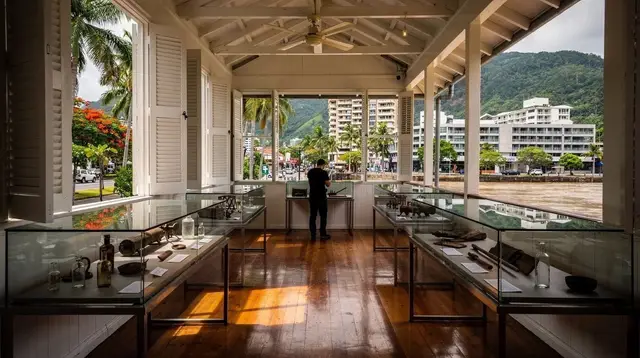
GetYourGuide does not provide a product photo for this activity — the image shows the meeting point, photographed by us.