The Atherton Tablelands Are the Underrated Half of Tropical North Queensland
Everyone talks about the reef. Almost no one talks about the plateau above it
I’ve lost count of how many conversations I’ve had with people who flew into Cairns, spent every spare day chasing the Great Barrier Reef or the Daintree Rainforest, and then asked me, on their last morning, what else there was to do. When I mention the Atherton Tablelands, the answer is usually some version of “oh, the waterfall place, right, we didn’t have time.” That sentence bothers me more than it probably should, because the Tablelands aren’t a filler stop between the reef and the airport. They’re the other half of Tropical North Queensland, and they get a fraction of the attention.
I understand why. A place billed as the largest living structure on the planet and a rainforest older than the Amazon will always win the marketing fight against a plateau of cow paddocks, cafes, and cheese factories. But that framing undersells what’s actually up there, and I want to make the case for it properly, not as an afterthought to a reef itinerary.
The altitude changes everything
The single fact that reorganises how I think about this region is elevation. The Atherton Tablelands sit on a volcanic plateau between roughly 500 and 1,100 metres, about 1 hour 30 minutes inland and uphill from Cairns. That’s not a trivial difference. The coast at Cairns is tropical in the full, sweaty sense of the word, humid year-round with heat that doesn’t let up even after dark. Climb onto the plateau and the air noticeably thins and cools. Locals treat it as their own escape valve, the place they go when the coast gets too heavy. If you’ve spent three days on reef boats and rainforest boardwalks at sea level, the Tablelands feel like a different climate zone, because they basically are one.
That cooler, wetter volcanic soil is also why this plateau grows coffee, avocados, mangoes, macadamias, and enough dairy cattle to support a genuine local cheese scene. None of that happens on the humid coastal strip. The Tablelands are agriculturally productive in a way the rest of Tropical North Queensland simply isn’t, and that shows up in the food, not just the scenery.
The waterfall everyone has seen and no one can place
Here’s a fact I like dropping on people: if you’ve ever watched a shampoo commercial with a woman standing under a curtain of falling water in a rainforest, there’s a decent chance you were looking at Millaa Millaa Falls. It’s widely considered the most photographed waterfall in Australia, and it sits on the Waterfall Circuit near the town of Millaa Millaa, alongside Zillie Falls and Ellinjaa Falls. All three are close together, easy to reach by car, and genuinely photogenic without needing a hike to earn the view.
But I’d be doing the Tablelands a disservice if I let the conversation stop at “cascade circuit,” because that’s exactly the trap I want to avoid here. Reducing this plateau to a waterfall detour is how it keeps losing to the reef and the Daintree in people’s itineraries. The waterfalls are one afternoon of a much longer story.
Two crater lakes and a tree that swallowed a forest
A short drive from Millaa Millaa sit Lake Barrine and Lake Eacham, two volcanic maars inside the Crater Lakes National Park. They’re quiet, still, and ringed by rainforest that feels older and darker than the coastal jungle around Cairns. Lake Eacham is the one locals actually swim in; Lake Barrine leans more toward its rainforest circuit walk and lakeside teahouse. Either way, this is proper crater-lake country, and it barely registers on most visitors’ mental map of the region.
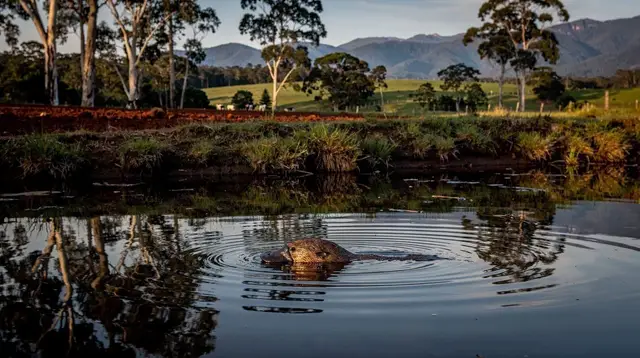
Then there’s the Curtain Fig Tree at Yungaburra, a strangler fig whose aerial roots have formed a curtain over 15 metres tall. It’s the kind of thing that sounds like a minor botanical curiosity until you’re standing under it, and it stops being minor. And a few minutes away, Peterson Creek in Yungaburra is, by most accounts I trust, the best place in Queensland to spot a wild platypus, provided you’re there at dawn or dusk and willing to stand still and watch the water. I’ve had more genuine wildlife thrill from ten quiet minutes at Peterson Creek than from some paid wildlife encounters elsewhere in the region.
Why this keeps losing the attention contest
None of this is exotic in the way the reef is exotic, and I think that’s precisely the problem. The Great Barrier Reef and the Daintree both carry a single, unforgettable headline: the largest living structure on Earth, the oldest living rainforest, two World Heritage sites touching at the water’s edge nowhere else on the planet. Those are extraordinary claims, and they deserve the attention they get. The Tablelands don’t have one clean headline.
They have a plateau’s worth of smaller, cumulative reasons: cooler air, crater lakes, a strangler fig, a platypus creek, and a waterfall circuit that happens to be one of the most photographed corners of the entire country. It’s harder to sell a collection than a superlative, and that’s exactly why the Tablelands end up cut from itineraries that are already stretched between reef days and Daintree days.
I’d argue that’s backwards. If you only have a handful of days in Cairns and you’re weighing a fourth reef trip against a first visit to the Tablelands, take the Tablelands. The reef and the Daintree will still be extraordinary the next time you visit a different site on either. A day you didn’t spend at Millaa Millaa Falls, Lake Eacham, or Peterson Creek is a day of this region you simply didn’t see.
How I’d actually spend the day up there
If you’re driving yourself, the loop through Yungaburra, the crater lakes, and the Waterfall Circuit is straightforward and well signposted, and I’ve done it both ways: self-drive with a rental car, and on a guided day tour with tastings built in at local coffee and cheese producers. The guided version removes the navigation thinking and adds context I wouldn’t have picked up alone, particularly around the volcanic history of the lakes and the agriculture the plateau supports. For travellers without a car, that’s also the only realistic way up there, since the Tablelands aren’t served by the kind of hotel-pickup day-tour network that covers the reef and Kuranda quite as densely.
a full-day Atherton Tablelands tour with local tastings is the version I’d point most first-time visitors toward, because it covers the waterfalls, the lakes, and the food in one day without you having to plan the route yourself. If you want to combine the plateau with Cape Tribulation over two days rather than choosing between them, a two-day tour linking the Tablelands and Cape Tribulation is the more honest way to see both without rushing either.
And if the reef is still the priority for the rest of your trip, there’s nothing wrong with balancing a Tablelands day against a half-day reef snorkelling trip rather than a full one — you’ll get both halves of Tropical North Queensland instead of only the one everyone already knows about.
For the practical side of planning a visit — routes, timing, what to skip if you’re tight on time — I’d send you to our Atherton Tablelands day trip guide, our Waterfall Circuit guide, and our comparison of Kuranda versus the Tablelands if you’re deciding between the two. This piece is the argument for going at all; those are the ones that get you there.
Frequently asked questions about visiting the Atherton Tablelands
What altitude are the Atherton Tablelands at?
The Tablelands sit on a volcanic plateau between roughly 500 and 1,100 metres above sea level, which is why the air feels noticeably cooler and drier than on the coast at Cairns.
How far is the Atherton Tablelands from Cairns?
It’s about 1 hour 30 minutes by road from Cairns up onto the plateau, making it a realistic day trip, though it rewards a slower pace if you have the time.
What is the best waterfall in the Atherton Tablelands?
Millaa Millaa Falls is the most photographed waterfall in Australia, thanks to decades of shampoo commercials, but it’s one of three falls on the Waterfall Circuit alongside Zillie Falls and Ellinjaa Falls.
Where can I see a platypus in the Atherton Tablelands?
Peterson Creek in Yungaburra is considered the best spot in Queensland for a wild platypus sighting, especially at dawn or dusk when they surface to feed.
Are Lake Barrine and Lake Eacham good for swimming?
Lake Eacham is the main freshwater swimming spot of the two crater lakes and sits within the Crater Lakes National Park; Lake Barrine is better known for its rainforest walk and teahouse than for swimming.
Can I visit the Atherton Tablelands without a tour?
Yes, with a rental car it’s straightforward to self-drive the loop, though a guided day tour saves navigation time and often adds tastings at local coffee, cheese, or macadamia producers.
How much time do I need for the Atherton Tablelands?
A single day covers the highlights, but two days lets you add Chillagoe or the Mareeba coffee trail without rushing the waterfalls and lakes. For the full logistics, see our Atherton Tablelands day trip guide.
Atherton Tablelands waterfalls, lakes and villages on GetYourGuide
Verified deep-linked GetYourGuide tours. Book through these links and we earn a small commission at no cost to you.
GetYourGuide does not provide a product photo for this activity — the image shows the meeting point, photographed by us.