Most people who reach Lake Tinaroo weren’t looking for it specifically — they were touring the Atherton Tablelands and the lake showed up on the map, a wide sheet of water where the plateau’s cool green hills flatten out into forestry country. That’s a fair way to arrive. Lake Tinaroo isn’t a headline attraction on the Tablelands the way the waterfall circuit or the crater lakes are; it’s a working reservoir with a scattering of low-key things to do around its shore, and it rewards a short, unhurried stop far more than a special trip from Cairns.
Where Lake Tinaroo Sits on the Tablelands
Lake Tinaroo lies on the eastern side of the Atherton Tablelands, the elevated plateau of old volcanic country that rises to between 500 and 1,100 metres behind Cairns and stays noticeably cooler than the coast. The lake sits near Yungaburra, a little north and east of the village, tucked against the edge of Danbulla State Forest and Danbulla National Park.
If you’re building a Tablelands day around Malanda, Atherton or Mareeba, Tinaroo is the detour to the north-east rather than something on the main loop — worth knowing before you plan your timing, because the forest drive around the lake adds real minutes to a day that already has a lot in it.
This page treats Lake Tinaroo as a short, secondary stop, in the same category as Granite Gorge, Mareeba Wetlands and Herberton — all worthwhile, none of them worth restructuring a whole itinerary around. For the full picture of what the plateau offers and how to sequence a day up here, our Atherton Tablelands day trip guide and the Atherton Tablelands two-day itinerary are the better starting points; this page fills in the detail on Tinaroo itself.
Not a Crater Lake — a Reservoir
It’s worth being direct about this, because the names get confused constantly: Lake Tinaroo is not one of the Tablelands’ volcanic crater lakes. Lake Barrine and Lake Eacham are maars — round, deep lakes formed inside old volcanic craters, sitting inside Crater Lakes National Park well to the south of here, ringed by rainforest that grew up undisturbed around them.
Lake Tinaroo is a different kind of place entirely: an artificial reservoir, created by damming Tinaroo Creek in the late 1950s to store water for irrigation and, later, hydro-electric generation on the Tablelands. The dam wall backs up a long, branching lake with dozens of coves and inlets rather than the single round bowl of a crater lake.
The practical upshot is that they don’t offer the same experience. Lake Eacham has a defined swimming area, walking track and a settled rainforest fringe that’s changed little in geological time. Lake Tinaroo is bigger, shallower at the edges, surrounded by a mix of state forest and cleared farmland, and built around utility as much as scenery — it exists because the Tablelands needed water storage, and recreation followed afterwards. If a swim in still, natural water is the goal, Lake Eacham is the better call; if a houseboat weekend or a morning’s barramundi fishing is what you’re after, Tinaroo is where you want to be.
Getting There from Cairns
Allow around 1 hour 45 minutes to drive from Cairns to Lake Tinaroo, longer than the roughly 1 hour 30 it takes to reach the Tablelands proper, since the lake sits a little further along than the villages of Yungaburra and Atherton. The route climbs the range — via Kuranda and the Kennedy Highway, or via Gordonvale and the Gillies Range Road, both routes covered in the Atherton Tablelands day trip guide — before crossing the plateau towards Yungaburra and turning off towards the dam.
There’s no organised excursion transfer to Lake Tinaroo itself; it isn’t on the standard day-tour circuit the way Kuranda or the reef islands are. A self-drive is the realistic way to see it, which is one more reason it works best folded into a wider Tablelands loop rather than visited on its own.
If you’d rather not drive and still want a taste of the Tablelands’ farm country, tastings and small towns, a guided day tour such as the Cairns: Atherton Tablelands Day Tour with Tastings covers the wider plateau, though it won’t stop specifically at the lake. See our note on whether you need a car in Cairns if you’re weighing up hiring one for the Tablelands.
On the Water: Houseboats, Boats and Barramundi
Lake Tinaroo’s reputation on the Tablelands rests mostly on two things: houseboats and barramundi. The lake is Queensland’s best-known stocked barramundi fishery on a dammed lake, regularly restocked and popular with anglers who come specifically for the chance at a barra without heading to a tidal river or estuary. Boat ramps are dotted around the shoreline, and hire houseboats let visitors spend a night or two drifting between coves, fishing at dawn and mooring in quiet bays — a slower, more self-contained way to see the lake than a drive-by stop.
None of this needs to be dressed up as more than it is. If fishing or a houseboat holiday isn’t on your agenda, the boating side of Lake Tinaroo is something to note rather than plan around — a reason other travellers are here, not necessarily a reason for you to be. Anyone planning to fish should check current Queensland Fisheries rules before arriving: size and bag limits apply to barramundi, and a stocked-impoundment permit is generally required to fish Queensland’s dammed lakes, Tinaroo included. Permit requirements and fees do change, so verify them close to your visit rather than relying on an old guidebook.
The Lake Tinaroo Forest Drive and Danbulla National Park
The most rewarding way to see the lake without a boat is the Lake Tinaroo Forest Drive, an unsealed forestry road that loops along the lake’s northern and eastern shore through Danbulla State Forest and Danbulla National Park. It links a string of lookouts, short walking tracks and lakeside camping areas, and it’s the kind of drive that suits people who already enjoy the quieter corners of the Atherton Tablelands — pockets of rainforest, glimpses of water through the trees, birdsong rather than crowds. It’s unsealed in sections, so it suits a standard car in dry conditions but is worth checking locally after heavy rain.
The drive is also the access route to the Cathedral Fig Tree, a giant strangler fig with an enormous curtain of aerial roots, broadly similar in kind to the better-known Curtain Fig Tree near Yungaburra, though set in forest beside the lake rather than in a maintained reserve. If you’ve already built the Curtain Fig Tree into your day, the Cathedral Fig is worth treating as a bonus rather than a duplicate stop — see them both only if you have the extra half hour to spare.
Camping and Picnics Around the Shore
Several basic camping grounds sit along the lake’s shore and forest drive — Kauri Creek, Downfall Creek and Fong-on Bay among them — run as low-facility bush camping rather than resort-style sites, and popular with Queensland families on weekends and school holidays rather than international visitors passing through for a day. Picnic and day-use areas near the dam wall and around the main boat ramps are the easier option for a short stop: shaded tables, water views, and enough space to break up a longer Tablelands drive without committing to a full camping trip.
If a quiet picnic on the Tablelands is really the goal rather than the lake specifically, Lake Eacham and Lake Barrine — covered in our crater lakes guide — have more established facilities and an easier, better-marked path from the car park to the water.
Wildlife Around the Lake
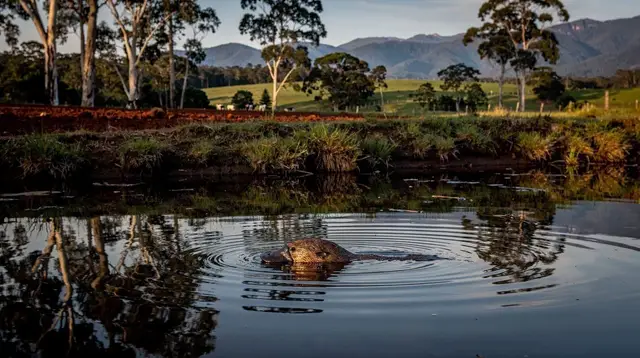
Lake Tinaroo’s shoreline and surrounding forest support a reasonable range of Tablelands birdlife — waterbirds along the coves, forest species in the fringing bush — and it’s included on some regional birdwatching routes for that reason. Platypus have been reported in some of the creeks feeding the lake, but this isn’t a reliable platypus-watching spot the way Peterson Creek at Yungaburra is; if seeing one is a priority, our platypus-spotting guide points to the better-proven locations. Treat any wildlife sighting at Tinaroo as a pleasant bonus on a drive rather than something to plan the visit around.
As with every body of fresh and estuarine water in Far North Queensland, take local signage seriously and don’t assume a spot is safe for a swim just because other people are there. Lake Tinaroo doesn’t carry the same estuarine crocodile risk as the tidal rivers and mangroves of the coast, but conditions, depth and underwater hazards vary by location, and there are no patrolled swimming areas on the lake.
Planning a Short Visit
For most itineraries, Lake Tinaroo earns half a day at most: a drive along part of the forest road, a stop at a lookout or picnic area, maybe a look at the Cathedral Fig Tree, then back onto the Tablelands loop towards Yungaburra, Malanda or Mareeba.
It slots naturally after a morning at the Curtain Fig Tree or before an afternoon at Granite Gorge, and it pairs well with a broader look at the plateau’s small museums and heritage towns, including the Historic Village at Herberton or a self-guided walk through the Crystal Caves in Atherton.
Families travelling with kids sometimes extend a Tinaroo stop into a wider Tablelands farm day, adding something hands-on like the animal feeding experience at Mutchilba Farm further west near Mareeba. None of these are lakeside activities, but they fill out a Tablelands day that starts or finishes with a look at Tinaroo, and they’re a reasonable answer to the question of what else to do on a plateau day beyond waterfalls and lookouts.
Bring water, sun protection and, if you’re stopping to fish or picnic for any length of time, insect repellent — the lake’s edges and surrounding forest hold their share of mosquitoes, especially at dawn and dusk. Fuel up before leaving Yungaburra or Atherton; services directly around the lake are limited. For a longer view of how Lake Tinaroo fits against everything else worth doing on the plateau, read the full Atherton Tablelands day trip guide, and for the waterfalls most people pair with a Tablelands day, see the Millaa Millaa waterfall circuit.
Lake Tinaroo: Common Questions
Is Lake Tinaroo the same as Lake Barrine or Lake Eacham?
No. Lake Tinaroo is an artificial reservoir built by damming Tinaroo Creek, on the eastern side of the Atherton Tablelands. Lake Barrine and Lake Eacham are natural volcanic crater lakes inside Crater Lakes National Park, well to the south, and they are covered separately in our Barrine and Eacham guide.
Can you swim in Lake Tinaroo?
People do swim from some of the lake’s picnic and camping areas, but there are no patrolled swimming spots, and the water is used for irrigation, boating and stocked fishing. If freshwater swimming is the goal, Lake Eacham on the Crater Lakes is the more established option on the Tablelands.
How far is Lake Tinaroo from Cairns?
It’s roughly 1 hour 45 minutes by car from Cairns, climbing the range through Kuranda or Gordonvale and across the Atherton Tablelands towards Yungaburra and Tinaroo.
Is Lake Tinaroo worth visiting if I’m not fishing or boating?
For most travellers without a boat or fishing gear, a stop is a short one: a lookout, a picnic, maybe a stretch of the forest drive. It works well as an add-on to a Tablelands day out rather than a destination in its own right.
What is there to do at Lake Tinaroo?
The lake is best known for houseboat holidays and barramundi fishing, alongside boat ramps, picnic and camping areas, and the Lake Tinaroo Forest Drive through Danbulla National Park, which links several lakeside camping spots and rainforest walks.
Do I need a permit to fish at Lake Tinaroo?
Queensland freshwater fishing rules and size and bag limits apply on the lake, and a stocked-impoundment permit is generally required to fish for barramundi in Queensland’s dammed lakes. Check current Queensland Fisheries requirements before you go, since rules and permit fees can change.
Can I combine Lake Tinaroo with the Curtain Fig Tree or Yungaburra?
Yes. Yungaburra and the Curtain Fig Tree sit only a short drive from the lake’s southern edge, and most people visiting Tinaroo pass through or near Yungaburra on the way.