Most people who cross Barron Gorge never plan to visit it at all — they book Skyrail or the Kuranda Scenic Railway to reach Kuranda, and the gorge is simply what unfolds underneath or beside them for half an hour. That’s not a complaint about the park; it’s the honest way almost everyone experiences it, and it’s worth understanding before you go so you know what you’re actually looking at.
A gorge you pass through more than a destination you arrive at
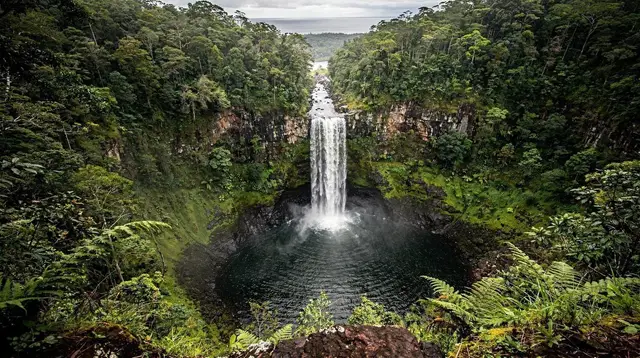
Barron Gorge National Park protects a steep, rainforest-clad valley cut by the Barron River as it drops from the Atherton Tablelands toward the coastal plain near Cairns. It sits directly between the coast and Kuranda, which is why it became the natural corridor for both the historic railway, built in the 1880s, and the cableway that opened more than a century later. The park itself has no single entrance gate or visitor centre; it’s mostly experienced from above (Skyrail), from the side (the train), or from the river (rafting), with a handful of short walking trails filling in the gaps on the ground.
Inside the park, the drama comes from three things working together: the vertical drop of the gorge walls, the density of lowland and upland rainforest that the Wet Tropics of Queensland is protected for, and the Barron River itself, which is dammed upstream at Tinaroo but still runs wild and rocky through this stretch. The most photographed single feature, Barron Falls, has its own dedicated page and its own guide — this page is about the park and the gorge that surrounds it, not the waterfall lookout itself.
Skyrail: gliding over the canopy, not just past the falls
The Skyrail Rainforest Cableway opened in 1995 and remains the easiest way to see Barron Gorge’s rainforest canopy up close. The full journey runs 7.5 kilometres between the Smithfield terminal, just north of Cairns, and Kuranda, with two stations along the way where you can get off, look around and re-board a later gondola at no extra cost.
The first stop, Red Peak, sits at the highest point of the ride and puts you on a boardwalk that drops from the gondola line down into the rainforest itself — this is the part of the experience that actually lets you stand inside Wet Tropics forest rather than fly over it, with a ranger often on hand to point out strangler figs, buttress roots and the layered canopy structure. The second stop, Barron Falls station, is built specifically for the gorge and the falls, with several lookout platforms that give a different angle on the river than you get from the train or the road.
Between the stations, the ride over the gorge itself is where Skyrail earns its reputation: gondolas swing out over open air with nothing below but rainforest canopy and, at the right point, a clear drop down to the river far beneath. It’s a genuinely different perspective on the same landscape the railway skirts from the side, and the two are commonly paired on the same day — the comparison between them, and which order to ride them in, is covered in full in the Skyrail versus Scenic Railway guide and the combined Skyrail and Kuranda Scenic Railway guide.
a combined Skyrail and Kuranda Scenic Railway day that covers the gorge from both directionsThe Scenic Railway: the gorge from the cliff face
The Kuranda Scenic Railway takes the opposite approach to the same landscape. Built between 1886 and 1891 largely by hand, the 37-kilometre line was carved into the gorge wall itself, passing through 15 tunnels and around 93 curves as it climbs from the coastal plain to Kuranda. Where Skyrail floats above the canopy, the train hugs the cliff face, giving passengers views straight down into the gorge and across to waterfalls tumbling from the opposite wall — including a dedicated slow pass at the Barron Falls viewing point and a crossing of the Stoney Creek Falls viaduct.
Trains depart from Cairns or from Freshwater Station, a heritage stop a little further inland that shortens the ride and is popular with people who want the gorge scenery without the full length of track through the city outskirts. Because the railway was engineered as transport infrastructure rather than a tourist ride, its pace through the gorge is slower and more deliberate than Skyrail’s, and it rewards a window seat on the gorge side more than any other part of the journey.
a Kuranda Railway itinerary that pairs the gorge crossing with Cattana Wetlands and Barron FallsWalking inside the national park
Away from the cableway and the railway, Barron Gorge National Park has a small network of walking tracks, most of them short and clustered around Kuranda and the Barron Falls lookout area rather than deep into the gorge interior — the terrain is simply too steep for extensive trails through the core of the park. Expect boardwalk sections through rainforest, a handful of lookout points over the gorge and falls, and interpretive signage on the Wet Tropics ecology rather than long-distance hiking.
For visitors who want more walking than the gorge itself offers, the surrounding region has better options: Crystal Cascades for freshwater swimming holes closer to Cairns, and the broader network covered in the best walks and hikes around Cairns guide.
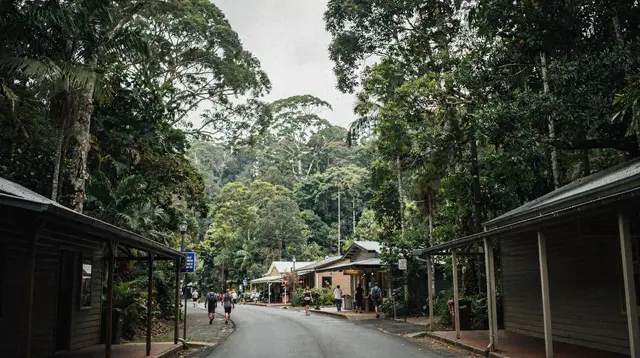
Inside Kuranda village itself, a cluster of attractions sits within easy walking distance of both the Skyrail and railway terminals, including Rainforestation Nature Park, Birdworld Kuranda and the Australian Butterfly Sanctuary, all of which make sense as add-ons once you’ve come up through the gorge for the day.
Wildlife in the gorge
Barron Gorge’s rainforest is part of the same Wet Tropics bioregion that runs from the Daintree south through the Tablelands, and it supports a similar cross-section of wildlife, even if sightings from a moving gondola or train carriage are opportunistic rather than guaranteed. Birdwatchers regularly pick out fruit-doves, honeyeaters and, with luck, larger rainforest birds from the Red Peak boardwalk, where the pace is slow enough to actually look rather than just ride through. The birdwatching guide for Tropical North Queensland covers the wider region’s specialities in more depth.
The gorge itself, being steep, forested and largely inaccessible on foot, is not a wildlife-park experience — for guaranteed close-up encounters with the region’s signature species, the purpose-built parks around Kuranda and the coast do that job better. What the gorge offers instead is the chance to see a healthy stretch of intact rainforest doing what it does without much human interference, which is a different kind of value than a guaranteed photo.
The Barron River below: rafting through the gorge
The upper stretches of the Barron River are dammed at Lake Tinaroo, but the river that flows through Barron Gorge below the dam still delivers a genuine whitewater run, generally graded II–III — technical enough to be engaging, gentle enough to suit first-time rafters, and much closer to Cairns than the bigger grade III–IV Tully River trips run further south. Rafting the gorge means seeing it from a completely different vantage point than either Skyrail or the train: at water level, looking up at the same cliffs and canopy that passengers overhead are looking down from.
Trips are typically run as a half-day, which pairs well with an afternoon Skyrail or railway ride on the same day if you want to combine perspectives on the gorge without giving up a full extra day of your trip. The distinction between this run and the bigger Tully River day trip is covered in the Tully versus Barron River rafting guide, and the broader options are laid out in the white-water rafting guide for Cairns.
a half-day rafting trip that runs the grade II–III rapids through Barron Gorge itselfSeasons: what changes in the gorge
The dry season, roughly May to October, is the more reliable time to visit Barron Gorge. Skies are clearer more often, which matters for both Skyrail’s canopy views and the railway’s outlook across to the falls, and river levels for rafting are calmer and more predictable. Humidity is lower, days are comfortable, and this is when most Cairns visitors schedule their Kuranda day regardless.
The wet season, November to April, changes the character of the gorge rather than ruling it out. Waterfalls inside the park, including Barron Falls itself, run at their fullest and most dramatic during this period — a genuine trade-off against the higher chance of low cloud obscuring canopy views from Skyrail, and higher, faster river flows that can affect rafting schedules.
Neither season makes the gorge a bad idea; they simply change what you’re likely to see and how comfortable the ride will feel, which is worth knowing rather than discovering on the day. For a fuller picture of how the wet season affects the wider region, see Cairns in the wet season and stinger season explained — a coastal issue that doesn’t apply up in the gorge itself, but shapes how many visitors plan their week around it.
Getting there and combining it with Kuranda
Skyrail departs from its own terminal at Smithfield, a short drive north of central Cairns, while the Scenic Railway leaves from Cairns Railway Station or from Freshwater Station further inland. Neither requires a hire car: most Skyrail and railway combination tours include hotel pickup from Cairns and the northern beaches, which is the simplest way to visit if you haven’t rented a vehicle, and it avoids the logistics of leaving a car at one end while riding one-way on the other.
Because the gorge sits directly on the route to Kuranda, almost nobody visits it in isolation — it’s built into a Kuranda day by default, whether that day centres on the village markets, its wildlife parks, or simply the ride itself. The classic pattern, taking one mode of transport up and the other back down, is explained step by step in the Kuranda day trip guide, and a broader assessment of which of Kuranda’s paid attractions are worth adding on sits in Kuranda attractions worth it.
For a category view of everything bookable around the gorge and the cableway, see Kuranda and Skyrail activities and the dedicated things to do in Barron Gorge listing.
a longer three-day package that folds a Kuranda and gorge day into a wider Daintree and reef itineraryHow much time to give Barron Gorge
| Approach | Typical time | What you get |
|---|---|---|
| Skyrail one-way | 1.5 hours | Canopy views, Red Peak rainforest walk, Barron Falls lookout platforms |
| Scenic Railway one-way | 2 hours | Cliff-side gorge views, tunnels, Stoney Creek Falls viaduct, slow pass at Barron Falls |
| Skyrail + railway combo | Half to full day | Both perspectives on the gorge, one-way each direction, usually with Kuranda village time built in |
| Half-day rafting | 4–5 hours including transfers | River-level view of the gorge, grade II–III rapids on the Barron |
| Short walking stop at Barron Falls | 20–30 minutes | Free lookout access without Skyrail or train tickets |
For most visitors, a half day built around Skyrail or the railway, plus an hour or two in Kuranda village, is enough to feel like you’ve properly seen the gorge. Rafters or anyone combining both cableway and railway should block out a full day, and it’s worth checking the one-day-in-Cairns itinerary if you’re trying to fit Barron Gorge alongside other Cairns highlights on a single-day visit.
Barron Gorge National Park, in short
Barron Gorge earns its place on a Cairns itinerary not because it’s a stand-alone attraction with its own gate and car park, but because it’s the landscape that two of the region’s most distinctive experiences — Skyrail and the Kuranda Scenic Railway — are built to cross. Add a half-day rafting trip or a short walk at the falls lookout, and you’ve seen the gorge from above, from the side and from the water, which is more than most single-attraction stops in the region can offer.
Frequently asked questions about Barron Gorge National Park
Is Barron Gorge National Park the same place as Barron Falls?
No. Barron Gorge National Park is the whole protected area of rainforest, river and cliff between Cairns and Kuranda. Barron Falls is one specific lookout inside that park, reached by its own short walk or viewed from the Skyrail and railway. Treat the gorge as the setting and the falls as one stop within it.
Can you walk into Barron Gorge National Park without taking Skyrail or the train?
Yes, to a limited extent. Short walking trails around Kuranda and near the Barron Falls lookout enter the national park on foot and are free, but the gorge’s interior canopy and river views are mostly seen from Skyrail’s gondolas, the train windows, or the water itself on a rafting trip.
Is the Barron River safe to swim in the gorge?
The gorge section of the Barron River is fast-flowing, rocky and not set up for swimming; it is a rafting run, not a swimming hole. Freshwater swimming near Cairns belongs at signed upstream sites such as Crystal Cascades or Lake Eacham, well away from tidal or estuarine water where saltwater crocodiles live.
How long does Skyrail take to cross Barron Gorge?
The full Skyrail Rainforest Cableway between Smithfield and Kuranda covers 7.5 kilometres and takes around 1.5 hours including the two stops at Red Peak and Barron Falls; the gorge crossing itself is only part of that longer canopy journey.
Can you raft through Barron Gorge?
Yes. Half-day rafting trips run on the Barron River, mostly on grade II–III rapids close to Cairns, making it a more accessible option than the bigger grade III–IV Tully River further south. It’s a way to experience the gorge from the water rather than from above.
Is Barron Gorge worth visiting in the wet season?
Yes, arguably more so for the waterfalls, which run at their fullest from November to April, though cloud can hide canopy views from Skyrail and the river runs higher and faster for rafting. The dry season (May–October) gives clearer visibility and calmer, more consistent conditions overall.
Do you need a car to reach Barron Gorge National Park?
No. Skyrail departs from Smithfield and the Scenic Railway from Cairns or Freshwater Station, and most Skyrail–railway combo tours include hotel pickup in Cairns and the northern beaches, so the gorge is easily reached without renting a car.