White-Water Rafting Near Cairns: Tully River vs Barron River
Where can you go white-water rafting near Cairns?
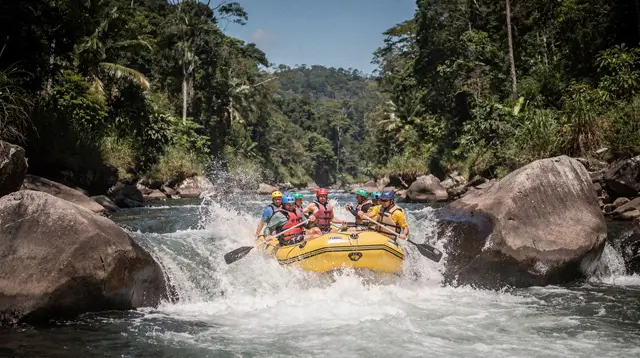
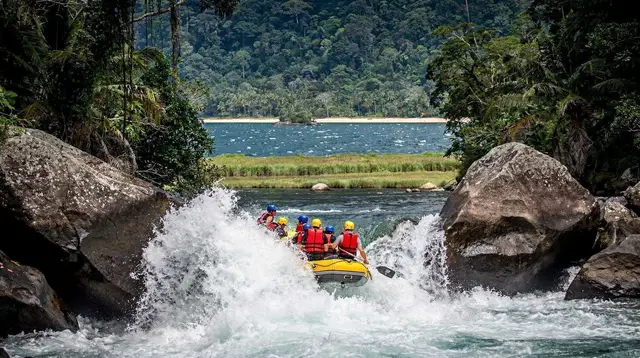
The Tully River, about two hours south of Cairns, offers full-day Class III-IV rafting fed by scheduled dam releases, so the rapids run reliably year-round. The Barron River, much closer to Cairns near Barron Gorge, offers a shorter half-day Class II-III trip that suits first-timers or a tighter schedule.
The river that doesn’t wait for rain
Most of Tropical North Queensland’s outdoor experiences bend to the calendar. The reef gets calmer in the dry season, the waterfalls swell in the wet, and the whole region reorganises itself around whether it has rained lately. The Tully River is the exception, and it is the reason serious rafters treat it as the region’s real white-water run rather than a side activity bolted onto a Cairns holiday.
The Tully’s rapids are not rain-fed. They come from scheduled releases out of the Kareeya hydroelectric power station upstream, which means the river runs at a workable, exciting level on a bone-dry August afternoon and on a soggy February one alike. That single fact changes how you should think about booking: there is no “best season” for the Tully in the way there is for the reef or the Daintree, and no need to check a rainfall chart before you commit. A dry-season river that depends on recent rain can drop to a disappointing trickle; the Tully doesn’t have that problem, and it is worth saying plainly, because guidebooks and blog posts sometimes lump it in with seasonal rivers out of habit rather than fact.
That reliability is also why the Tully anchors a full day rather than a quick stop. Operators build the trip around a genuine journey — pickup from Cairns or Mission Beach, a scenic drive into the rainforest, a safety briefing, several hours on Class III-IV water, a cooked lunch on the riverbank, and the drive home — rather than a bolt-on activity squeezed between two other stops.
Mission Beach: Tully River White Water Sports Rafting is the full commercial trip most rafters end up booking, run from the closer Mission Beach base rather than the longer Cairns transfer.
Why the rapids never disappear: how the dam releases work
The Tully rises in the ranges behind Wooroonooran National Park and is dammed upstream at Koombooloomba, with water released through the Kareeya power station on a schedule set for hydroelectricity generation, not for rafting. Commercial operators have built their trips around that schedule for decades, timing the day so the water is running well during the hours guests are on the river.
The practical effect is a river with a personality closer to a controlled rapid park than a wild, unpredictable watercourse. The volume is consistent enough that guides know each rapid’s character on a given release level, and the trip can run through a dry spell that would leave a rain-fed river unraftable. It is a different kind of river experience from, say, a flash-flood creek: less drama in the “will it even be runnable today” sense, more consistency in delivering genuine Class III-IV water trip after trip.
This is also the detail to get right if you’re comparing operators or reading older material: nothing about the Tully’s rafting season is tied to the wet season or the dry season the way almost everything else around Cairns is. Treat “when should I raft the Tully” as a non-question — book it whenever the rest of your itinerary allows.
What a day on the Tully actually looks like
A typical full-day Tully trip from Cairns or Mission Beach follows a similar shape across operators, even though the exact rapids and lunch spot vary by outfit and by release schedule on the day.
Morning: pickup from your Cairns accommodation (around a two-hour drive south) or a much shorter hop if you’re staying at Mission Beach or Tully itself. On arrival at the put-in, guides run a land-based safety briefing covering paddle commands, what to do if you fall out, and how the raft self-rescues.
On the water: the river is broken into a sequence of named rapids separated by calmer pools, run over roughly 12-14 kilometres depending on the operator’s stretch of river. Guides sit at the back of each raft calling commands, and crews of six to eight paddle together through the technical sections. Between rapids there’s time to look up at the rainforest closing in overhead, spot a jungle perch or a turtle in the slower water, and occasionally swim a gentle stretch.
Lunch: most trips stop riverside for a cooked barbecue lunch, a welcome break in the middle of a physically demanding day.
Afternoon: a second stretch of rapids, generally including the river’s best-known drops, before pulling out and heading back to base for a hot shower and the drive home.
Evening: return to Cairns in the late afternoon or evening, tired, wet-haired, and usually still talking about one specific rapid.
Full Day White Water Rafting from Cairns or Mission Beach covers this complete itinerary for travellers who want the Cairns-based pickup option rather than staying at Mission Beach.
Grading the rapids: what Class III-IV actually means in the water
International white-water grading runs from Class I (flat, easy moving water) to Class VI (unraftable). The Tully sits at Class III-IV, which in plain terms means:
| Grade | What it feels like | Where you’ll find it |
|---|---|---|
| Class I-II | Riffles and small waves, minimal manoeuvring | Calm stretches between Tully rapids; most of the Barron |
| Class III | Moderate, irregular waves; crew paddling matters | Frequent sections of the Tully; some Barron rapids |
| Class IV | Powerful, continuous water; precise timing and teamwork required | The Tully’s named signature rapids |
| Class V+ | Expert-only, not offered commercially near Cairns | Not run commercially in this region |
In practice this means the Tully asks something of you. You’re not a passenger — the raft needs everyone paddling on command through the harder sections, and guides brief this clearly before you launch. It’s approachable for first-timers with reasonable fitness and no fear of moving water, but it isn’t a passive float. If that sounds like more river than you’re after, that’s exactly the gap the Barron fills.
The Barron River: the closer, shorter alternative
The Barron River runs through Barron Gorge on Cairns’ own doorstep, tumbling down from the Atherton Tablelands past Kuranda toward the coast. Where the Tully is a full-day commitment two hours south, the Barron is a half-day trip that can start and finish within a few hours of a Cairns pickup, graded a gentler Class II-III.
That makes it the practical choice for a shorter stay, a family with kids at the lower end of the minimum-age range, or anyone testing whether white water agrees with them before committing to a bigger day. It’s also worth noting the Barron’s water levels do respond more to rainfall and, at times, to Barron River hydro operations upstream — it isn’t the same dam-release story as the Tully, and operators will confirm on the day whether conditions suit a family-friendly run or a livelier one.
Cairns: Half Day Barron River White Water Rafting is the standard half-day trip, and it pairs easily with another Cairns-area activity on the same day since it doesn’t consume the whole day the way the Tully does. Some operators also combine the river with powered options — Cairns: Jet Boating Barron River Rafting 2 Tours bundles a rafting run with jet boating on the same stretch for travellers who want both the paddle-powered and engine-powered version of the same river in one outing.
Tully vs Barron at a glance
| Tully River | Barron River | |
|---|---|---|
| Grade | Class III-IV | Class II-III |
| Duration | Full day | Half day |
| Distance from Cairns | ~2 hours (closer from Mission Beach) | Close to Cairns, near Barron Gorge |
| Water source | Scheduled dam releases (Kareeya) | Rainfall and upstream hydro operations |
| Reliability | Runs consistently year-round | Can vary with recent rain |
| Best suited to | Fit adults wanting genuine white water | First-timers, families, shorter schedules |
| Includes | Cooked lunch, full-day guiding | Shorter guided session |
This table is a snapshot, not a verdict — the full breakdown of which river suits which traveller, including how the two compare on price and on what a first-timer should realistically expect, is covered in our dedicated Tully vs Barron River rafting guide.
Getting there and transfer times
Cairns-based operators for the Tully typically collect guests from central Cairns hotels early in the morning, with the drive south taking around two hours along the coastal and inland routes past Innisfail and Tully township. Staying at Mission Beach cuts that transfer dramatically, since the town sits much closer to the river’s put-in point — worth factoring in if your itinerary already has you spending a night or two on that stretch of coast, perhaps to look for a wild cassowary along the way.
The Barron, by contrast, is close enough to Cairns that transfer time barely factors into the decision — it’s one of the few adventure activities near Cairns that genuinely works as a half-day add-on rather than requiring you to write off a whole day of your trip.
Neither river requires a hire car. Every commercially operated rafting trip near Cairns includes hotel pickup and drop-off as standard, which is one less thing to plan around if you’re travelling without your own vehicle — see our broader guide on getting around Cairns if you’re weighing up whether you need one at all.
What to bring, and what not to
Pack light for either river:
- Swimwear worn under a rash vest or quick-dry top
- A towel and a full change of clothes for the ride home
- Reef-safe sunscreen and a hat for the bus and lunch stop
- Sturdy, secured footwear — old sneakers or sandals with a back strap; thongs (flip-flops) generally aren’t accepted
- A dry bag or leave valuables at your accommodation; phones and cameras are best left in the vehicle unless your operator provides a waterproof housing
Operators supply the wetsuit or splash jacket (seasonal, since the water temperature varies through the year), helmet, life jacket, and paddle. You do not need your own gear for either river.
Combining rafting with the rest of the Tablelands or the south coast
A Tully rafting day already covers a lot of driving south of Cairns, which makes it a natural anchor for a broader loop through the region rather than a one-off. Travellers heading that way often pair it, on a different day, with Paronella Park near Mena Creek — the crumbling Spanish-style ruins and rainforest gardens make an easy half-day stop on the same stretch of coast, and Cairns: Paronella Park Rainforest Full Day Tour with Dinner covers it as a standalone day if rafting and ruins don’t suit the same itinerary.
If your trip has room for a proper adventure-focused stretch, see our adventure week in Cairns itinerary, which sequences rafting alongside skydiving at Mission Beach, diving, and canopy activities without over-scheduling any single day.
Who should choose which river
There’s no universal right answer here, and this page deliberately doesn’t try to settle it — that comparison belongs to our Tully vs Barron River rafting guide, which weighs price, time, and traveller type side by side. As a general starting point:
- Choose the Tully if you have a full day free, want genuine Class III-IV white water, and are staying anywhere between Cairns and Mission Beach.
- Choose the Barron if you have half a day, are travelling with younger kids, or want a taste of rafting without committing your whole day to the transfer.
- Choose both, on separate days, if your trip is a week or longer and adventure activities are a priority — see things to do: rafting & river adventures for the full spread of operators and options across both rivers.
Booking tips and pricing
Full-day Tully trips generally run in the mid-to-high hundreds per person once transfers, lunch, and equipment are included; half-day Barron trips cost meaningfully less, reflecting the shorter time on the water and closer transfer. Treat any figure you see online as a rough order of magnitude rather than a quote — check the current price and inclusions on the specific tour before booking, and confirm the minimum age and weight requirements if you’re travelling with children, since these are set for safety and enforced on the day rather than negotiable.
Booking a week or more ahead is sensible in peak season (roughly June to September), when both rivers see strong demand from the broader Cairns dry-season crowd. Outside peak months, availability is generally easier, and — worth repeating — the Tully’s schedule doesn’t shift with the season the way the rest of the region’s activities do. For a wider view of what a rafting day adds to an overall trip budget, see our Cairns travel costs breakdown.
Frequently asked questions about rafting near Cairns
Is Tully River rafting affected by rain or a dry spell?
No. The Tully’s rapids are fed by scheduled releases from the Kareeya hydroelectric dam upstream, not by rainfall, so the river runs at a dependable level whether the week has been dry or wet. That is what sets it apart from a rain-fed river, which can drop to a trickle in the dry season or become unsafe after a storm.
What grade of rapids will I paddle on the Tully River?
The Tully is graded Class III-IV, Australia’s most consistent commercial white water at that level. Expect continuous rapids with names, drops, and stretches that require the whole crew paddling together, plus calmer pools between sections where guides point out rainforest and swimming holes.
How does the Barron River compare to the Tully River?
The Barron is a Class II-III half-day trip close to Cairns near Barron Gorge, gentler and shorter than the Tully’s full-day Class III-IV run. It suits travellers with limited time, families with older children, or anyone wanting a taster before committing to a bigger day. The full comparison lives in our Tully vs Barron River rafting guide.
Do I need previous rafting experience for either river?
No prior experience is required for the Tully or the Barron. Both are commercially guided trips with a safety briefing on land before you touch the water, and guides sit in the raft steering and calling instructions throughout. A reasonable level of fitness and comfort in moving water helps, especially on the Tully’s longer rapids.
What should I bring on a rafting day trip from Cairns?
Bring swimwear worn under quick-dry clothing, a towel, a dry change of clothes for the bus home, reef-safe sunscreen, and secured footwear such as old sneakers or sandals with a back strap. Operators supply the wetsuit or splash top (seasonal), helmet, life jacket, and paddle; cameras and phones should stay in the bus unless the operator provides a waterproof option.
How long is the transfer from Cairns to the Tully River?
Most full-day Tully trips run around two hours each way from Cairns, with the day usually starting with an early pickup and returning to Cairns in the late afternoon or early evening. Some tours also collect guests from Mission Beach, which sits much closer to the put-in point than Cairns does.
Is white-water rafting near Cairns suitable for kids?
Minimum age and weight limits vary by operator and by river, and they exist for safety reasons that cannot be waived on the day. The Barron River’s gentler Class II-III water is the more common choice for younger or first-time paddlers, while the Tully’s Class III-IV water typically carries a higher minimum age. Check the specific tour’s requirements before booking.
What happens if it rains on rafting day?
Tropical rain over Cairns or the coast does not affect the Tully’s flow, since the river’s level is set by dam releases rather than local rainfall, so trips run as scheduled through a shower. Operators only cancel or reschedule in genuinely unsafe conditions, such as a cyclone warning or an unscheduled flood release, which is rare.
Whitewater rafting and river adventures on GetYourGuide
Verified deep-linked GetYourGuide tours. Book through these links and we earn a small commission at no cost to you.
GetYourGuide does not provide a product photo for this activity — the image shows the meeting point, photographed by us.