Cairns with Kids: A Family Travel Guide
Is Cairns a good destination for families with young kids?
Yes, but the city itself has no swimming beach, so families rely on the free, netted Cairns Esplanade Lagoon plus a short list of easy, low-risk days out: the Aquarium, Hartley's Crocodile Adventures, a calm-water day at Green Island, and the Kuranda wildlife parks reached by Skyrail or the Scenic Railway.
Planning a family trip to Cairns without the guesswork
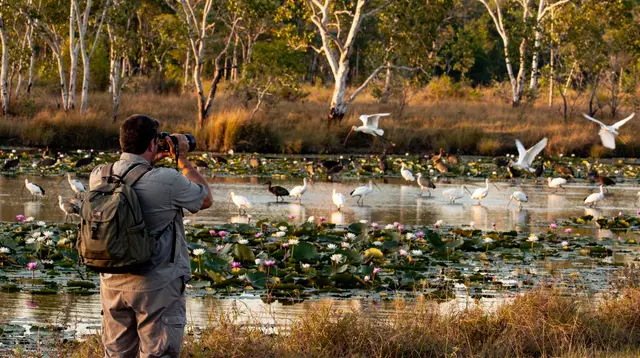
Cairns looks, on paper, like an obvious family beach town. It isn’t quite that, and the sooner a family plans around the real geography instead of the postcard, the smoother the trip goes. The city’s own waterfront is a tidal mudflat, not sand, and the coastline around it holds two of the region’s genuine hazards for casual swimmers: marine stingers for roughly half the year, and saltwater crocodiles in every estuary and river mouth, all year. None of that makes Cairns unsuitable for kids.
It makes the choice of where a family swims and which days out they book the whole game, and this guide sticks to the handful of options that are genuinely built for children and non-swimmers: the Cairns Esplanade Lagoon, the Cairns Aquarium, Hartley’s Crocodile Adventures, a calm-water reef day at Green Island, and the wildlife parks around Kuranda.
For the reef specifically, the logistics of taking young children out to the Great Barrier Reef — which boats accept toddlers, what a stinger suit for a small child looks like, seasickness, nappy changes on a moving boat — get their own dedicated guide at reef trips with young children. And if this page has convinced a family to build a whole trip around these ideas, the day-by-day version is at Cairns with kids: 5 days. This guide is the “what and why” behind both of those.
The one rule that matters more than any other
Before anything else: the only place in Cairns where kids should swim freely in open water is the Cairns Esplanade Lagoon. Not the Esplanade waterfront itself, which is a mudflat at low tide and offers no swimming at any tide. Not any river, creek, estuary or mangrove along this coast, because saltwater crocodiles live in all of them, including Trinity Inlet in the middle of town — see seeing crocodiles safely for what that actually means day to day.
And not the open sea from November to roughly May without a stinger suit, because that’s marine stinger season, and the smallest and most dangerous of the stingers, the Irukandji, is known to pass straight through the safety nets strung across beaches. For the full picture on why Cairns doesn’t have a swimming beach in the way visitors expect, see does Cairns have a beach. Everything below this section is built around that one rule, not around avoiding it.
The Cairns Esplanade Lagoon: the actual family swimming spot
The Cairns Esplanade Lagoon is a free, lifeguard-patrolled saltwater swimming pool built into the Esplanade, roughly 4,800 square metres of water, opened in 2003 specifically because the natural waterfront in front of it can’t be swum in. It sits right along the Esplanade boardwalk, has a shallower toddler pool next to the main lagoon, wide shaded lawns with barbecues and play equipment around it, and it’s open every day of the year — stinger season changes nothing here, since it’s a filled and treated pool, not open water.
There’s no entry fee, which makes it the easiest way to fill a hot afternoon in Cairns without spending a dollar. For the fuller picture of the Esplanade as a whole — the boardwalk, the play areas, the night markets nearby — see Cairns Esplanade and the Lagoon.
A few practical notes for families: the Lagoon gets busy in the middle of the day and on weekends, mornings and early evenings are calmer, and the surrounding lawns are genuinely good for a picnic dinner while watching the sunset over Trinity Inlet. There are showers and toilets on site, but bring your own towels, and reef-safe sunscreen matters here just as much as it does on the reef itself, since the UV index in Far North Queensland runs high year-round.
Cairns Aquarium: rainy-day and reef-preview option
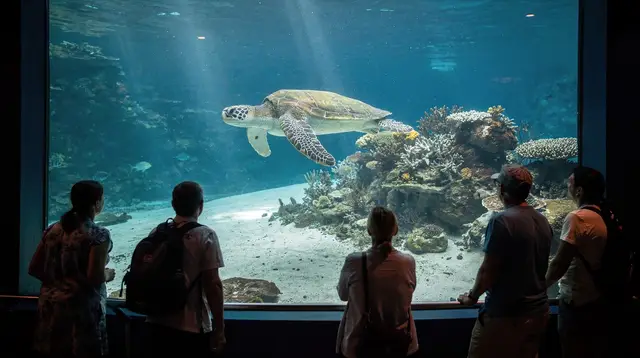
The Cairns Aquarium is a purpose-built facility in the city centre that works two ways for a family: it’s a solid, air-conditioned option on a wet-season downpour day, and it’s a genuinely useful preview of what a reef snorkel will actually look like, which matters for a nervous first-timer of any age.
Expect several hours indoors moving through tanks organised by habitat, from the Wet Tropics river systems down to the outer reef, with a reasonable amount of hands-on and interactive content for younger children. It pairs naturally with a Lagoon session, since both sit within easy walking distance of the Esplanade. For a longer look at what’s inside, see the Cairns Aquarium guide.
Hartley’s Crocodile Adventures: crocodiles the safe way
Given that saltwater crocodiles are a real and constant presence in this region’s rivers and estuaries, the honest way to let kids actually see one is at Hartley’s Crocodile Adventures, a wildlife park about 40 minutes north of Cairns on the Captain Cook Highway, built directly around crocodile encounters. The park runs cruises on its own lagoon where crocs are fed from the boat, has a koala and wildlife section, and stages a scheduled crocodile attack show that most kids find genuinely thrilling rather than frightening.
It’s the single best way to answer “will we see a crocodile” without going anywhere near one in the wild, and it turns the safety rule above from an abstract warning into something kids have actually watched. The full rundown of what’s on site and how long to allow is at the Hartley’s guide. Hartley’s works well combined with a Port Douglas day, since it sits roughly on the road between the two.
Green Island: the family’s first coral reef
Of the reef options out of Cairns, Green Island is the one built for families and non-swimmers. It’s a coral cay about 27 kilometres offshore, roughly 45 minutes by fast catamaran, and unusually for a cay of its size it carries genuine rainforest, not just scrub — kids can walk the loop track around the island in about 20 minutes and it feels like a small jungle, not a sandbar.
The water off the beach is calm and shallow, there’s a glass-bottom boat and a semi-submersible for anyone who doesn’t want to get in the water at all, and reef walking, snorkelling gear and stinger suits are all set up for a first-timer of any age. A day trip that includes a glass-bottom or semi-submersible tour is worth booking ahead rather than improvising on arrival:
a full-day Green Island trip with optional diving for the adults keeps the family together on one boat while still giving a parent who dives the chance to go under, and it’s a straightforward way to see the reef without anyone needing to be a strong swimmer.
Fitzroy Island is the other easy option and worth knowing about as an alternative or a second visit — it’s a granite island rather than a coral cay, with more in the way of walking tracks and a resort-style base, and its shorter format suits families who want half a day rather than a full one:
a half-day Fitzroy Island trip with optional add-ons is built around exactly that shorter window, with extras like a glass-bottom boat kept optional rather than compulsory.
For families who’d rather stay closer to shore with a boat-based lunch and easy marine life viewing without committing to a full island crossing, a marine life cruise with a two-course lunch on board is a gentler middle option, particularly for a family travelling with a child who gets seasick or simply doesn’t want a long open-water crossing. Whichever boat a family books, ask directly whether stinger suits come in kids’ sizes — most family-oriented operators carry them, but it’s worth confirming before the day, not on the dock.
For everything else about taking children specifically to the outer reef — nappy-aged kids, seasickness, what boats actually allow — the dedicated guide is reef trips with young children, and it’s worth reading before booking any reef day, not after.
Kuranda: a full day of wildlife parks in the rainforest
Kuranda is a rainforest village about 27 kilometres and roughly 330 metres above Cairns, and it happens to cluster four of the best wildlife experiences in the region within easy walking distance of each other.
Most families ride up on the Skyrail Rainforest Cableway — gondolas gliding over the rainforest canopy with two stops to get out and walk — and come back down on the Kuranda Scenic Railway, a historic train line finished in 1891 that winds past the Barron Gorge and its waterfalls, or the other way around. Either order works, and doing one each way rather than the same route twice is the usual family choice; the comparison of both is covered in Skyrail vs the Scenic Railway.
Once in the village, four attractions do the heavy lifting for a family day:
- Kuranda Koala Gardens — close-up koalas, and depending on the day, a photo opportunity holding one, alongside other native animals in a walk-through setting.
- Birdworld Kuranda — a large walk-through aviary with birds from the region and beyond flying at close range, a hit with most young kids purely for the novelty of it.
- Australian Butterfly Sanctuary — one of the largest butterfly enclosures in the country, calm and shaded, and an easy stop for a hot afternoon.
- Rainforestation Nature Park — home to the Army Duck rides, amphibious ex-military vehicles from the Second World War that drive straight into the rainforest lake, plus a koala and wildlife section and the Pamagirri cultural performance. The Army Ducks in particular are usually the single most memorable ride of a Kuranda day for younger kids.
A note worth stating plainly: Tjapukai Aboriginal Cultural Park closed permanently in 2021 and still turns up on older lists and forum posts. If a family wants an Aboriginal cultural experience as part of a Kuranda day, Rainforestation’s Pamagirri performance is the current option in the village itself; further afield, the Kuku Yalanji Dreamtime Walk at Mossman Gorge is the more immersive alternative for a family with an extra day near Port Douglas.
Fitting all four Kuranda attractions into one day alongside Skyrail and the train is tight but doable for families with primary-school-age kids or older; with toddlers, it’s usually more comfortable to pick two of the four and leave the rest for a later trip. The full logistics — opening hours, combo tickets, how to sequence the day — are laid out in the Kuranda day trip guide and which Kuranda attractions are actually worth it.
A gentler alternative up on the Tablelands
Families who want a rainforest day without the cable car crowds sometimes prefer the Atherton Tablelands instead of Kuranda — it’s noticeably cooler at altitude, less crowded, and built around short, easy walks to waterfalls rather than wildlife parks with entry queues. A guided day trip that includes lunch takes the planning out of it entirely:
a full-day waterfall tour from Cairns with lunch included covers several of the Tablelands’ easiest, most photogenic waterfalls in one day, with the walking kept short enough for most kids to manage comfortably. It’s a solid alternative for a family that’s already done Kuranda on a previous trip, or that simply wants a lower-key day between busier ones.
Putting a few days together
| Day type | Best fit for | Roughly how long |
|---|---|---|
| Cairns Esplanade Lagoon + Aquarium | Any age, including toddlers, rainy days | Half to full day |
| Hartley’s Crocodile Adventures | Ages 4 and up, wildlife-focused kids | Half day plus travel |
| Green Island or Fitzroy Island | Non-swimmers, first reef experience, ages 3 and up with supervision | Full day |
| Kuranda (Skyrail + train + parks) | Ages 5 and up for a full day; toddlers manage 2 of the 4 parks | Full day |
| Atherton Tablelands waterfalls | Families wanting a quieter, cooler day | Full day |
None of these days need to be booked back to back — Cairns rewards a slower pace with young kids, and alternating an active day out with a Lagoon afternoon keeps everyone from burning out. For a full week built around exactly this rhythm, see Cairns with kids: 5 days, which sequences these same building blocks with travel time and nap schedules already worked in.
Practical notes for travelling with kids in and around Cairns
Reef-safe sunscreen and hats are non-negotiable here regardless of season — the UV index runs high even under cloud. Most tour operators, including the reef and Kuranda options above, pick guests up directly from hotels in central Cairns and the northern beaches, so a family doesn’t need to hire a car purely to reach the wharf or the cableway base station; a car becomes more useful once a family wants to reach the Tablelands or Port Douglas independently, which is covered in do you need a car in Cairns.
Stinger suits for children are worth requesting when booking any boat trip during stinger season, from roughly November to May, since not every vessel stocks every size as standard. And on the drive to Hartley’s or the Tablelands, treat cassowary and wildlife crossing signs literally — cassowaries are large, can be aggressive if approached, and cross roads in this region with no warning.
Frequently asked questions about Cairns with kids
Can kids swim in the sea in Cairns?
Not casually. There is no swimming beach at Cairns itself, marine stingers are present from roughly November to May, and every estuary and river mouth on this coast can hold saltwater crocodiles. The safe, purpose-built option in town is the free Cairns Esplanade Lagoon.
What is the Cairns Esplanade Lagoon and is it free?
It’s a lifeguard-patrolled saltwater pool on the Cairns Esplanade, roughly 4,800 square metres, opened in 2003. Entry is free, there are shaded lawns and a shallow toddler pool alongside the main pool, and it stays open year-round regardless of stinger season.
Is Green Island suitable for children and non-swimmers?
Yes, it’s the easiest reef day for families. The crossing is about 45 minutes, the beach and glass-bottom boat need no swimming ability at all, and stinger suits are provided for anyone snorkelling during jellyfish season.
Are crocodiles a real risk for a family staying in Cairns?
Yes, saltwater crocodiles live in every estuary, river and mangrove along this coast, including Trinity Inlet in the middle of the city. The rule for families is simple: no swimming in rivers, estuaries or mangroves, ever, and treat every Crocwise sign as literal. Hartley’s Crocodile Adventures is the safe, guided way to see one up close.
How much does a family day at Kuranda cost, roughly?
Budget somewhere around 130 to 160 Australian dollars per adult for a Skyrail-and-train combo, before any of the wildlife parks. Treat that as an order of magnitude, not a quote, since fares and park bundles change.
What is the best single day to plan if we only have one full day with kids?
Most families do best splitting the day between the Lagoon or the Aquarium in the morning and Hartley’s Crocodile Adventures or a half-day at Kuranda in the afternoon, since the reef and rainforest need a full day each on their own.
Do young kids need a stinger suit even on a calm family reef trip?
Yes, during stinger season, because Irukandji jellyfish are small enough to pass through the safety nets used on beaches and have been recorded even out on the reef. Family-oriented boats carry suits in kids’ sizes as standard, and it’s worth asking when booking.
Family-friendly activities on GetYourGuide
Verified deep-linked GetYourGuide tours. Book through these links and we earn a small commission at no cost to you.
GetYourGuide does not provide a product photo for this activity — the image shows the meeting point, photographed by us.