Does Cairns Have a Beach?
Does Cairns have a beach?
No — the city centre waterfront, the Esplanade, is a tidal mudflat, not a sand beach, and it is not for swimming. Cairns residents and visitors swim at the Cairns Esplanade Lagoon, a free, patrolled saltwater pool opened in 2003, or drive 15–25 minutes north to real sand beaches like Palm Cove and Trinity Beach.
The short answer: no, and here’s why that surprises people
Type “Cairns beach” into a search bar before your trip and you’ll picture something like Bondi with a rainforest backdrop: a wide crescent of sand, gentle surf, a few surfers at dawn. Fly in, walk down to the Cairns Esplanade at low tide, and you’ll find something else entirely — a flat, brown expanse of tidal mud stretching out toward the horizon, dotted with wading birds, with no sand and no swimming in sight.
This isn’t a case of a beach having “seen better days.” Cairns simply doesn’t have a swimming beach in the city centre, and it never has. The city was built on Trinity Inlet, a tidal estuary that James Cook named on 10 June 1770, Trinity Sunday. Estuaries are defined by mud and mangroves, not sand — that’s the geology, not a failure of city planning. Understanding this before you arrive saves a wasted first afternoon and, more importantly, keeps you out of water you genuinely shouldn’t enter.
What the Esplanade waterfront actually is
The Esplanade is Cairns’ waterfront promenade, and it’s genuinely worth your time — just not for swimming. At low tide the exposed foreshore is a mudflat, part of the same mangrove-and-tidal-flat system that lines much of Trinity Inlet. It’s an excellent spot for birdwatching (curlews, egrets, and migratory waders feed on it daily), a popular running and cycling strip, and the site of the Cairns Night Markets and regular food van gatherings in the evening.
What it is not, at any state of the tide, is a place to swim. Even setting aside the mud, this stretch of coast sits inside an estuary system where saltwater crocodiles are present — more on that below. If you came to Cairns expecting to drop a towel on sand outside your hotel and walk straight into the sea, recalibrate now: that beach doesn’t exist here, and no amount of low tide changes that.
Where Cairns actually swims: the Esplanade Lagoon
The fix for “no beach” arrived in 2003, and it’s one of the most-used pieces of public infrastructure in the city. The Cairns Esplanade Lagoon is a free, artificial saltwater swimming pool built right on the waterfront, roughly 4,800 square metres of clear, treated water with a sandy-edged beach entry, grassed surrounds, barbecues, and lifeguards on duty every day of the year.
It solves three problems at once. It gives the city a swimming spot that doesn’t depend on tides or mud. It sits outside the reach of the box jellyfish and Irukandji that make the open coast risky for part of the year, so it’s safe to swim in during stinger season without a wetsuit. And because saltwater crocodiles are excluded from a fenced, engineered pool, it removes that risk too. For a full rundown of hours, facilities, and what else sits around the Lagoon precinct, see our dedicated guide to the Cairns Esplanade and Lagoon.
The Lagoon is free to enter, gets busy with families in the late afternoon and on weekends, and is genuinely one of the better free attractions in the whole city. If someone tells you Cairns “doesn’t really have anything to swim in,” they haven’t been to the Lagoon.
| Where | What it is | Can you swim? | Cost |
|---|---|---|---|
| Cairns Esplanade waterfront | Tidal mudflat | No, at any tide | Free (it’s just a walk) |
| Cairns Esplanade Lagoon | Free saltwater pool, patrolled | Yes, year-round | Free |
| Palm Cove / Trinity Beach | Real sand beach, ~20–25 min north | Yes, with stinger net in season | Free |
| Four Mile Beach, Port Douglas | Real sand beach, ~1 hour north | Yes, with stinger net in season | Free |
| Great Barrier Reef (day trip) | Coral cay or pontoon | Yes, with stinger suit in season | Paid tour |
The two safety realities that explain the whole setup
It’s worth spelling out why Far North Queensland’s coastline works this way, because once you understand it, the Lagoon stops looking like a compromise and starts looking like the obviously sensible option it is.
Stinger season runs roughly November to May. During these months, box jellyfish (Chironex fleckeri) and the much smaller Irukandji are present in coastal waters along this stretch of coast. Box jellyfish stings can be extremely painful and, in serious cases, life-threatening; Irukandji cause a severe, delayed-onset syndrome.
Beaches in the region put out stinger nets during this period, but nets are not a total guarantee — Irukandji are small enough to occasionally pass through mesh, and stinger suits are recommended for anyone swimming or snorkelling on the open coast or the reef during these months, not just for children. None of this affects the Lagoon, which is a sealed, land-based pool with no connection to the sea. For the full picture on timing and precautions, read our stinger season guide.
Saltwater crocodiles live in every estuary, river mouth, and mangrove system on this coast, including Trinity Inlet, right beside the Esplanade. This is why swimming is never recommended in the estuary itself, no matter how calm or inviting the water looks at high tide. It’s also why freshwater swimming holes inland — places like Crystal Cascades or Lake Eacham on the Atherton Tablelands — are managed and signed so differently from the coast.
Our guide to seeing crocodiles safely covers where they live and how to enjoy the region without ever putting yourself at risk, and our roundup of freshwater swimming holes around Cairns lists the inland spots where a proper swim is genuinely on offer.
If you actually want sand: the real beaches near Cairns
None of this means Far North Queensland is short on beaches — quite the opposite. It just means you need to leave the city centre to find them, and the drive is short.
The Northern Beaches — a run of suburbs including Palm Cove, Trinity Beach, Clifton Beach, Kewarra Beach, and Yorkeys Knob — sit 15 to 30 minutes north of the city along the coast. These are proper sand beaches, backed by palm trees and low-rise resorts, with stinger nets installed during the risk season.
Palm Cove in particular has a reputation as one of the prettiest stretches of sand in the region, framed by huge old paperbark trees along its esplanade. Our Cairns Northern Beaches guide and dedicated Palm Cove guide go through each one in detail, including which are best for families, snorkelling, or just a quiet afternoon.
Further north, Port Douglas has Four Mile Beach, a long, wide stretch of sand roughly an hour’s drive up the Captain Cook Highway, with its own netted swimming enclosure in season. It’s a legitimately excellent beach and a common reason people choose Port Douglas over Cairns as a base — see our Four Mile Beach guide and Port Douglas guide for the full comparison.
If you’d rather not drive, Green Island and Fitzroy Island both offer beach time as part of a reef day trip, roughly 45 minutes from Cairns by catamaran — genuine sand at Green Island, and coral-rubble “sand” at Fitzroy’s famous Nudey Beach. Further south, the coastline running toward Cape Tribulation delivers some of the most dramatic beach scenery in Australia, where the Daintree rainforest grows right down to the tideline at spots like Myall Beach and Thornton Beach.
A day trip that puts sand, rainforest, and safe swimming together
One of the more efficient ways to see what this coastline actually offers — beaches, rainforest, and a properly managed swimming stop — is a guided day trip north toward Cape Tribulation. These tours are built around exactly the areas where the “no city beach” problem doesn’t apply: wide sand beaches backed by ancient rainforest, plus stops at freshwater or crocodile-safe swimming spots along the way.
a full-day tour from Cairns to Cape Tribulation covering its beaches, crocodile-spotting, and safe swimming stops is a straightforward way to see the region’s real beaches in a single day without renting a car or navigating the Daintree River ferry yourself.
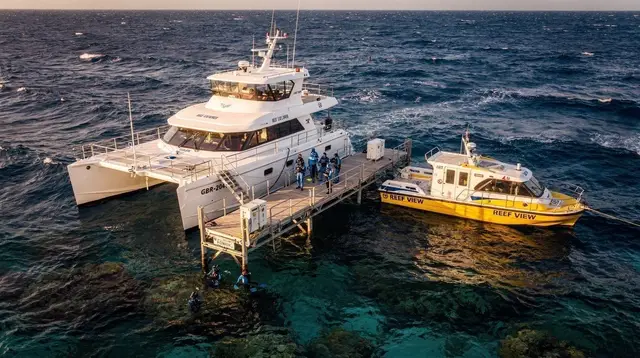
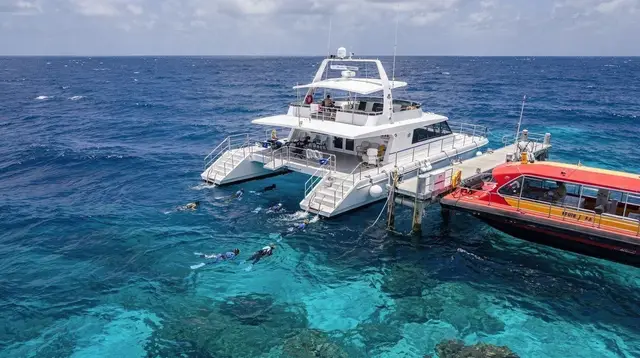
If a beach was never really the point and what you actually want is water time, two other options solve that differently. A guided freshwater tubing trip — a rainforest river tubing trip departing Cairns and the northern beaches — gets you into cool, clear inland water without any of the estuary or stinger-season considerations. And if the goal was always the reef rather than the coast, a premium Great Barrier Reef cruise from Cairns gets you snorkelling over coral within a couple of hours, stinger suit provided when the season calls for one.
Planning around it: what this means for your itinerary
If beach time is a priority for your trip, don’t build your first day around the Esplanade expecting sand — build it around the Lagoon for a free swim, and set aside a half-day or full day to actually reach a real beach. A hire car makes the northern beaches trivial (Palm Cove is a 25-minute drive), while Cape Tribulation and Port Douglas are comfortably done as guided day trips if you’d rather not drive the coast road or deal with the Daintree ferry yourself.
For a broader first-timer’s view of what else trips people up in this region, our first-time-in-Cairns mistakes guide is worth reading alongside this one, and if you’re mapping out a full itinerary, How Many Days in Cairns and our one-day in Cairns itinerary both factor the Lagoon-versus-real-beach question into their planning.
Choosing between the beaches: a quick way to decide
Not every beach near Cairns suits every traveller, and picking the right one is easier once you know what you want from the day. If you are travelling with children and want something close, the Lagoon and the nearer northern beaches are the natural fit, and our Cairns with kids guide explains how to pace a family trip around heat, shade and swimming. If you want a long, quiet stretch of sand, Ellis Beach and Holloways Beach sit at either end of the northern run and feel less polished than Palm Cove.
If your priority is cafés, restaurants and an evening stroll after a swim, Palm Cove is the easiest answer. If you want a base with a proper beach on your doorstep, the choice of where to sleep matters more than most people expect, and our where to stay in Cairns guide lays out the trade-off between the city centre and the coast. The wider question of whether to base yourself in the city or further north is covered in Cairns vs Port Douglas.
Another option for sand and a relaxed pace is further south. Mission Beach has a long, quiet shoreline and a very different feel from the northern beaches, and Mission Beach vs Cairns compares the two honestly if you are deciding where to spend your nights.
Swimming without the beach: other ways to get in the water
Plenty of visitors end up swimming in places that are not beaches at all. The reef is the obvious one: a day on the water means real snorkelling over coral, and our snorkelling the Great Barrier Reef guide explains what to expect, while Great Barrier Reef from Cairns covers how the different boats and reef sites compare. If you cannot decide between a large pontoon and a smaller vessel, reef pontoon vs small boat is a good place to start.
For a beach-and-reef combination without a long drive, the islands work well. Green Island and Fitzroy Island each have their own day-trip guide, and both let you mix beach time with snorkelling in a single outing.
If you would simply rather stay out of the sea, you are far from alone. Our blog piece on Cairns for non-swimmers shows how much the region offers on dry land, and where you can actually swim in Far North Queensland sets out the safe options in one place. For a candid take on how visitors react when they discover the mudflats, read what nobody tells you about Cairns beaches.
When the weather changes the plan
Beach days in the tropics depend on the season. The dry season, from May to October, is the most reliable time for sand and sun, and the best time to visit Cairns explains how the months compare. In the humid months from November to April, rain and stinger nets shape what you can do, and Cairns in the wet season shows how to keep a trip enjoyable anyway.
On a day when the sky closes in, you do not need to give up on the city. The Cairns Aquarium and Rusty’s Markets are both good indoor-friendly alternatives, and Cairns on a rainy day collects more ideas for when the beach is off the table.
Getting to the sand without stress
The northern beaches are close, but how you reach them depends on your plans. A car gives you the most freedom, and do you need a car in Cairns weighs the cost against the convenience. If you would rather not drive, getting around Cairns goes through the other ways to travel along the coast, so a beach afternoon never needs to be complicated.
Cairns beaches: frequently asked questions
Is there a beach in Cairns city itself?
Not one you can swim from. The Esplanade waterfront is a mudflat at low tide, backed by mangroves and tidal mud rather than sand. It is a pleasant place to walk, cycle, or watch birds, but it was never a swimming beach.
Where do people swim in Cairns then?
At the Cairns Esplanade Lagoon, a free, lifeguard-patrolled saltwater swimming pool of roughly 4,800 square metres on the Esplanade, open since 2003. It is the default swimming spot for anyone based in the city centre.
Why doesn’t Cairns just have a normal beach?
The city sits on Trinity Inlet, a tidal estuary with mangroves and soft mud, not an open sand coastline. The nearest real sand beaches are 15 to 25 minutes north along the coast road.
Is it safe to swim in the ocean near Cairns?
Not in the Esplanade waterfront at any time, because of the mud and the estuary. On the northern beaches, swimming is possible outside stinger season, and inside netted enclosures during stinger season from roughly November to May.
What is stinger season and does it affect the Lagoon?
Stinger season, roughly November to May, is when box jellyfish and Irukandji are present in coastal waters. It does not affect the Cairns Esplanade Lagoon, which is a purpose-built saltwater pool physically separate from the ocean and safe year-round.
Which nearby beach should I visit instead of the Esplanade?
Palm Cove and Trinity Beach are the easiest options, both under 30 minutes from central Cairns with real sand, palm trees, and stinger nets in season. Four Mile Beach in Port Douglas is a larger option about an hour north.
Are there crocodiles at the Cairns Esplanade or the Lagoon?
Saltwater crocodiles can be present in Trinity Inlet and the estuary waters off the Esplanade, which is one more reason not to enter that water. The Lagoon itself is a fenced, treated pool with no connection to the estuary, so crocodiles are not a concern there.
Beach and coastal experiences on GetYourGuide
Verified deep-linked GetYourGuide tours. Book through these links and we earn a small commission at no cost to you.
GetYourGuide does not provide a product photo for this activity — the image shows the meeting point, photographed by us.