Green Island Day Trip: A Practical Guide from Cairns
How long is a day trip to Green Island from Cairns?
Green Island sits about 27 km off Cairns, roughly 45 minutes each way by fast catamaran. Most day trips give you around 4 to 6 hours on the island itself, depending on whether you book a morning cruise, an afternoon cruise, or the full-day option.
What a day at Green Island actually looks like
Green Island is the easiest reef island day trip out of Cairns, and it earns that reputation on logistics as much as scenery. It sits about 27 km northeast of the city, roughly 45 minutes away by fast catamaran, which is short enough that even a half-day booking leaves real time on the island rather than eating the whole visit in transit. This guide walks through the practical shape of that day — when boats leave, how many hours you actually get on the sand, what fills that time, and the one line item that almost never appears in the advertised price.
The island itself is a coral cay, but an unusual one. Most cays in the Great Barrier Reef are low sandy banks with scrubby vegetation, useful for birds and not much else. Green Island carries a genuine rainforest canopy on top of its coral sand base, dense enough to shade the interior walking track and support its own understorey. That combination — a swimmable beach, a living coral garden a few strokes from shore, and an actual forest you can walk through in twenty minutes — is why it works for such a wide range of travellers: families with toddlers, grandparents who don’t swim, first-time snorkellers, and certified divers all get something out of the same island on the same morning.
Getting there: departure points and crossing time
Nearly every Green Island cruise departs from the Cairns Reef Fleet Terminal, a short walk or taxi ride from the city centre and close to the Cairns Cruise Liner Terminal precinct where most reef and island operators check in passengers. Checked-in guests typically need to arrive 30 to 45 minutes before departure for boarding, safety briefings and gear fitting.
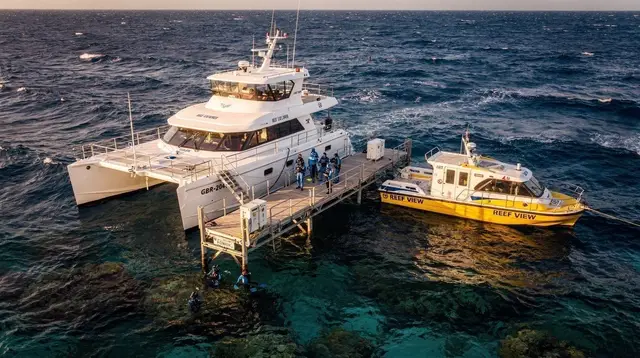
The crossing itself runs about 45 minutes in each direction on a fast catamaran, over sheltered inshore water that is noticeably calmer than the run out to the outer Great Barrier Reef. That matters for anyone prone to seasickness — the same swell that affects outer reef trips is largely absent on the Green Island run, though conditions can still pick up on a windy afternoon.
Departure schedules generally fall into three patterns:
| Departure style | Typical departure | Typical return | Time on island |
|---|---|---|---|
| Morning cruise | Early morning | Early-to-mid afternoon | About 4-5 hours |
| Afternoon cruise | Early afternoon | Early evening | About 3-4 hours |
| Full-day cruise | Morning | Late afternoon | About 5-6 hours |
Exact times vary by operator and season, so treat this as a planning guide rather than a timetable — always confirm the departure window at booking. Travellers who want the most time on the island without committing to a full day tend to book the morning option; those staying in the Cairns Northern Beaches or heading out that evening often prefer the shorter afternoon run.
a half-day morning cruise to Green Island is the simplest way to get several hours on the island and be back in Cairns by mid-afternoon, while an afternoon cruise suits a slower start to the day.
What fills the hours on the island
Once the boat docks at the jetty, the island’s small footprint — you can walk end to end in a few minutes — means there’s no wasted time finding your way around. A typical stretch of hours on Green Island breaks down into a handful of activities that can be mixed and matched depending on how many hours your ticket includes.
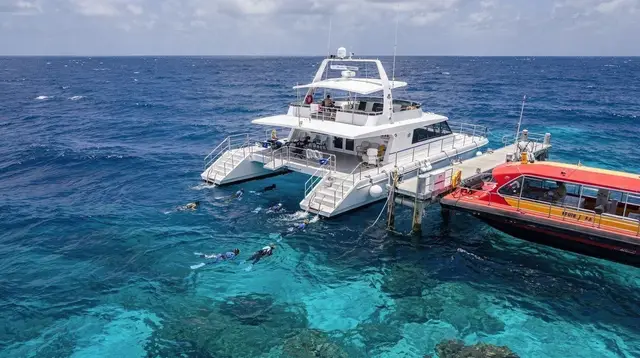
The beach and the coral garden. The main beach faces the jetty and mainland side of the island, with calm, shallow water and sand underfoot rather than the coral rubble found on some nearby cays. A coral garden lies close enough to shore that snorkellers can reach it by wading out rather than swimming any distance, which is the detail that makes Green Island workable for children and weak swimmers. Staying within the marked, patrolled swimming and snorkelling zones matters here — these boundaries exist for boat traffic safety as much as reef protection.
The forest walk. A sandy track loops the island’s interior in about 20 minutes at an easy pace, running beneath a closed rainforest canopy that keeps the path shaded even at midday. It’s flat, well-defined, and manageable in sandals, making it one of the few genuine rainforest walks in the region that doesn’t require hiking shoes or a car to reach — see the broader context in our guide to Daintree vs Kuranda for how Green Island’s pocket of forest compares to the mainland’s larger tracts.
Glass-bottom boat or semi-submersible. For anyone who won’t get in the water — non-swimmers, older travellers, small children, or people who simply prefer to stay dry — a glass-bottom boat or semi-submersible vessel tours the coral edges without requiring a mask or a swim. This is usually included in full-day tickets and offered as a paid add-on on shorter cruises.
Snorkelling gear and stinger suits. Mask, snorkel and fins are included with most tickets. During stinger season, roughly November to May, full-body lycra or neoprene stinger suits are provided or available for hire — worth taking even in the shallow water close to shore, since the coral garden here sits well within the range where jellyfish have been recorded.
Optional dives. Certified divers can add a two-tank shore dive with several operators, and people without a certification can usually book an introductory dive with an instructor. One option worth knowing about is a helmet-based “seawalker” dive that keeps hair and glasses dry and needs no swimming skill at all — useful for travellers who want to walk the seafloor without committing to a full scuba lesson.
a Green Island cruise with a seawalker helmet dive pairs the standard day trip with that no-swimming-required option, and a full-day Green Island tour with diving is the pick for certified divers who want maximum time both in the water and on the island.
Marine life boardwalk and other attractions. Near the jetty, a small cluster of shops, cafes and a resort complex give shade and facilities between water sessions. Some cruise packages bundle in extras like a marine life presentation; check what’s included rather than assuming.
What a ticket actually includes — and what it doesn’t
This is where most of the frustration on Green Island trips comes from, and it’s avoidable with a few minutes of reading before you book.
The reef tax is rarely in the sticker price. The Great Barrier Reef Marine Park Authority (GBRMPA) charges an Environmental Management Charge, commonly called the EMC or “reef tax,” on every visit into the marine park — around 8 Australian dollars per person per day. Almost no operator folds this into the number displayed in search results or on a poster; it’s usually added at checkout or buried in a terms line. Some tickets also carry a small port or terminal fee on top. Budget for it and read the fine print before comparing prices between operators — see our broader breakdown in The Reef Tax Nobody Mentions at the Counter.
Lunch is sometimes included, sometimes not. Full-day tickets often bundle a buffet lunch at the island’s cafe or resort restaurant; shorter morning and afternoon cruises frequently leave food as a separate purchase or bring-your-own. If a package looks unusually cheap relative to others, missing lunch is a common reason why.
Snorkel gear is standard; extras aren’t. Mask, snorkel and fins are close to universal inclusions. Stinger suits, glass-bottom boat rides, guided snorkel tours, dives and the seawalker experience are the items that separate a basic ticket from a premium one — worth deciding in advance which of these you actually want rather than upgrading impulsively at the counter.
Choosing between the ticket types
For families with young children or anyone travelling with a non-swimmer, the priority is usually maximising time on the beach and in the shallow coral garden rather than covering distance or diving depth — see Great Barrier Reef Trips With Young Children for more on what makes a reef day workable with kids. A morning or full-day cruise with a glass-bottom boat option covers that comfortably.
a full-day Green Island cruise with a choice of snorkelling or glass-bottom boat viewing is the most flexible single booking for a mixed group, since it lets swimmers and non-swimmers each spend the day the way they want without splitting into separate tours.
Travellers short on time — a stopover day, a half-day gap between other bookings, or a trip built around One Day in Cairns — get the most out of a half-day cruise, morning or afternoon depending on the rest of the day’s plans. Anyone wanting a scenic extra can look at the fly-cruise combination, which swaps one leg of the boat trip for a scenic flight over the reef and coastline.
a fly-cruise package combining a scenic flight with the Green Island boat trip is worth considering for a first Great Barrier Reef visit, since the flight gives an aerial view of the reef structure that a boat deck never can.
If the choice is specifically between Green Island and its neighbour to the south, that comparison — different terrain, different vibe, different strengths for divers versus families — is covered in full in Green Island vs Fitzroy Island rather than here.
Practical notes for the day
What to bring. Reef-safe sunscreen, a hat, a rash guard or light long-sleeve shirt for extra sun protection in the water, a reusable water bottle, and a dry bag for phones and cameras. Cairns sun is intense year-round; see Best Time to Visit Cairns for how UV exposure and comfort shift across the seasons.
Stinger season. From roughly November to May, jellyfish including the potentially dangerous box jellyfish and the much smaller Irukandji are present in these waters. Wearing a stinger suit in the water — even in the shallow coral garden close to shore — is the standard precaution, not an optional extra; see Stinger Season Explained for the full picture.
Seasickness. The Green Island crossing is calmer than trips to the outer reef, but anyone sensitive to motion should still take precautions before boarding — covered in Seasickness on Great Barrier Reef Trips.
Facilities. Toilets, freshwater showers, shaded seating, lockers and food options are all available near the jetty, which is part of why Green Island suits families and older travellers better than islands with fewer amenities.
Weather and cancellations. Cruises can be adjusted or cancelled in poor weather, particularly during the cyclone season that overlaps with the wet season from November to April. Booking with some flexibility in your Cairns itinerary — rather than a single tight day — reduces the impact of a weather-driven reschedule.
The bigger picture
Green Island’s appeal is really about ease: a short, calm crossing, a beach and coral garden close enough to shore for non-swimmers, a real forest walk on top of a coral cay, and enough on-island infrastructure to make a half-day or full-day visit comfortable for almost anyone. It won’t match the drama of the outer reef sites reached from Hastings Reef or Flynn Reef for coral density and visibility, but for a logistically simple, low-risk introduction to the Great Barrier Reef — especially with children, older relatives, or non-swimmers in the group — it’s hard to beat.
a Green Island cruise offering either snorkelling or a glass-bottom boat tour covers the essentials at the lower end of the price range, and it’s a reasonable starting point if you’re weighing this trip against other reef-islands options like Fitzroy Island or Michaelmas Cay. Whichever ticket you choose, factor the EMC into your budget from the start, confirm what’s included before you pay, and check the current departure schedule directly with the operator — times shift slightly by season and are the one detail this guide can’t fix in place.
Green Island day trip: frequently asked questions
How far is Green Island from Cairns and how long does the boat take?
Green Island is about 27 km northeast of Cairns. The fast catamarans that run from the Cairns Reef Fleet Terminal take roughly 45 minutes each way in calm inshore water.
Is Green Island good for non-swimmers and young children?
Yes. Green Island has a real sand beach, shallow water close to shore, and a coral garden you can see by wading and looking through a mask without swimming out. A glass-bottom boat or semi-submersible option lets non-swimmers see coral and fish without entering the water at all.
Does the ticket price include the reef tax?
Almost never. The Environmental Management Charge (EMC) set by the Great Barrier Reef Marine Park Authority, around 8 Australian dollars per person per day, is usually added separately at booking or listed in the fine print rather than folded into the headline price. Always check before you pay.
Can you walk around the whole island?
Yes. A sandy forest track circles Green Island in about 20 minutes at an easy pace, passing through genuine rainforest rather than the low scrub typical of a coral cay.
Do you need to book snorkelling gear separately?
Most Green Island cruise tickets include mask, snorkel and fins for the day. Wetsuits or full-body lycra suits are usually available for hire or included during stinger season, roughly November to May.
Is there anywhere to eat on Green Island?
Yes, there are cafes and a resort restaurant near the jetty, and some cruise packages include a buffet lunch. Others leave lunch as an optional extra, so check what your ticket covers before you go.
What is the best time of day to visit for good weather and light underwater visibility?
The dry season, roughly May to October, gives the calmest seas, clearer water and no jellyfish concerns. Morning departures generally have flatter water and better underwater light than late afternoon cruises.
Can you dive at Green Island, not just snorkel?
Yes. Certified divers can book a two-tank dive add-on with several operators, and introductory dives for people without a certification are commonly available, including a helmet-based option that keeps hair and glasses dry.
Green Island and Fitzroy Island trips on GetYourGuide
Verified deep-linked GetYourGuide tours. Book through these links and we earn a small commission at no cost to you.
GetYourGuide does not provide a product photo for this activity — the image shows the meeting point, photographed by us.