Cairns Northern Beaches: Palm Cove to Ellis Beach
Which of the Cairns northern beaches should I choose?
Palm Cove for resorts and dining, Trinity Beach for a quieter local feel, Clifton and Kewarra for empty sand, Yorkeys Knob for the marina, Holloways for kitesurfing, and Ellis Beach for camping and a beach bar. All are real sand beaches, unlike central Cairns.
The beaches Cairns city doesn’t have
Ask anyone who has just landed in Cairns why they can’t find a beach downtown, and the honest answer is that there isn’t one — the Esplanade waterfront is a tidal mudflat, which is exactly why the city built a free saltwater Lagoon instead of promising sand it can’t deliver. Drive fifteen minutes north, though, and the coastline changes completely.
From Yorkeys Knob to Ellis Beach, a string of real sand beaches faces the Coral Sea, backed by palms, rainforest-covered hills, and a scatter of small, unhurried communities. This stretch is collectively known as the northern beaches, and it’s where most visitors who actually want to lie on sand end up staying.
This guide covers the whole run: Palm Cove, Trinity Beach, Clifton Beach, Kewarra Beach, Yorkeys Knob, Holloways Beach, and Ellis Beach, plus Hartley’s Crocodile Adventures and Smithfield nearby. Think of it as a hub page: for a deep dive on Palm Cove specifically, see the Palm Cove guide; for Port Douglas’s equivalent, see the Four Mile Beach guide.
Where each beach actually sits
The northern beaches run along roughly 25 kilometres of the Captain Cook Highway between Cairns and Port Douglas. From south to north:
| Beach | Distance from Cairns | Character |
|---|---|---|
| Holloways Beach | ~15 km | Quiet, local, near the airport |
| Yorkeys Knob | ~17 km | Marina, foreshore park, kitesurfing |
| Trinity Beach | ~20 km | Long sweep of sand, low-key resorts |
| Clifton Beach | ~22 km | Quiet, mostly residential |
| Kewarra Beach | ~23 km | Secluded, bordered by rainforest |
| Palm Cove | ~25 km | Resort strip, dining, the busiest of the group |
| Ellis Beach | ~30 km | Netted swimming enclosure, caravan park, beach bar |
None of this is a substitute for checking current conditions before you go, but it gives a sense of why people pick one over another: proximity to the airport and city for Holloways and Yorkeys Knob, resort infrastructure and restaurants for Palm Cove, and genuine quiet for Clifton and Kewarra.
Palm Cove: the resort end
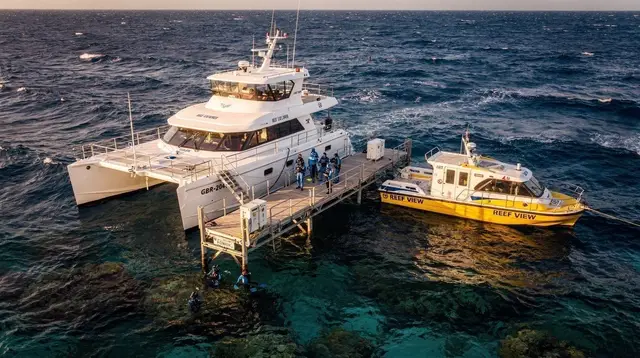
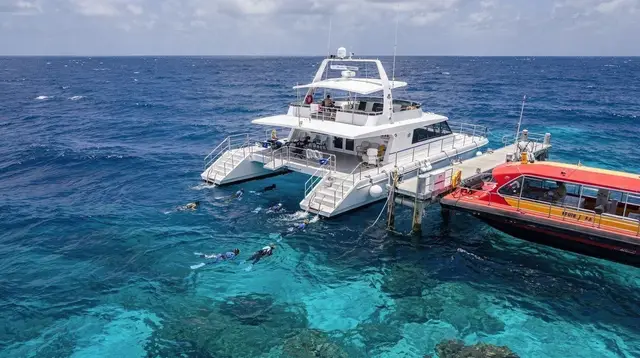
Palm Cove is the best-known of the group, and for good reason. A single beachfront strip, Williams Esplanade, is lined with paperbark trees, resort pools, day spas, and restaurants that spill onto the sand at sunset. It has more infrastructure than the other beaches combined — patrolled swimming during stinger season, a jetty, and easy access to boat departures for the Great Barrier Reef that skip the crowds of the main Cairns marina.
It’s also the most convenient base for a day trip north to Port Douglas or the Daintree. The trade-off is that Palm Cove is the busiest and most built-up of the northern beaches — if you’re after solitude, this isn’t it. Full detail, including where to stay and eat, is in the Palm Cove guide.
One of the more relaxed ways to see the water here is by kayak rather than boat: a guided half-day turtle kayak tour along Palm Cove’s coastline paddles calm, sheltered water where green turtles regularly surface, with a guide pointing out what to look for — a gentler introduction to the coast than a reef boat, and a good option on a day when the wind keeps snorkel boats closer to shore.
Trinity Beach, Clifton Beach and Kewarra Beach: the quiet middle
Between Palm Cove and Yorkeys Knob sit three beaches that see a fraction of the visitor traffic. Trinity Beach is the largest of the three, a long, gently curving stretch with a handful of cafes and apartment-style accommodation rather than big resorts — it’s popular with families who want beach access without Palm Cove’s price tag or bustle.
Clifton Beach is smaller and largely residential, with little in the way of tourist infrastructure, which is exactly its appeal for anyone wanting an empty morning walk. Kewarra Beach is the most secluded of the group, backed directly by rainforest and a lagoon system, with only a couple of resorts breaking up the tree line.
None of these three has the dining or activity options of Palm Cove, and that’s the point — they work best as a base if your plan is to drive to Cairns, Palm Cove, or Kuranda for the day and come back to somewhere quiet at night.
Yorkeys Knob and Holloways Beach: closest to the airport
Yorkeys Knob centres on a working marina — this is where many reef and dive boats based north of the city actually depart from, along with sailing charters. The foreshore park behind the beach has shade, barbecues, and a playground, making it a practical stop for families staying nearby. Consistent onshore wind also makes it one of the better spots in the region for kitesurfing and windsurfing.
Holloways Beach, just south of Yorkeys Knob, is the closest of the northern beaches to Cairns Airport — useful if you have a late flight and want a last swim, or an early one and don’t want to drive far the night before. It’s quiet, mostly residential, and has little in the way of shops, which locals treat as a feature rather than a gap.
For anyone based at either beach who wants to get out on the water rather than just beside it: a 45-minute guided jet ski tour of Cairns Harbour runs from the city end and gives a fast look at the coastline and Trinity Inlet — worth noting that this departs from the Cairns marina, not the northern beaches themselves, so it suits a day you’re already spending in town.
Ellis Beach: the netted beach that stays open
Ellis Beach sits at the far northern end, roughly 30 kilometres from Cairns and close to Hartley’s Crocodile Adventures. It’s smaller than Palm Cove but has one practical advantage: a permanent, patrolled swimming enclosure that operates through more of the year than the seasonal stinger nets elsewhere, alongside a beachfront caravan park and a long-running beach bar and restaurant. It’s a good stop on the drive to or from Port Douglas rather than a full destination in itself, and pairs naturally with the wildlife park next door.
Hartley’s, on the highway between Palm Cove and Port Douglas, is the region’s dedicated crocodile and wildlife park — worth the stop specifically because it’s the safe, controlled way to see a saltwater crocodile up close, given that swimming or wading in any estuary, river mouth, or mangrove along this coast is never safe: the Zootastic 5-entry ticket to Hartley’s Crocodile Adventures covers cruises, feeding shows, and repeat visits over several days, which suits families basing themselves at one of the northern beaches for a week.
The one rule that applies to every beach on this list
Stinger nets go up at patrolled beaches — Palm Cove and Ellis Beach among them — for the stinger season, roughly November to May, to keep out box jellyfish. That’s a genuine safety measure and worth using. What it does not do is guarantee protection from Irukandji, which are small enough to drift through standard net mesh; Irukandji have been recorded well beyond netted areas, including out on the reef itself.
If you’re swimming outside the flagged, netted section of any of these beaches during stinger season, or if you’re someone the resort staff would consider higher-risk, a full-body stinger suit is the sensible choice, not an overreaction. For the full picture on timing and symptoms, see the dedicated stinger season guide.
The same estuary and mangrove caution that applies everywhere in Tropical North Queensland holds here too: the beaches themselves are open ocean sand, but the creek mouths and mangrove-lined inlets that punctuate this coastline — including around Trinity Inlet closer to the city — are saltwater crocodile habitat, and are never swimming spots.
A day plan that strings the beaches together
A reasonable way to see several of these beaches in one day, driving north from Cairns:
- Start at Holloways Beach or Yorkeys Knob for an early, quiet swim.
- Continue to Trinity Beach or Clifton Beach for coffee and a walk.
- Stop at Palm Cove for lunch and, if the timing works, a boat departure or the turtle kayak tour above.
- Finish at Ellis Beach or Hartley’s Crocodile Adventures before continuing on to Port Douglas or turning back to Cairns.
If your schedule allows it, a jet ski run adds a different angle on the same coast: a guided 30 or 60 minute jet ski tour is offered in shorter blocks than the harbour tour above, which makes it easier to slot into a beach-hopping day without committing a full morning.
Getting there and getting around
Public buses run along the Captain Cook Highway connecting Cairns city to Palm Cove, stopping near most of the beaches in between, and many hotels along this stretch run their own shuttles into the city. That said, a hire car makes beach-hopping far more practical, since the beaches themselves are set back from a highway rather than connected by a coastal path.
Most reef and rainforest tours, including day trips to the Daintree and Kuranda, will collect passengers directly from northern beaches hotels, so a car isn’t essential if your main goal is day tours rather than independent beach-hopping. Full detail on car hire trade-offs is in the do you need a car in Cairns guide.
Northern beaches vs. Cairns city vs. Port Douglas
| Sand beach? | Best for | Distance from Cairns | |
|---|---|---|---|
| Cairns city | No — mudflats, use the Lagoon | Nightlife, restaurants, tour departures | — |
| Northern beaches | Yes | Resort stays, quieter pace, real sand | 15–30 km |
| Port Douglas | Yes (Four Mile Beach) | Upscale stays, shorter Daintree access | 68 km |
If sand is the priority and you don’t want to commit to the longer drive to Port Douglas, the northern beaches are the answer — see the Cairns vs. Port Douglas comparison for the fuller trade-off.
Frequently asked questions about the Cairns northern beaches
Do the northern beaches have actual sand, unlike Cairns city?
Yes. Cairns city’s Esplanade is mudflats at low tide, with no swimming beach. The northern beaches, from Yorkeys Knob to Ellis Beach, are genuine stretches of sand facing the Coral Sea.
Are stinger nets enough to make swimming safe from November to May?
No. Stinger nets at Palm Cove and other patrolled beaches keep out box jellyfish, but Irukandji are small enough to pass through the mesh. A full-body stinger suit is still recommended for swimming outside the flags in stinger season.
Which northern beach is best for families?
Palm Cove and Trinity Beach are the most family-friendly, with calm, shallow water, patrolled sections in season, and short walks to cafes and playgrounds. Yorkeys Knob’s foreshore park also suits younger kids.
How far are the northern beaches from Cairns Airport and the city?
They run along roughly 15 to 25 kilometres of coast north of Cairns, about 15 to 30 minutes’ drive from the airport and city centre, with Palm Cove at the far northern end closest to Port Douglas.
Do I need a car to visit the northern beaches?
A car or transfer helps for beach-hopping between Yorkeys Knob and Ellis Beach in one day. Public buses and hotel shuttles connect Cairns city to Palm Cove and the beaches in between, and many tours pick up directly from northern beaches hotels.
Is Hartley’s Crocodile Adventures near the northern beaches?
Yes. Hartley’s sits on the Captain Cook Highway between Palm Cove and Port Douglas, roughly 25 minutes north of Palm Cove, and is commonly combined with a northern beaches day.
Can I swim at Ellis Beach outside stinger season?
Ellis Beach is one of the few northern beaches with a permanently netted swimming enclosure and lifeguard patrols, plus a beachfront caravan park and bar, making it a reliable stop even outside the main stinger months.
Beach and coastal experiences on GetYourGuide
Verified deep-linked GetYourGuide tours. Book through these links and we earn a small commission at no cost to you.
GetYourGuide does not provide a product photo for this activity — the image shows the meeting point, photographed by us.