Cairns’ most polished beach village
If Cairns city is where the boats leave from and the backpacker bars stay open late, Palm Cove is the opposite instinct: a low-rise, palm-lined village built around one long stretch of sand, with the pace set by resort pools and beachfront restaurants rather than nightclubs.
It sits on the same run of coast as Trinity Beach, Clifton Beach, Kewarra Beach, Yorkeys Knob, Holloways Beach and Ellis Beach — collectively Cairns’ northern beaches — but it has grown into the most upscale of the group. The mature paperbark trees along the Esplanade, the boutique hotels tucked behind them, and the absence of any real high-rise give it a village feel that is closer to a small resort town than a suburb.
For a full comparison of how Palm Cove stacks up against its neighbours on price, atmosphere and who each one suits, see the dedicated Cairns northern beaches guide. This page focuses on Palm Cove itself: what the beach actually offers, what it does not, and how to use the village as a base.
Palm Cove works because of where it sits, not because it has more attractions than anywhere else. It is on the Captain Cook Highway, the single coastal road that runs from Cairns north to Port Douglas and on to the Daintree. That puts a genuinely relaxed beach stay and a fast road trip north within the same afternoon, which is not true of every base in the region.
Getting to and from Palm Cove
Palm Cove is roughly 25 km north of central Cairns and about 25 to 30 minutes by car or shuttle, closer to Cairns Airport than to the CBD itself — most transfers from the airport reach Palm Cove faster than they reach the city centre. There is no train or tram; the options are a private transfer, a shared shuttle booked with your accommodation, a rental car, or a local bus service that runs along the highway.
A rental car is genuinely useful here in a way it is not in central Cairns, because Palm Cove’s whole appeal is being a launch point north. The drive from Palm Cove up to Port Douglas takes around 40 minutes on the Captain Cook Highway, one of the more scenic coastal drives in Australia, with a worthwhile stop at the Rex Lookout over Wangetti Beach partway along. Heading the other way, Kuranda and the Skyrail base station at Smithfield are also closer to Palm Cove than to the Cairns CBD.
That said, a car is not required to enjoy Palm Cove itself. Almost every reef boat, dive operator and day tour that runs out of Cairns includes hotel pickup from Palm Cove as standard, which is worth knowing before you assume you need to hire a vehicle just to get to the marina.
The beach, the paperbarks, and what the water actually asks of you
Palm Cove’s beach is a real, swimmable stretch of sand — a genuine point of difference from central Cairns, where the Esplanade waterfront is mudflat at low tide, not a swimming beach (see does Cairns have a beach for the full picture on that). Palm Cove’s sand runs for a couple of kilometres, shaded along its length by the old paperbark trees that give the village its character, with a gentle slope into calm, usually flat water protected by the headlands either side.
During the warmer months, from roughly November to May, a stinger net enclosure is installed at the beach to give swimmers a protected area from box jellyfish. This matters, but it is not a blanket guarantee of safety, and it is the single most misunderstood fact about swimming on this coast: the smaller, near-invisible Irukandji jellyfish can pass through the mesh of a stinger net, and swimmers inside a netted enclosure are not automatically clear of risk during stinger season.
Local advice during those months is still to consider wearing a stinger suit, to get in and out promptly rather than lingering at dusk or dawn, and to follow any lifeguard flags or closures without arguing the point. None of this is unique to Palm Cove — it is true of every beach along this coast — and it is covered in full, including what a sting looks like and what to do about it, in the stinger season guide. The short version for this page: a net reduces risk, it does not remove it, and the safest months to swim freely are the dry season, from May to October, when jellyfish are not present on this coast at all.
Outside of that seasonal caveat, Palm Cove’s beach is genuinely one of the more pleasant places to swim in the Cairns region, and it is the main reason people choose to stay here rather than in the city.
What a stay in Palm Cove is actually good for
Palm Cove is not the place to base yourself if a busy bar strip or backpacker energy is what you are after — that is squarely a central Cairns experience. What Palm Cove does well is a slower kind of holiday: waking up to the beach, a walk under the paperbarks, breakfast at a beachfront café, then a pool or spa afternoon, followed by dinner at one of the seafood or Australian restaurants clustered along Williams Esplanade.
The accommodation mix leans toward resorts and boutique hotels rather than hostels or budget motels, and prices generally sit a notch above equivalent options in central Cairns — one reason a rental car pays for itself if you also want to explore beyond the village. Spa treatments, day-use resort pools and beachfront dining are a bigger part of the Palm Cove experience than sightseeing on foot; there is very little to walk to beyond the beach itself and a small strip of shops and galleries.
Families do well here for the same reason couples do: a calm, shallow, netted-in-season beach right outside the hotel removes the daily logistics of getting children to and from an attraction. It suits a slower multi-day stay better than a one-night stopover.
On the water from Palm Cove
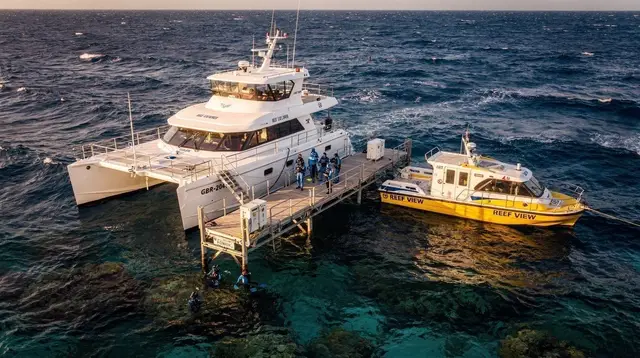
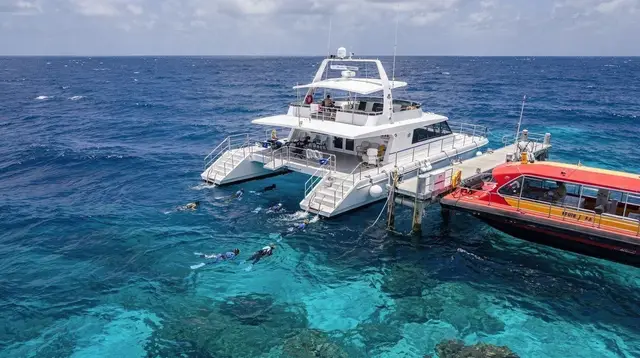
Palm Cove sits close enough to the marina precincts that most Great Barrier Reef boats collect guests directly from local hotels, so a reef day trip does not mean an early taxi into the city first. A Quicksilver cruise out to the outer reef is one of the more established options with pickup available from Palm Cove resorts, running a full day out at a pontoon or reef site with snorkelling, and for a smaller-group, higher-service alternative there is also a premium Great Barrier Reef cruise departing Cairns with hotel transfers included.
Closer to the village itself, a guided half-day kayak tour paddles the calm inshore waters around Palm Cove in search of turtles, which is a gentle way to spend a morning without a long transfer to a marina — worth booking if a slow paddle appeals more than a full reef day, though for the fuller picture on kayaking options up and down this coast, including which stretches suit beginners, see the dedicated sea kayaking guide rather than treating this as the definitive comparison.
Whichever boat you choose, remember that the reef itself sits inside the same jellyfish-risk waters as the coast, and operators supply or rent stinger suits for exactly that reason during the warmer months — wearing one on a reef trip in season is standard practice, not overcaution.
Side trips north: Hartley’s and Port Douglas
Being on the Captain Cook Highway means Palm Cove is a natural stopping point on the way north, not just a destination in itself. About twenty minutes further up the highway is Hartley’s Crocodile Adventures, a wildlife park built around lagoon cruises to see saltwater crocodiles in a controlled setting — a good way to see the animal that this whole coastline warns you never to look for in the wild. A Hartley’s Crocodile Adventures entry ticket covers the cruise and wildlife shows and slots easily into a half-day on the drive to or from Port Douglas.
Port Douglas itself, roughly 40 minutes further on, is worth a full day if not an overnight: Four Mile Beach, Macrossan Street’s boutiques and restaurants, and its own departure point for outer reef trips toward Agincourt Reef. Travellers basing themselves in Palm Cove often treat Port Douglas as a day trip rather than backtracking to swap hotels, which keeps the beach-resort base while still reaching the Daintree turn-off further north.
A rainforest day without leaving the coast behind
Palm Cove’s position also makes it a workable base for a rainforest day that does not require a hotel change. Kuranda and the Skyrail Rainforest Cableway are reachable directly, and a combined Kuranda rail, Rainforestation and Army Duck tour with Palm Cove pickup bundles the scenic railway, the amphibious Army Duck ride through the rainforest, and the Pamagirri cultural experience into one day, collecting guests directly from Palm Cove hotels rather than requiring a trip into Cairns first.
This is a genuinely useful option on a day when the beach is not the plan — either because the weather has turned, or simply because a rainforest day breaks up a beach-heavy itinerary well. It is a good pairing with a wet-season stay in particular, when Barron Falls and the surrounding rainforest are at their most dramatic even if the beach itself is less inviting.
How many days, and when to come
Two nights is enough to get a feel for Palm Cove and fit in one day trip, whether that is a reef cruise, Kuranda, or the drive to Port Douglas. Three to four nights allows a proper mix: a slow beach day, a reef day, and a day trip north or inland, without every day being a transfer.
The dry season, from May to October, is the clear recommendation for a stay built around the beach itself, since it removes the jellyfish question entirely and brings calmer seas and lower humidity. A wet-season stay, from November to April, is not without merit — rates drop, the surrounding rainforest is lush, and Palm Cove’s resort pools and spas are exactly the kind of amenity that make a rainy afternoon easy to absorb — but it does mean planning around the stinger net and treating the beach with the seasonal caution outlined above rather than assuming it behaves the same way it does in July.
| Dry season (May–Oct) | Wet season (Nov–Apr) | |
|---|---|---|
| Swimming at the beach | Unrestricted, no jellyfish | Netted enclosure only, Irukandji risk remains |
| Typical conditions | 17–26°C, low humidity, calm seas | 24–31°C, high humidity, heavy rain possible |
| Reef visibility | Best of the year | Reduced after heavy rain |
| Rates and crowds | Peak season, higher rates | Lower rates, quieter resorts |
Frequently asked: Palm Cove beach safety, distance and day trips
Is it safe to swim at Palm Cove?
Palm Cove’s beach is swimmable and calm year-round, and outside stinger season (roughly November to May) there is nothing unusual to plan around. During stinger season, a net enclosure protects against box jellyfish, but the smaller Irukandji jellyfish can pass through stinger nets, so swimming inside the enclosure in those months is lower-risk, not risk-free.
How far is Palm Cove from Cairns city?
Palm Cove is about 25 km north of central Cairns, a drive of roughly 25 to 30 minutes on the Captain Cook Highway, and it is generally a faster transfer from Cairns Airport than the city centre is.
How far is Palm Cove from Port Douglas?
Port Douglas is about 40 minutes further north of Palm Cove along the same highway, making Palm Cove a workable base for a Port Douglas day trip without changing hotels.
Does Palm Cove have a real beach, unlike Cairns city?
Yes. Unlike the Cairns Esplanade, which is mudflat at low tide, Palm Cove has a genuine sand beach suitable for swimming, subject to the same seasonal jellyfish precautions as the rest of this coast.
Is Palm Cove better than staying in central Cairns?
It depends on what you want. Palm Cove suits a resort-style, beach-first stay with easy road access north; central Cairns suits travellers who want nightlife, a wider choice of budget accommodation, and to be walking distance from the marina for reef trips. Many itineraries do a few nights in each.
Can you book Great Barrier Reef trips directly from Palm Cove?
Yes. Most reef cruise operators, including outer reef boats, offer hotel pickup from Palm Cove resorts, so a reef day trip does not require getting yourself into central Cairns first.
Is Palm Cove good for a family holiday?
Yes, particularly for families who want a calm, netted-in-season beach right outside the accommodation rather than a city base. The resort pool culture here also suits younger children on days when the beach or a boat trip is not the plan.
What is the best time of year to stay in Palm Cove?
May to October, the dry season, is the clear recommendation for a beach-focused stay, since it removes jellyfish risk from the water entirely and brings the calmest seas and best visibility for reef trips.