Paronella Park: A Spanish Castle Built From a Catalan Immigrant's Dream
What is Paronella Park and is it worth visiting?
Paronella Park is a Spanish-style castle, staircase and gardens built from 1929 by Catalan immigrant Jose Paronella beside a waterfall near Mena Creek, south of Cairns. It is not an ancient ruin but a one-man dream realised in the 20th century, and most visitors rate it among the most memorable stops in the Atherton Tablelands, especially on a lit night tour.
A Castle That One Man Built From Nothing
Most of the ruins tourists visit anywhere in the world were left behind by empires, wars or centuries of slow abandonment. Paronella Park was left behind by one immigrant’s stubborn, singular dream, and it is barely a century old. That distinction matters, because it is easy to glance at the crumbling towers, the moss-covered stonework and the tangled banyan roots at Paronella Park and assume you are looking at some remnant of Spanish colonial Queensland. You are not. Every stone was placed there on purpose, in the twentieth century, by a man who had never trained as a builder and who wanted to give his family — and eventually, thousands of strangers — a piece of the Spain he had left behind.
The man was Jose Paronella, born in Catalonia in 1887. He arrived in Australia in 1913 with almost nothing, worked the cane fields of the Innisfail district, bought and sold several sugar cane farms over more than a decade, and by the mid-1920s had saved enough to return briefly to Spain. There he married Matilda, and the two came back to Far North Queensland together. It was on a trip along Mena Creek, a tributary that plunges over a set of waterfalls south of Innisfail, that Paronella found the piece of land he had apparently been imagining his whole working life: a fall of water surrounded by rainforest, close enough to the coastal towns to matter, remote enough to feel like a private world.
From Cane Farmer’s Savings to a Spanish Castle
Paronella bought roughly 5.6 hectares of land beside the falls in 1929 and began building almost immediately, doing much of the early construction himself by hand, with local labour helping as funds allowed. He had no formal training as an architect or engineer. What he had was a memory of the castles of his native Catalonia and a clear picture of what he wanted his own castle, staircase and pleasure gardens to look like reproduced beside a Queensland waterfall.
Work progressed for years rather than months. He built a grand stone staircase down to the water, a castle structure with turrets and archways that functioned partly as his family home and partly as a venue, a bridge, tennis courts, and — this is often the detail visitors remember best — a purpose-built picture theatre where he screened films for locals and became, for a time, the only cinema for miles in either direction.
He planted more than 7,000 trees and plants across the grounds, many of which have since grown into the towering rainforest canopy that now shades the ruins. Paronella Park formally opened to the public in 1935, six years after he started, and by then it had become something close to a regional attraction in its own right, drawing visitors from Cairns and Innisfail for dances, film nights and picnics beside the falls.
Queensland’s First Hydroelectric Power Station
The detail that separates Paronella Park from a merely pretty folly is what Paronella built to power it. He engineered a small hydroelectric plant fed by the waterfall on his own property, and it went into operation in 1933 — the first hydroelectric power station in North Queensland, supplying electricity to his castle, his cinema and his gardens years before many towns in the region were fully connected to mains power. It is a genuinely striking piece of self-taught engineering: a cane farmer with no formal qualifications built a working power station from a rainforest creek to light a castle he had designed from memory.
That same hydro system, in modified and restored form, still generates a portion of the power used on site today, which is a rare thing to be able to say about any tourist attraction of this age. It is worth pausing at the falls themselves for exactly this reason — not only for the photograph, but for the fact that the water dropping past you has been doing productive work on this one plot of land for close to a century.
Ruin, Not Relic: Why Paronella Park Looks the Way It Does
The romantic, half-swallowed-by-jungle look of Paronella Park today is not the patina of centuries. It is the accumulated damage of cyclones, floods and one serious fire, layered onto a structure that was never built to museum-preservation standards in the first place. Cyclones have repeatedly torn through the site — most damagingly in 1946, and again in later decades — and Mena Creek has flooded the lower gardens more than once.
A fire gutted part of the original castle building in the 1970s. Jose Paronella himself died in 1948, only thirteen years after opening the park, and while his family kept it running for years afterward, the site passed through a period of decline before new owners took it on in 1993 and began a long programme of stabilisation and restoration that continues today.
Understanding that history changes how the ruins read. The cracked archways and root-bound walls are not neglect for its own sake, and they are not colonial-era stonework either — they are the visible result of a hostile, wet, cyclone-prone climate working on a structure for ninety-plus years, managed by owners who have deliberately chosen to stabilise and interpret the ruins rather than rebuild them to look new. That is also why the site pairs so naturally with a night visit: after dark, coloured lighting picks out the staircase, the arches and the falls in a way that leans into the gothic, faintly melancholic atmosphere Paronella seems to have wanted even in the 1930s.
Visiting by Day or by Night
Daylight is the better time to actually see what you are looking at. The plant life Paronella planted — now mature rainforest rather than young garden — the layout of the staircase down to the water, the shape of the castle ruins and the working turbine are all easiest to take in with natural light, and a guided walk included with entry explains the history in more depth than any signage can. Most day visits run to around two hours, longer if you linger over the gardens or the small museum and café on site.
After dark is a different experience entirely. The ruins, the bridge and the falls are lit for evening visitors, and the atmosphere shifts from historical curiosity to something closer to a film set — which, fittingly, is close to what Paronella originally built with his own cinema on the grounds. Many visitors treat the two as complementary rather than a choice: arrive in the afternoon, walk the gardens and staircase in daylight, stay for dinner or a break, then see the same site reappear under lights once the sun goes down. Several tour itineraries from Cairns are timed deliberately to make this combination possible in a single day trip.
| Visit type | Best for | Typical duration |
|---|---|---|
| Daytime self-guided walk | First-time visitors, photography, understanding the layout | 1.5–2 hours |
| Guided historical walk (included) | Understanding Paronella’s story in detail | 45–60 minutes |
| Night lighting | Atmosphere, photography of the falls and ruins after dark | 45–60 minutes |
| Combined day-into-night visit | Seeing both sides of the site in one trip | Half day to full day |
Getting There From Cairns
Paronella Park sits inland from Innisfail, close enough to the southern Atherton Tablelands loop that most visitors reach it as part of a longer day out rather than a single-purpose trip. By road it is roughly a two-hour drive south of Cairns, and self-drivers commonly build a route that also takes in Josephine Falls or the Wooroonooran National Park on the way down, since both sit along the same southern corridor.
For visitors without a rental car, the practical option is a guided day tour, and this is one part of the Tablelands where a tour genuinely simplifies logistics rather than just adding convenience: Paronella Park is far enough from Cairns, and awkward enough to combine with public transport, that most independent travellers end up booking a seat rather than driving themselves.
A small-group day tour to Paronella Park from Cairns covers the return drive and the guided walk in one booking, while a longer day tour pairing Paronella Park with Lake Barrine and the Millaa Millaa waterfalls is the better pick if you want the wider Tablelands loop in the same trip rather than a single stop.
If Innisfail is on your route either way, it deserves its own stop rather than a drive-through: the town’s Art Deco streetscape and Italian-Australian heritage are worth the short detour, and are covered in full on the Innisfail destination page rather than here.
Combining Paronella Park With the Rest of the Tablelands
Because Paronella Park sits toward the southern end of the Atherton Tablelands loop, it combines naturally with several other Tablelands highlights in a single day, and most operators build their itineraries this way rather than running Paronella as a standalone product.
The waterfall circuit near Millaa Millaa, including Millaa Millaa Falls itself, sits within a manageable detour, as do the volcanic crater lakes at Lake Barrine and Lake Eacham. A day tour linking Paronella Park with Lake Barrine and the Millaa Millaa Falls is built around exactly this loop.
For a slower, more immersive version of the same idea, a two-day tour combining Paronella Park with the wider Atherton Tablelands and a stretch north to Cape Tribulation turns what would otherwise be a single rushed day into an overnight loop through two very different sides of Tropical North Queensland — volcanic plateau gardens in the south, ancient lowland rainforest in the north.
If you would rather build your own combination from scratch, the Atherton Tablelands day trip guide lays out how Paronella Park, the crater lakes and the waterfall circuit fit together on one loop, and the waterfall circuit guide and the crater lakes guide go deeper on those two stops individually.
Travellers staying longer in the region sometimes prefer to slow the whole Tablelands section of their trip down rather than compress it into one day; the two-day Atherton Tablelands itinerary is built for exactly that pace, with Paronella Park as one anchor among several. And if you are still deciding how the Tablelands fit into a broader Cairns trip at all, the best day trips from Cairns guide and the general how many days in Cairns guide are the right starting points before you commit a full day to the southern loop.
What to Know Before You Go
A few practical notes make the visit smoother. Paths through the gardens involve stairs and uneven, sometimes damp stone surfaces, particularly on the staircase down to Mena Creek itself, so closed shoes are worth the small inconvenience over sandals. Tropical rain can arrive without much warning even outside the wet season proper, and a light rain jacket earns its space in a day bag here more than almost anywhere else on the Tablelands loop, given how much of the visit happens outdoors under rainforest canopy.
There is a café and a small museum on site, along with restrooms, so it is not necessary to plan the visit around bringing your own food, though a full day tour that also stops at the Millaa Millaa waterfall circuit or the Mareeba coffee district will usually have its own meal stops built in.
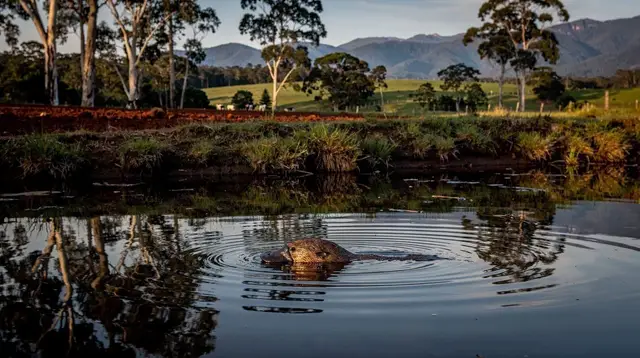
Because Paronella Park operates as a private, family-run attraction rather than a national park, opening hours and night-tour timings can shift seasonally, and checking current hours before setting out — particularly if a night visit is the plan — avoids a wasted drive. If wildlife-watching is part of your wider Tablelands agenda, note that the platypus-watching spot at Yungaburra and the Curtain Fig Tree sit further north on the plateau rather than near Paronella itself, and are better paired with a separate loop through the central Tablelands — the platypus-spotting guide covers that stop in detail.
The Story Worth Remembering
It is tempting, faced with a set of atmospheric ruins in the rainforest, to reach for the easiest available comparison and call Paronella Park a “lost Spanish castle.” Resist it. What makes the site worth the drive is not that it resembles somewhere else, but that it does not: a Catalan cane farmer with no formal training built a castle, a staircase, tiered gardens and North Queensland’s first hydroelectric power station beside a waterfall he found on a day trip, and he did it inside two decades, entirely from his own savings and his own hands.
The cyclones and the fire that later damaged it are as much a part of the true story as the building itself. Seeing Paronella Park for what it actually is — a hundred-year-old monument to one immigrant’s persistence, not a colonial relic — is what turns a pretty stop on the Tablelands loop into one of the more genuinely memorable places in Tropical North Queensland.
Atherton Tablelands waterfalls, lakes and villages on GetYourGuide
Verified deep-linked GetYourGuide tours. Book through these links and we earn a small commission at no cost to you.
GetYourGuide does not provide a product photo for this activity — the image shows the meeting point, photographed by us.