Port Douglas: The Complete Guide
What is Port Douglas, and is it just a beach town near Cairns?
Port Douglas is a village 68 km north of Cairns by the Captain Cook Highway, about an hour's coastal drive. It doubles as a self-contained base: an alternative departure point for the outer Great Barrier Reef at Agincourt Reef, and a shorter run into Mossman Gorge and the Daintree than Cairns offers.
A village that works harder than it looks
Most visitors hear “Port Douglas” and picture a pretty beach town to pass through on the way somewhere else. That undersells it. Port Douglas is a genuine second base for the Tropical North — the place travellers choose over Cairns specifically because it sits closer to the outer reef ribbon and closer to the Daintree, not because the sand is nicer. If you’re weighing where to actually stay, Port Douglas vs Cairns is worth reading before you book anything, because the two towns solve different problems rather than competing on the same one.
Getting there: the coastal drive from Cairns
Port Douglas sits 68 km north of Cairns, reached by the Captain Cook Highway, a coastal road that runs between the Coral Sea and the forested slopes of the Great Dividing Range for almost the entire way. Allow about an hour of driving time, though most people build in longer. Rex Lookout, roughly midway, is the obvious reason to stop: a roadside pull-off above the water with sweeping views back down the coast, and a well-known spot for watching hang gliders launch on the right wind.
The route counts among the more scenic coastal drives in Australia, and it’s reason enough on its own to build a Port Douglas visit around a car rather than a straight transfer. For the mechanics of getting between the two towns — shuttle options, timing, and whether you need to drive at all — see Cairns to Port Douglas transport.
Macrossan Street and the village
The heart of Port Douglas is Macrossan Street, a low-rise, palm-lined strip of galleries, boutiques, seafood restaurants and open-air bars running from the highway down toward the marina. It has none of the high-rise feel of the Cairns Esplanade; the whole village is built at a walkable, low scale, and evenings here run at a noticeably slower pace than in Cairns. The Port Douglas Markets, held on weekends near the waterfront, are a good stop for tropical fruit, local crafts and a feel for the town outside its restaurant strip.
One way to see the village itself, rather than just walk through it, is a guided eco-segway route that threads the foreshore path along a guided eco-segway tour along Four Mile Beach, covering more ground than a walk without needing a car.
Four Mile Beach and Flagstaff Hill
Port Douglas’s beach, Four Mile Beach, runs along the ocean side of the village and gets a stinger net during jellyfish season like the northern beaches around Cairns do. It deserves its own visit and its own detail on safety, sand, and access points — covered fully in the Four Mile Beach guide rather than repeated here.
At the northern end of the beach, a short walk or drive climbs to Flagstaff Hill, a headland lookout above the town with views back over the curve of Four Mile Beach on one side and the marina and inlet on the other. It’s the standard sunset spot in Port Douglas, quieter than the beach itself and worth timing for late afternoon.
Port Douglas as a reef gateway
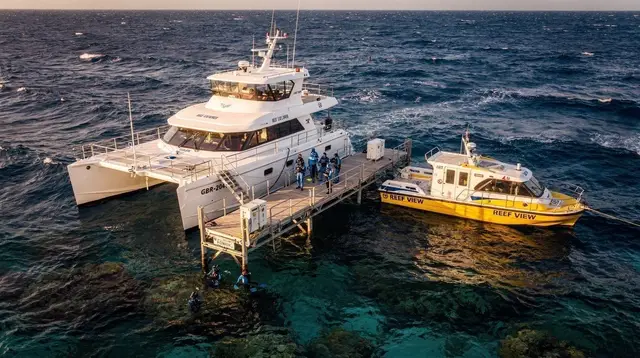
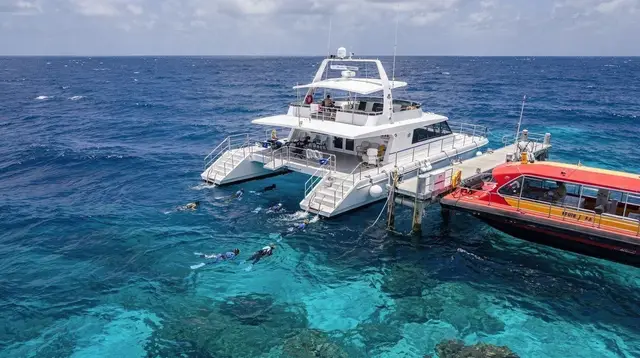
This is the part of Port Douglas that a beach-town description misses entirely: it is also a departure point for the Great Barrier Reef in its own right, and for a different stretch of it than most Cairns boats reach. Cairns boats typically run to reefs like Hastings, Norman, Saxon, Flynn and Moore, in the inshore-to-mid-shelf band. Port Douglas boats run further out, to Agincourt Reef, a ribbon reef sitting right on the edge of the continental shelf — generally clearer water, and a genuinely different reef experience from an inner-shelf site. For the broader distinction between the two bands of reef and which suits which traveller, see outer reef vs inner reef.
Port Douglas is also the departure point for Low Isles, a small coral cay about 15 km offshore with a 19th-century lighthouse and calm, shallow water — a gentler alternative to the outer reef, and a strong choice for a first snorkel or for families travelling with young children. The Low Isles from Port Douglas guide covers what the day looks like.
Whichever reef site you choose, remember that the daily price quoted by an operator almost never includes the Environmental Management Charge, the reef tax levied per person per day for any trip into the marine park — read reef tax and hidden costs before comparing prices between boats.
For travellers who want a small-group boat rather than a large day-trip vessel, a limited-capacity option worth knowing about is a small-group reef cruise capped at just 12 passengers, which trades the scale of the big Cairns operators for a quieter, more personal day on the water.
The reef here isn’t immune to what’s happened to the wider system — Port Douglas’s outer reefs have felt the same bleaching events that affected the Great Barrier Reef in 2016, 2017, 2020, 2022 and 2024. Condition varies enormously site to site, and operators generally know which patches are healthiest that season; ask before you book rather than assuming either the best or the worst. Travellers curious about ongoing reef restoration work, rather than just a snorkel, can join a guided tour of the Forever Reef Project’s coral biobank, which explains the science behind coral resilience work happening offshore from the town.
The shorter road to Mossman Gorge and the Daintree
The other reason serious travellers base themselves in Port Douglas rather than Cairns is what lies immediately north. Mossman Gorge, in Kuku Yalanji country, is only about 20 km away — noticeably closer than the roughly 90-minute drive from Cairns. Access into the gorge itself works the same regardless of where you start: cars are left at the Mossman Gorge Centre and a shuttle carries visitors in, with the guided Dreamtime Walk as the standout way to experience it. The full picture is in the Mossman Gorge guide; for Kuku Yalanji cultural experiences more broadly, see Kuku Yalanji Dreamtime Walk.
Beyond Mossman, Port Douglas is also the shorter starting point for a full day into the Daintree Rainforest and on to Cape Tribulation, crossing the Daintree River by cable ferry. A guided full-day option that covers Kuku Yalanji country in depth runs as a full-day cultural tour through Kuku Yalanji country, pairing the gorge with rainforest walking and cultural interpretation from local guides rather than a self-drive itinerary.
If waterfalls and the Atherton side of the region interest you more than the coast, a tour departing directly from the village covers that ground too, as a waterfall tour with lunch departing from Port Douglas — useful for travellers based here who don’t want to backtrack through Cairns to reach the Tablelands.
For a structured multi-day plan built around exactly this geography, see Port Douglas and Daintree in 4 days.
Wildlife, crocodiles and the river
Port Douglas is also a good place to meet the region’s animals on your own terms. The Wildlife Habitat is the village’s own wildlife park, a sensible first stop for travellers who want to see tropical birds and Australian animals up close before heading into the rainforest. Further north, the Daintree River is home to saltwater crocodiles, and the Daintree River cruises guide explains how boat-based sightings work. Crocodiles live along this whole coast, so read seeing crocodiles safely before you swim in any creek, river mouth or unnetted water, and keep to signed swimming areas.
When to go
Port Douglas shares the climate of the rest of the region: a dry season from May to October, with 17-26 °C days, and a humid wet season from November to April, when temperatures run 24-31 °C and cyclones are possible. The dry months are the best time for reef days and rainforest walking, and best time to visit Cairns breaks the year down in detail. If you’re travelling in the hotter months, stinger season explained covers why the netted section of Four Mile Beach matters, and cyclone season: what to know is worth a read before you lock in dates. A trip in the wet has its own appeal, as Cairns in the wet season argues, with fewer crowds and full waterfalls.
Choosing a reef boat from the village
The choice that shapes a Port Douglas stay is usually the reef boat. A larger vessel with a platform suits travellers who want a stable base and plenty of facilities, while a small boat offers a more intimate day; reef pontoon vs small boat lays out the trade-offs. If you’ve never snorkelled before, snorkelling the Great Barrier Reef covers what to expect in the water, and anyone who tends to feel queasy should read seasickness on reef trips before booking. For a first-hand opinion, the blog post on how to choose a reef boat is a useful companion.
Beyond the village: Mossman and the coast
Just past the turn-off to the gorge, the small town of Mossman is a working sugar-cane town and a quieter contrast to Port Douglas’s resort polish. Further along the coast, Wonga Beach offers a long, empty stretch of sand for a slower afternoon. If you plan to continue north, driving to Cape Tribulation and the Cape Tribulation day trip guides cover the road and the ferry, while the Daintree is not a day trip makes the case for staying longer, and staying overnight in the Daintree shows how.
Comparing the two bases at a glance
| Port Douglas | Cairns | |
|---|---|---|
| Distance from Cairns Airport | ~68 km, ~1 hour | at the airport |
| Reef access | Outer ribbon reefs (Agincourt), Low Isles | Wider choice, inshore to mid-shelf reefs |
| Distance to Mossman Gorge | ~20 km | ~90 minutes |
| Distance to Cape Tribulation | Shorter, via the Daintree ferry | Longer, same ferry crossing |
| Town character | Small, low-rise, resort-village pace | Larger, more nightlife and operator choice |
| Best for | Reef-focused and Daintree-focused stays | Broader day-trip choice, budget range, transport hub |
Where the two towns actually differ
None of this makes Port Douglas the “better” base outright — it makes it a different one. Cairns has more reef operators, more price points, a wider range of day trips leaving from one hub, and better onward transport if the rest of your trip runs south. Port Douglas trades that breadth for proximity: a shorter run to the outer reef, a shorter run into the rainforest, and a village built at a scale that suits a slower few days rather than a base to launch day trips from every direction. Read Port Douglas vs Cairns for the fuller comparison, and how many days in Cairns style itinerary thinking if you’re trying to work out how to split time between the two.
A short list of what Port Douglas is not
It’s not a substitute for a Cairns stay if your priority is nightlife, the broadest possible reef operator choice, or easy onward travel south. It’s not primarily a beach destination either — Four Mile Beach is pleasant but unremarkable by Queensland standards, and the town’s real advantages sit offshore at Agincourt Reef and inland at Mossman Gorge and the Daintree. And it’s not a place to see in a rushed half-day squeezed between a reef trip and a flight; the village, the reef access and the road north each want at least a full day of their own.
Planning your stay
Most travellers who base themselves here still fly into Cairns, so Cairns Airport is the practical start of the trip, and do you need a car in Cairns helps decide whether to hire one for the run north. The blog post the drive from Cairns to Port Douglas gives a first-hand account of the road, and Cairns or Port Douglas: where I would stay is a candid take on the base question. For other things to fill spare days, day trips from Port Douglas lists what runs from the village, and Palm Cove makes a pleasant stop on the way back south. For a wider view of the coast between the two towns, see the Cairns northern beaches guide.
Whatever you choose, give the village at least a couple of nights. The reef, the rainforest and Macrossan Street each reward a slower pace, and the extra time means one wet or windy day doesn’t wreck the plan.
Frequently asked questions about visiting Port Douglas
Is Port Douglas better than Cairns for a Great Barrier Reef trip?
Neither is simply better. Port Douglas puts you closer to Agincourt Reef, a ribbon reef on the outer edge of the continental shelf, while Cairns has more boat operators and a wider range of reef sites and price points. It’s a trade-off worth weighing directly.
How far is Port Douglas from Cairns?
About 68 km, roughly an hour along the Captain Cook Highway, one of the more scenic coastal drives in Australia, with a lookout stop possible at Rex Lookout.
Can you visit the Great Barrier Reef from Port Douglas?
Yes. Port Douglas is the usual departure point for Agincourt Reef and other outer ribbon reefs, and also for Low Isles, a calmer inner reef site closer to shore.
Is Four Mile Beach safe to swim at Port Douglas?
There’s a stinger net in place during jellyfish season, but the beach deserves its own detailed look rather than a quick answer here.
How far is Port Douglas from Mossman Gorge and the Daintree?
Mossman Gorge is about 20 km north of Port Douglas, and the Daintree River crossing is closer still than it is from Cairns, which is one of the practical reasons travellers base themselves here instead.
What is there to do in Port Douglas besides the beach?
Macrossan Street’s galleries, markets and restaurants, the Flagstaff Hill lookout, reef and Low Isles boat trips, and day tours into Mossman Gorge and the Daintree all run from the village.
Do you need a car to visit Port Douglas from Cairns?
Not necessarily. Shuttle transfers and organised day tours run between the two regularly, though a car gives more freedom to stop at Rex Lookout and explore beyond the village at your own pace.
Is Port Douglas worth an overnight stay or just a day trip?
It works either way, but an overnight stay makes far more sense of the reef and Daintree logistics than a rushed day trip squeezed in from Cairns.
Beach and coastal experiences on GetYourGuide
Verified deep-linked GetYourGuide tours. Book through these links and we earn a small commission at no cost to you.
GetYourGuide does not provide a product photo for this activity — the image shows the meeting point, photographed by us.