Michaelmas Cay and the Sand Cays
What is Michaelmas Cay and can you walk on it?
Michaelmas Cay is a small coral sand cay about 40 km from Cairns and a major seabird nesting site. Access to land is restricted to a roped-off strip of beach at one end; the rest of the cay is fenced off to protect nesting colonies, so this is a snorkelling and birdwatching stop, not an island to explore on foot.
A Sand Cay, Not an Island
Most people who book a “reef island” trip out of Cairns picture a patch of land they can walk around, lie on, and photograph from a lookout. Michaelmas Cay is not that place, and it is worth knowing this before you book rather than after you arrive. It is a low, unvegetated bank of coral sand about 40 km northeast of Cairns, sitting on the edge of the outer Great Barrier Reef, and it exists first as a wildlife sanctuary and second as a snorkelling stop. The distinction matters because the access rules that follow from it are strict, and a guide that skips them sets visitors up for a small but avoidable disappointment on the sand.
Michaelmas Cay is one of a handful of true sand cays scattered along this stretch of the Great Barrier Reef, alongside places like Upolu Cay closer to Cairns and the reef flats around Moore Reef. What sets it apart from the others is scale: it hosts one of the largest seabird breeding colonies on the entire reef, and that single fact shapes everything about how a visit works.
Why Access Is Restricted
Michaelmas Cay is gazetted as a National Park and sits within a designated seabird sanctuary. Tens of thousands of birds use the cay to breed and roost across the year, most conspicuously sooty terns and common noddies, with crested terns, bridled terns, and occasional visiting waders adding to the mix. The colony is dense, ground-nesting, and easily disturbed — chicks and eggs sit in shallow scrapes directly on the open sand, with no cover and no way to move if people walk through.
To protect the colony, only a narrow strip of beach at one end of the cay is open to visitors, marked off by a rope-and-post fence. Everything beyond that line is off-limits, year-round, not just during the busiest nesting months. Rangers or boat crew are typically present to point out the boundary and explain why it exists, and on most days the reason is visible without much explanation: turn toward the fenced section and the sand is genuinely covered in birds.
This is the single most important thing to set expectations for before a trip. Michaelmas Cay is not somewhere to stretch out on a towel or wander a loop track. It is a short stop for snorkelling in the surrounding shallows and a close look at a functioning seabird colony from a respectful distance — closer to a nature reserve with a beach attached than a beach with some birds nearby.
Snorkelling Around the Cay
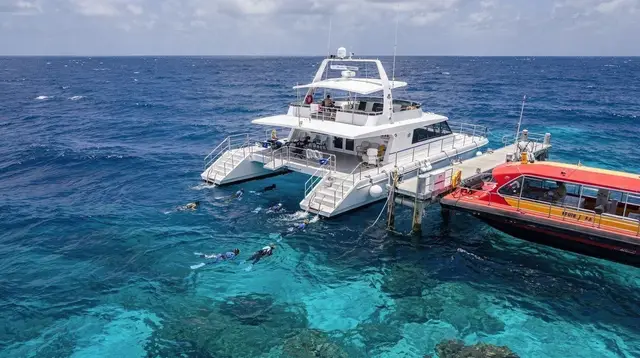
The water around Michaelmas Cay is shallow, clear, and sheltered by the surrounding reef flat, which makes it a comfortable spot for snorkellers who are not confident swimmers. Coral bommies sit close to the boat mooring, and the usual reef fish life — parrotfish, damselfish, wrasse, the occasional reef shark cruising the sand channels — is easy to find without swimming far.
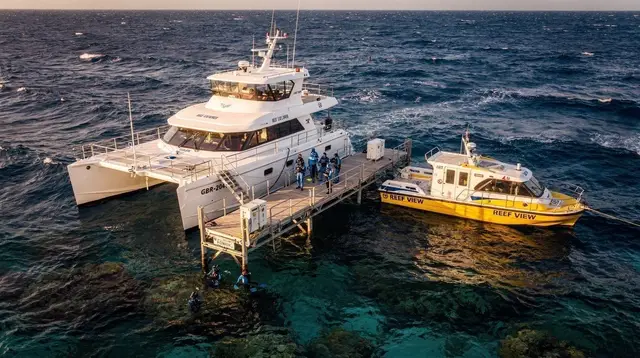
Operators visiting the cay typically anchor a pontoon or use the vessel itself as a base, with guided snorkel tours, flotation noodles, and vests available for anyone who wants extra support in the water. Because the cay itself offers so little to do on land, most of a visit here is spent in or near the water rather than on the sand, which suits people who came primarily to snorkel rather than to sightsee on foot.
This guide sticks to what a day-trip snorkeller needs to know. If diving is the priority, the site selection, depth, and visibility notes belong in Best Dive Sites Near Cairns rather than here — Michaelmas Cay trips are built around snorkelling, and the boats that also offer certified diving nearby are covered in more depth there.
Michaelmas Cay, Green Island, and Low Isles: Not the Same Trip
It is easy to lump every offshore sand patch near Cairns into one mental category of “reef island,” but the three most commonly booked options are genuinely different products, and choosing the wrong one is a common source of letdown.
| Cay | Departure point | Distance | Can you walk around it? | Defining feature |
|---|---|---|---|---|
| Michaelmas Cay | Cairns | ~40 km | No — fenced beach strip only | Seabird breeding colony |
| Green Island | Cairns | ~27 km | Yes — has rainforest and a walking track | Vegetated coral cay with resort facilities |
| Low Isles | Port Douglas | ~15 km | Limited, but calm and easy | 1878 lighthouse, gentle first-timer snorkel |
Green Island is the cay most people picture when they imagine a tropical island day trip: it actually carries a rainforest, a walking track around its perimeter, a jetty, and facilities on land. It is the right choice for anyone who wants to combine snorkelling with time spent walking on an island. The differences between it and its usual comparison point are laid out fully in Green Island vs Fitzroy Island, and a full day-trip breakdown sits in Green Island Day Trip.
Low Isles, reached from Port Douglas rather than Cairns, is a different kind of cay again — small, calm, with a working lighthouse dating to 1878 and shallow water that suits nervous swimmers and first-time snorkellers particularly well. It is covered in detail in Low Isles from Port Douglas.
Michaelmas Cay sits apart from both. It offers neither the walkable rainforest of Green Island nor the historic lighthouse and easy calm of Low Isles. What it offers instead is proximity to one of the most significant seabird colonies on the reef, seen from a boat and a short stretch of protected sand. Anyone choosing between the three should decide first whether birdlife or a walkable island matters more to their day, because Michaelmas Cay answers only the first of those.
Reaching the Cay
Boats to Michaelmas Cay leave from the Cairns Cruise Terminal and take a little over an hour to reach the mooring, depending on the vessel and sea conditions. Some operators combine a stop at Michaelmas Cay with time on the outer reef proper, giving a day that pairs the bird colony with a longer snorkel or dive session further out; others run it as a standalone half-day trip.
Because departures are from Cairns rather than Port Douglas, Michaelmas Cay is generally the more convenient option for anyone based in Cairns or the northern beaches, while Low Isles suits a stay in Port Douglas better logistically.
The Reef Tax, and What a Michaelmas Cay Trip Actually Costs
Any boat trip into the Great Barrier Reef Marine Park, Michaelmas Cay included, carries the Environmental Management Charge levied by the Great Barrier Reef Marine Park Authority — commonly called the reef tax. It runs at roughly 8 Australian dollars per person per day and funds reef management and monitoring. It is very often left off the headline price shown in marketing, and added at checkout or on the day, which is the single most common source of “the price went up” complaints at the ticket counter.
The mechanics of this charge, and a handful of other line items that tend to appear only once you are booking, are set out fully in Reef Tax and Hidden Costs. The short version for planning a Michaelmas Cay day is simple: treat the advertised tour price as a starting point, not a final figure, and confirm whether the EMC and any port charge are included before you pay.
When to Go
The dry season, roughly May to October, gives the calmest seas and the best underwater visibility for snorkelling, and it carries no risk of marine stingers. It is the more comfortable season for the boat trip itself, which matters on a route that spends over an hour crossing open water each way.
Birdlife peaks during the breeding season, roughly October through March, when the colony is at its densest and most active — this is also when the restricted zone matters most, and when the sight of the fenced nesting ground is at its most dramatic. This period overlaps with the wet season and the window for marine stingers described in the reef-wide seasonal guides, so anyone timing a visit specifically for birdlife should also read up on stinger precautions before booking a boat that far offshore.
A full season-by-season breakdown of what to expect on the water sits in Snorkelling the Great Barrier Reef, and the wider question of picking a season for a Cairns trip generally is covered in Best Time to Visit Cairns.
Choosing a Boat
Because Michaelmas Cay trips are sold as one option among several outer-reef and reef-island itineraries, and because Green Island in particular gets booked far more often, it is worth comparing what different boats actually include before choosing. A trip that lists Michaelmas Cay as a stop, rather than the sole destination, sometimes pairs it with additional reef time — worth checking directly with the operator, since itineraries change with the season and with weather.
For a Cairns-based day that centres on a coral cay with a full range of facilities, a Green Island trip such as the Full Day Green Island trip with a choice of snorkelling or glass-bottom boat viewing gives walking, swimming, and snorkelling in one booking.
Fitzroy Island, a granite continental island rather than a coral cay, is a similar-length trip from Cairns and adds hiking and a turtle rehabilitation centre; the full-day Fitzroy Island trip with optional add-ons and the shorter half-day Fitzroy Island option both work as an alternative for travellers who want an island they can properly walk.
Between July and September, the Fitzroy Island trip combined with humpback whale watching adds a seasonal wildlife layer of its own, on a different schedule from the seabird activity at Michaelmas Cay.
None of these four trips lands specifically at Michaelmas Cay’s restricted beach — check the day’s exact itinerary with the operator directly, since which cay or reef site a boat visits can shift with sea conditions and season.
What to Pack and Expect
A Michaelmas Cay day runs like most outer-reef boat trips: reef-safe sunscreen, a hat, and a rash vest or stinger suit if travelling outside the dry season, since sun exposure on open water is intense even under cloud. Bring a dry bag for a phone or camera if you plan to photograph the colony from the boat or from the fenced beach section — a long lens helps, since the closest approach to the birds is deliberately kept short.
Because the only time on land is a few minutes on a narrow strip of sand, do not expect facilities, shade structures, or shelter at the cay itself; everything happens either on the boat or in the water. Anyone prone to seasickness on the crossing should read the practical notes in Seasickness on Reef Trips before booking, since the swell on the run out to Michaelmas Cay can catch first-timers by surprise on a breezy day.
The Honest Verdict
Michaelmas Cay rewards a specific kind of traveller: someone who wants to see a genuinely large, wild seabird colony up close, and who is happy to spend the land portion of the day looking rather than walking. For anyone whose main goal is a classic tropical island experience — sand to wander, shade to sit in, a walking track through vegetation — Green Island answers that brief far better, and Low Isles offers a gentler, calmer version of the same near Port Douglas. Michaelmas Cay is not a lesser version of either; it is a different kind of stop entirely, and the restrictions that can feel disappointing on arrival are the same restrictions that keep the colony worth seeing in the first place.
Frequently Asked Questions About Michaelmas Cay
Can you actually get off the boat at Michaelmas Cay?
Yes, but only onto a fenced section of beach at one end of the cay. A rope-and-post barrier keeps visitors off the rest of the sand, which is reserved for nesting seabirds. Rangers or crew are usually on hand to explain the boundary.
Is Michaelmas Cay the same as Green Island?
No. Green Island is a true coral cay with rainforest growing on it, a walking track, resorts, and a jetty. Michaelmas Cay is unvegetated sand with no facilities and no permanent structures, and it exists mainly as a bird sanctuary.
Why is access to Michaelmas Cay restricted?
The cay is a breeding and roosting site for tens of thousands of seabirds, including sooty terns, common noddies, and crested terns. The restricted zone keeps foot traffic away from nests and chicks, particularly during the breeding season from roughly October to March.
Do you need to be a strong swimmer to snorkel at Michaelmas Cay?
No. The water around the cay is shallow and sheltered, and most tours provide flotation vests, pontoons, or guided snorkel tours for less confident swimmers. Crew keep a close eye on the group in the water.
Is there an extra fee to visit Michaelmas Cay?
Tours to Michaelmas Cay operate inside the Great Barrier Reef Marine Park, so the Environmental Management Charge of roughly 8 Australian dollars per person per day applies, on top of the tour price. Check whether it is included before booking.
What is the best time of year to visit Michaelmas Cay?
The dry season from May to October gives calmer seas, better underwater visibility, and no marine stingers. Birdlife is at its densest in the breeding season from October to March, which overlaps with the wet season and stinger season.
How does Michaelmas Cay compare to Low Isles near Port Douglas?
Both are small sand cays reached by boat, but Low Isles has a working lighthouse from 1878, calm shallow water good for first-time snorkellers, and departs from Port Douglas rather than Cairns. Michaelmas Cay is further offshore and defined by its bird colony rather than any structure.
Green Island and Fitzroy Island trips on GetYourGuide
Verified deep-linked GetYourGuide tours. Book through these links and we earn a small commission at no cost to you.
GetYourGuide does not provide a product photo for this activity — the image shows the meeting point, photographed by us.