Low Isles from Port Douglas: The Calm-Water Reef Trip
Can you visit the Low Isles from Cairns?
No. The Low Isles are reached only from Port Douglas, roughly 15 km offshore. Travellers based in Cairns need to get to Port Douglas first, by car, transfer, or organised tour, before boarding a Low Isles boat.
A Small Coral Cay, a 19th-Century Lighthouse, and Calm Water
Most first-time visitors to the Great Barrier Reef picture a long, choppy ride to a pontoon somewhere out of sight of land. The Low Isles are the opposite kind of reef trip. They sit only about 15 km off the coast, close enough that the crossing is short and usually gentle, and the reef flat that surrounds the cay breaks up the swell before it reaches the lagoon where most snorkelling happens. That combination — short run, sheltered water, a genuine coral cay with a working lighthouse on it — makes the Low Isles the most forgiving introduction to reef snorkelling in the region, and a deliberately different product from the exposed outer reef sites people usually picture when they say “the Great Barrier Reef.”
This guide covers what the trip actually involves: where it leaves from, what the cay and its lighthouse are, what the water is like compared with the outer reef, what it costs once the reef tax is added, and the safety points — stinger season chief among them — that any honest guide to this stretch of coast has to state plainly.
Only From Port Douglas — Not From Cairns
This is the point most worth getting right before you plan anything else: every Low Isles trip departs from Port Douglas, not from Cairns. There is no Low Isles boat leaving from the Cairns marina, and no combined ticket that starts your day in Cairns and simply includes the cay as a stop.
If you’re staying in Cairns and want to add the Low Isles to your trip, you have two practical options. The first is to base a day around Port Douglas itself — the drive up the Captain Cook Highway takes about an hour and is one of the more scenic coastal roads in the country in its own right, so it’s not a wasted transfer. The second is to book a package that includes return transport from Cairns hotels to Port Douglas and back, which several operators offer alongside the cruise itself; read the fine print, since transfer times can add close to two hours to your day each way.
For the transport logistics in more depth, see our guide to getting between Cairns and Port Douglas. Travellers who are already staying in Port Douglas rather than Cairns have the simplest version of this trip: a short walk or transfer to the marina, and no road time to plan around at all.
Getting There: The Cruise Itself
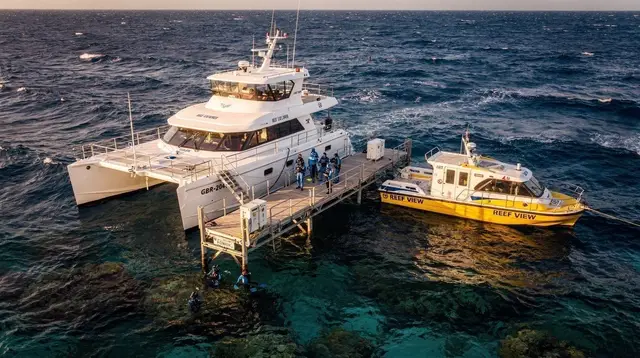
Boats leave from the Port Douglas marina on half-day departures, generally a morning session and an afternoon session, with most trips running around four to five hours door to door once boarding, the crossing, time on the water, and the return are all counted. The crossing itself typically takes well under an hour in reasonable conditions, considerably shorter than the run out to most outer reef sites from either Port Douglas or Cairns.
A handful of operators run the Low Isles as a standalone half-day trip aimed squarely at snorkelling and the lighthouse cay; others combine a Low Isles stop with a longer run further out onto the reef proper, giving you both a sheltered introduction and a taste of more exposed water in a single day. Neither approach is objectively better — it depends on whether you want a shorter, calmer, family-friendly outing or a longer day that adds outer reef variety.
| Trip style | Typical duration | Best for |
|---|---|---|
| Half-day Low Isles snorkel (morning or afternoon) | 4-5 hours | First-time snorkellers, families, non-swimmers |
| Afternoon Low Isles cruise on a larger catamaran | 4-5 hours | A relaxed, later-start option with fewer early mornings |
| Combined reef and Low Isles cruise | Full day | Travellers who also want time on the more exposed outer reef |
a half-day Low Isles snorkel tour departing Port Douglas is the most direct way to book this exact trip, and choosing between the morning and afternoon session usually comes down to your own schedule rather than any real difference in conditions.
For travellers who’d rather relax on board and only get in the water when they feel like it, an afternoon cruise to the Low Isles on a larger catamaran keeps things unhurried, with more space and a later departure than the standard morning boats.
The Lighthouse and the Cay
The Low Isles are actually two small landforms — a coral cay with sand and rubble, and a low, mangrove-fringed islet beside it — sitting inside a reef flat that has built up over a very long time. The cay’s most distinctive feature is its lighthouse, built in 1878, one of the older structures of its kind on this stretch of coast and still standing on the same small patch of sand. Most Low Isles itineraries include a short guided or self-directed walk around the cay and up to the base of the lighthouse, which takes only a few minutes but gives a useful sense of scale — there’s very little land here, and almost the entire experience is built around what’s in the water around it, not on it.
Don’t expect facilities in the way that larger islands offer. There’s no resort, no shop, and shade is limited, so the sun protection point below matters more here than it might at a more developed island stop.
What the Snorkelling Is Actually Like
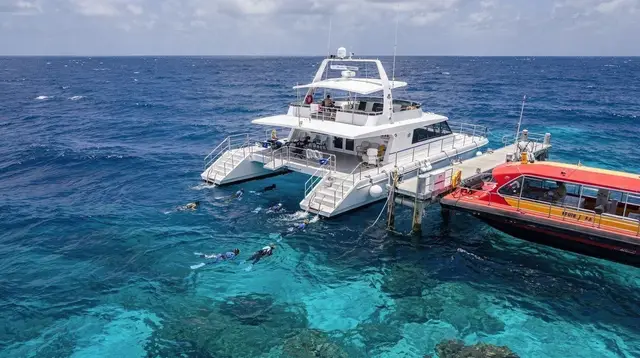
This is where the Low Isles genuinely differ from a standard outer reef trip, and it’s worth being specific rather than just saying the water is “calm.” The cay sits inside a reef flat that absorbs most of the ocean swell before it reaches the lagoon, so the water around the boat and along the shallow coral gardens tends to stay noticeably flatter than what you’ll find at exposed sites like Agincourt Reef or further out on the Great Barrier Reef proper. That matters for two groups in particular: people who are nervous about ocean swimming, and anyone prone to seasickness on a longer, rougher crossing.
The coral itself is shallower and the visibility can vary more with tide and weather than at some outer reef sites — this is a genuine coral garden, not a manufactured feature, and its condition on any given day depends on conditions nobody can fully control. What it consistently offers is easy, low-effort access: guided snorkel tours for people who’ve never used a mask and fins before, semi-submersible or glass-bottom boat viewing for anyone who’d rather stay dry, and enough shallow, sheltered water that first-timers aren’t fighting current or chop while they get used to breathing through a snorkel.
If snorkelling technique itself is the thing making you hesitate, our general guide to snorkelling the Great Barrier Reef covers the basics before you go. For a broader sense of how inner reef sites like this compare with the exposed outer reef, see outer reef versus inner reef.
The Reef Tax and What You’ll Actually Pay
The Environmental Management Charge (EMC), the fee the Great Barrier Reef Marine Park Authority levies on every visitor entering the marine park, applies at the Low Isles exactly as it does everywhere else on the reef. It runs at roughly 8 Australian dollars per person, per day, and is very often not folded into the headline price you see advertised — it gets added at checkout, or worse, mentioned only at the marina desk on the day. A small port charge is common on top of that. Neither is a scam; both are standard across the industry. The only mistake is not expecting them. For the wider pattern across reef operators, see our guide to the reef tax and other hidden costs.
As a rough guide to what a Low Isles day actually costs once you add the EMC, transport, and any extras:
| Item | Typical range (per person) |
|---|---|
| Half-day Low Isles cruise, base fare | Varies by operator and season |
| Environmental Management Charge (EMC) | ~8 A$ per day |
| Port charge | Often a few dollars, check at booking |
| Optional extras (guided snorkel tour, gear upgrade) | Priced separately by most operators |
Treat any figure you see as an order of magnitude rather than a fixed quote, and always confirm whether the EMC is included before you compare two operators’ prices side by side — a lower headline fare that excludes the reef tax isn’t actually cheaper.
Stinger Season and Other Safety Notes
North Queensland’s stinger season runs roughly from November to May, and it affects the Low Isles the same way it affects every other stretch of this coast and its surrounding reef. Two separate hazards are involved: the box jellyfish (Chironex fleckeri), which is large, visible, and potentially dangerous, and the Irukandji, a tiny jellyfish responsible for an extremely painful syndrome. Neither hazard disappears simply because the water looks calm and clear at the Low Isles, and the Irukandji in particular has been recorded well out on reef waters, not just close to shore.
The standard, sensible response — and what reputable operators provide — is a full-body lycra stinger suit worn in the water during stinger season, whether you’re snorkelling from the boat or wading near the cay. Treat it as standard equipment, not an inconvenience. If you’re stung by a box jellyfish, the first-aid sequence is vinegar poured liberally over the sting, followed immediately by calling 000.
This isn’t a reason to skip the trip during the wet season — the Low Isles remain a good option precisely because their sheltered water is more forgiving than an exposed outer reef site even in the harder months — but it is a reason to take the stinger suit seriously rather than treating it as optional. For a fuller explanation of the season and both jellyfish species, see stinger season explained.
One further point worth stating plainly: the Low Isles trip does not take you anywhere near estuaries, rivers, or mangrove creeks on the mainland, so saltwater crocodiles aren’t part of the risk picture on this particular outing — that hazard belongs to the Daintree River and the coast’s estuarine waterways, not the open reef water around this cay.
Low Isles vs Green Island vs Fitzroy Island
Travellers comparing reef islands sometimes lump the Low Isles in with Green Island and Fitzroy Island, but they’re different products aimed at different trips. Green Island and Fitzroy Island both sit off Cairns, are considerably larger, and support a full day on land — beaches, walking trails, and facilities — in addition to the water. The Low Isles are smaller, closer to shore, calmer, and reachable only from Port Douglas.
If you’re deciding between them, the honest starting point is usually your accommodation: travellers based in Cairns are naturally better served by Green Island or Fitzroy Island, while anyone staying in or near Port Douglas will find the Low Isles the more convenient and often calmer choice. We cover Green Island and Fitzroy Island in full elsewhere — see our Green Island day trip guide, our Fitzroy Island day trip guide, and a direct Green Island versus Fitzroy Island comparison — rather than duplicating that detail here.
For travellers who want to see more of the outer reef in the same trip, an alternative worth knowing about is a combined itinerary that pairs a Low Isles stop with a longer run further offshore: a combined reef and Low Isles cruise from Port Douglas covers both the sheltered lagoon and more exposed reef water in a single day. If you’d rather skip the Low Isles altogether and go straight to the outer reef, an outer reef cruise on a luxury catamaran from Port Douglas is the more exposed, longer-range alternative.
Practical Tips: Timing, Sun, and What to Bring
Apply reef-safe sunscreen at least twenty minutes before you board, not after you’re already on the water — Queensland’s UV index runs high year-round, cloud cover included, and there’s little shade once you’re on the cay or in the water. A hat, a rash vest or light long sleeves under your stinger suit, and a towel round out the basics. Bring any motion-sickness medication you know you’ll need and take it well before departure rather than once you’re already at sea; the crossing is shorter and calmer than most outer reef runs, but it’s still open water.
Book your session — morning or afternoon — around the rest of your Port Douglas day rather than the other way around. An afternoon departure pairs naturally with a relaxed morning in Port Douglas itself or a walk at Four Mile Beach, while a morning trip leaves your afternoon free.
For travellers building a longer Port Douglas itinerary around this outing, our Port Douglas and Daintree four-day itinerary slots a Low Isles day in alongside the rainforest side of the region, and our broader Port Douglas guide and things to do near the Low Isles page round out the planning detail this guide doesn’t cover.
Frequently Asked Questions About the Low Isles Trip
Can I do the Low Isles as a day trip from Cairns?
Not directly. Every Low Isles boat departs from Port Douglas, about an hour up the coast from Cairns. If you’re staying in Cairns, you either need your own transport to Port Douglas or a combined transfer-and-cruise package, and you should budget the extra travel time either way.
Is the Low Isles trip suitable for first-time snorkellers and non-swimmers?
Yes, more so than most outer reef trips. The lagoon inside the reef flat is shallow and sheltered by the surrounding coral, so the water stays calmer than at exposed outer reef sites. Flotation aids, guided snorkel tours, and semi-submersible or glass-bottom viewing are usually available for anyone who prefers to stay dry.
Does the reef tax (EMC) apply to the Low Isles as well?
Yes. The Low Isles sit inside the Great Barrier Reef Marine Park, so the same Environmental Management Charge of around 8 Australian dollars per person per day applies, plus in most cases a small port charge. Check whether your quoted price already includes it before you book.
Are there jellyfish at the Low Isles?
During stinger season, roughly November to May, both box jellyfish and the much smaller Irukandji are present in North Queensland coastal and reef waters, and the Low Isles are not an exception. Operators provide full-body lycra stinger suits in season, and wearing one in the water is the standard, sensible choice, not an optional extra.
What’s actually on the island itself?
A working lighthouse built in 1878, a small area of sand and coral rubble, mangroves on the landward side, and very little else. Most operators allow a short walk around the cay and up to the lighthouse base as part of the stop, but the trip is built around the water, not the island.
How does a Low Isles trip compare to Green Island or Fitzroy Island?
The Low Isles are smaller, closer to shore, calmer, and leave from Port Douglas rather than Cairns. Green Island and Fitzroy Island are larger, sit off Cairns, and suit travellers who want a longer stay on land with beaches, trails, or facilities beyond a swim stop. If you’re deciding between them, it usually comes down to which town you’re based in.
How long does the whole outing take?
Most Low Isles cruises from Port Douglas run as a half-day, typically a morning or afternoon session of around four to five hours including boat time, though some full-day combined itineraries run longer. Check the specific departure window when you book, since morning and afternoon options often differ slightly in what’s included.
What should I bring?
Reef-safe sunscreen applied well before boarding, a hat and rash vest for extra sun cover even under a stinger suit, a towel, and any seasickness medication you know you need, taken in advance. Most operators supply snorkel gear, stinger suits in season, and light refreshments, so check your specific booking’s inclusions rather than assuming.
Green Island and Fitzroy Island trips on GetYourGuide
Verified deep-linked GetYourGuide tours. Book through these links and we earn a small commission at no cost to you.
GetYourGuide does not provide a product photo for this activity — the image shows the meeting point, photographed by us.