Cairns Museum and the City's History
What does the Cairns Museum cover, and how far back does Cairns' history go?
The Cairns Museum, in the heritage-listed 1907 School of Arts building on Lake Street, traces Cairns from the 1876 founding as a Hodgkinson River goldfields port through sugar and tourism. The land itself is Gimuy Walubara Yidinji country going back far longer than 1876, and the museum can be seen in about an hour.
A City With Two Starting Points
Most potted histories of Cairns start in 1876, the year the port was pegged out on the edge of Trinity Inlet. That date is real and it matters, but it is not where the story of this place begins. The land the city now stands on has a much older name and a much longer history, and the honest way to tell Cairns’ story is to hold both timelines at once: the deep one that belongs to the Gimuy Walubara Yidinji people, and the shorter colonial one that gave the city its European name and its first streets. The Cairns Museum is where the second of those timelines is told in the most concentrated form anywhere in the city, and it is worth fifteen minutes of context before you walk through the door.
Inside the Cairns Museum
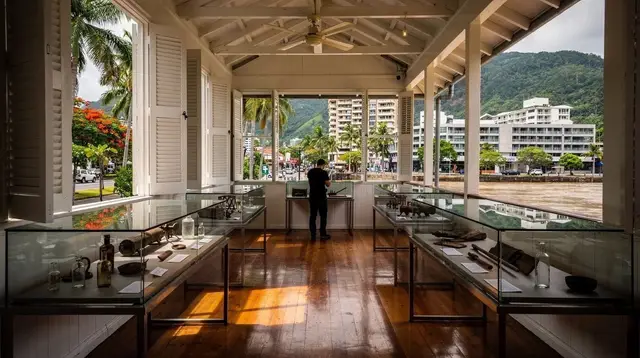
The museum occupies the old School of Arts building, a heritage-listed structure from 1907 at the corner of Lake Street and Shields Street, right in the middle of the Cairns grid. It is a single, walkable collection rather than a sprawling institution, and most visitors are through it in well under an hour — which is exactly why it pairs so easily with a morning of shopping or coffee in the surrounding blocks rather than needing a half-day of its own.
Inside, the exhibits move roughly in chronological order: the Hodgkinson River gold rush that gave the port its reason for existing, the Chinese and other immigrant communities that built much of early Cairns’ commerce, the switch to sugar cane once the goldfields declined, the cyclones and floods that have periodically flattened parts of the city, and the arrival of tourism as the industry that eventually eclipsed everything before it.
Ship models, mining equipment, old photographs of a much smaller and much muddier Cairns, and objects tied to the World War II era — when Cairns became a major staging base for Allied forces in the Pacific — round out the collection. It is a social history museum built around a small city’s changing economy, told through objects rather than through a single dramatic narrative.
a Cairns Museum entry ticket is the simplest way to skip the ticket queue and walk straight in, and it is usually the cheapest way to book if you plan to combine it with another central attraction the same day.
Before 1876: Gimuy Walubara Yidinji Country
The name Cairns did not exist until a governor gave it one in 1876. Before that — and for tens of thousands of years before European ships ever entered Trinity Inlet — this land was, and remains, the country of the Gimuy Walubara Yidinji people. The word Gimuy is the Yidinji name for a species of blue fig tree that grew where the modern city centre now stands, near what is today the central business district. It is not an archaic label confined to museum wall text: Gimuy is still the name Yidinji people use for Cairns today, and it predates “Cairns” by a margin that the 1876 founding date, taken on its own, completely obscures.
The Gimuy Walubara Yidinji are one of several neighbouring groups whose country meets around the city and the ranges behind it — the Yirrganydji hold the coastal strip running north, the Djabugay and Bulwai are custodians around Kuranda and the Barron Gorge, and other groups extend the pattern further afield across the Tablelands and the coast. This guide focuses specifically on the Cairns city site and its colonial-era history as told at the museum; it is not the place to look for a living cultural experience, and it should not try to be one.
For that, two separate guides do the subject justice: Aboriginal experiences in Cairns covers guided cultural tours and activities you can actually book, and Traditional Owners of Tropical North Queensland sets out the wider pattern of custodianship across the region beyond the city itself. Reading either alongside this page, rather than instead of it, is the fuller picture.
The point worth carrying out of the museum and into the rest of the city is a simple one: 1876 is when Cairns got its current name and its first European streets, not when the place’s history began.
Trinity Bay, Trinity Inlet, and a Name From 1770
More than a century before the town was founded, James Cook sailed past this stretch of coast on the Endeavour and named the wide bay he saw Trinity Bay, on 10 June 1770 — Trinity Sunday in the Christian calendar, which gave the bay its name. Trinity Inlet, the sheltered waterway on which the port and much of modern Cairns now sit, takes its name from the same bay.
Cook did not land here or interact with the Yidinji custodians of the area; the naming was done from the ship’s deck, in the same voyage that would later run the Endeavour aground on the reef further north near what became Cape Tribulation. It is one of several Far North Queensland place names that date to that single 1770 passage rather than to the town-founding era over a century later.
From Goldfields Port to Sugar Town
The city itself was pegged out in 1876 as a shipping point to serve the Hodgkinson River goldfields, an inland gold rush that needed a port closer than the existing options further south. It was named after Sir William Wellington Cairns, the Governor of Queensland at the time — a naming that honoured a colonial administrator rather than describing any feature of the landscape, in contrast to the older Yidinji name for the same place.
The gold did not sustain the town for long. As the Hodgkinson goldfields declined, sugar cane became the region’s economic backbone, and cane farming spread across the coastal flats around Cairns and further south toward Innisfail and Babinda through the late nineteenth and early twentieth centuries. Tourism, the industry that now dominates the local economy almost completely, is the newest of the three chapters, arriving in force only in the second half of the twentieth century as the reef and the rainforest became internationally known drawcards in their own right.
What the Museum Building Itself Tells You
The School of Arts building that now houses the museum is, in its own right, one of the older surviving structures in central Cairns, dating to 1907 — itself well over a century after the Yidinji presence on the same ground, but old by the standards of a young colonial port town. School of Arts buildings were a common feature of Queensland towns in this era: part library, part lecture hall, part civic meeting space, built at a time when a town’s cultural life had almost nowhere else to happen. Its survival into the present, repurposed as a museum, is itself a small piece of the city’s history — most of Cairns’ original timber-era buildings did not make it through the cyclones, fires, and redevelopment of the following century.
Combining the Museum With the Rest of the City Centre
Because the museum sits in the heart of the grid, it combines easily with other central sights rather than requiring a special trip. Rusty’s Markets, a few blocks away, is the best place in the city to see the produce side of the sugar-and-tropical-fruit economy that grew out of the same history the museum describes — a visit covered in more depth in the Rusty’s Markets guide.
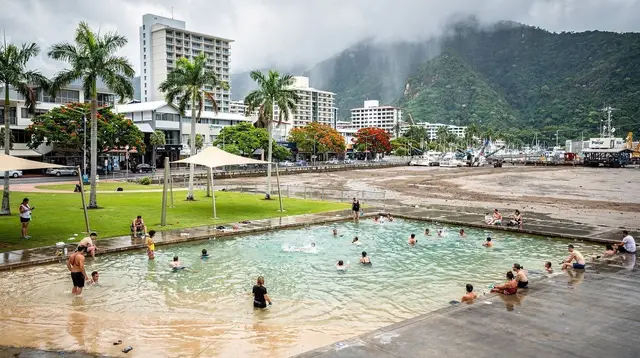
The Cairns Esplanade, including the free saltwater Esplanade Lagoon, sits along the same waterfront that Cook named in 1770 and that the port grew up around a century later. In the evening, the Cairns Night Markets — covered separately in the Night Markets guide — occupy a stretch of the same commercial strip that has been trading in one form or another since the port’s earliest years.
| Nearby stop | Distance from the museum | Ties into this history |
|---|---|---|
| Rusty’s Markets | ~10 min walk | Sugar and tropical fruit economy |
| Cairns Esplanade & Lagoon | ~10 min walk | Trinity Bay waterfront, named 1770 |
| Cairns Night Markets | ~5 min walk | Same central commercial strip |
| Cairns Botanic Gardens | short drive or bus | Colonial-era civic institution, founded later than the port |
For a broader look at what else fills a day in the city beyond this one museum, Things to Do in Cairns City covers the full spread, and the things to do in Cairns hub lists it by category if you are planning around a specific interest.
Two Other Small Museums Worth Knowing About
Cairns has a small handful of other niche museums that sit outside the scope of this guide but are worth knowing exist. A collection of restored military vehicles and artillery from several conflicts is displayed a short transfer from the city centre, and can be visited with a return transfer included to the Australian Armour & Artillery Museum — a different kind of history again, focused on hardware rather than the city’s own founding story.
If your interest in central Cairns runs wider than any single museum, an a hop-on hop-off bus loop around the city’s main sights is a low-effort way to string together the museum, the Esplanade, and the northern beaches suburbs in a single day without arranging transport between each stop. A guided half-day option, a half-day city sights and surrounds tour, covers similar ground with commentary included, which suits visitors who would rather have the history narrated than read it off wall panels.
How the History Shows Up Beyond the Museum Walls
The story of the port does not stop at the museum door. Trinity Inlet, still a working waterway, is covered in the Cairns Inlet page, and the cruise ships that dock today at the Cairns Cruise Terminal are the modern descendants of the vessels that once carried miners and supplies to the same shore. The gold that justified the port came from inland, and the rail and road links that grew out of that era are the reason the hinterland towns exist at all. The best-known of them is Kuranda, reached today by the Kuranda Scenic Railway, a line whose purpose in the nineteenth century was to haul goods and people up the range, not to carry sightseers.
Further inland, the same pattern of mining, farming and railway building shaped Herberton, Mareeba and the wider Atherton Tablelands. If the museum leaves you curious about that interior, the Atherton Tablelands day trip is the natural next step, and the Chillagoe caves day trip heads into the mining country of the outback. On the other side of the story, the road north to Cooktown follows a coast that Cook knew well, and the Cooktown and the far north guide picks up where Cairns’ own history leaves off.
Planning the Visit Around Your Wider Trip
The museum is a small stop, so it slots into almost any plan. On a short stay, the one day in Cairns and two days in Cairns itineraries leave room for an hour indoors, and longer trips such as five days in Cairns can afford to treat it as an unhurried morning. If you are still deciding how long to stay, how many days in Cairns helps you weigh a history stop against reef and rainforest time, and is Cairns worth visiting gives the wider case for the city itself.
Visitors who prefer to understand a place before exploring it often pair the museum with a stroll through the Cairns Botanic Gardens or a meal after reading about the port; where to eat in Cairns lists options across the central grid. Families can fold it into a day with children using the Cairns with kids guide, and anyone avoiding the obvious tourist stops will find it fits the approach in avoiding tourist traps in Cairns.
Getting There and Practical Details
The Cairns Museum is a short walk from almost anywhere in the central grid, and from the Cairns Cruise Terminal it is an easy fifteen-minute walk for cruise passengers with a spare hour before reboarding.
There is no need to hire a car for this one: it sits squarely inside the walkable core covered by the do you need a car in Cairns guide, and the getting around Cairns guide covers the wider transport picture if you are combining it with sights further out. It is an indoor, air-conditioned stop, which also makes it one of the better options on the Cairns on a rainy day list during the wet season months.
Why This History Is Worth Knowing Before You Explore Further
None of this changes what you will do on a reef trip or a walk through the Daintree, but it changes how the city itself reads. Street names, the layout of the waterfront, the location of the old wharves along Trinity Inlet, and even the choice of “Cairns” over the older name for the same ground all trace back to the two histories this page has tried to hold together — a Yidinji presence measured in tens of thousands of years, and a colonial port measured in one hundred and fifty. The museum tells the second story well. Knowing the first one is what keeps the visit honest.
Guided sightseeing tours on GetYourGuide
Verified deep-linked GetYourGuide tours. Book through these links and we earn a small commission at no cost to you.
GetYourGuide does not provide a product photo for this activity — the image shows the meeting point, photographed by us.