Skydiving in Cairns and Mission Beach
Should I skydive in Cairns or Mission Beach?
Both use certified tandem operators and both fly over the Great Barrier Reef coastline. Cairns is easier if you have no car and want to stay in town; Mission Beach, about two hours south, is the one where you land on the actual beach with the reef in the background, and it is the region's dedicated skydiving hub.
Two jump sites, two very different views
Tropical North Queensland has two places to throw yourself out of a plane, and they are not interchangeable. Cairns is the convenient option: you jump close to where you are already staying, near Cairns Airport, with pickup usually arranged from your hotel. Mission Beach, about two hours south of Cairns, is the specialist option — it is the region’s dedicated skydiving base, and the reason people drive two hours for it is the landing: you come down on open sand, with fourteen kilometres of beach and the reef spread out beyond it.
Neither is objectively “better.” The right one depends on what else is on your itinerary and whether the extra drive is worth it to you.
| Cairns | Mission Beach | |
|---|---|---|
| Distance from Cairns | In town | About 2 hours south |
| Landing | Airfield / open ground | On the beach |
| View in freefall | City, coast, rainforest edge | Reef, islands, coastline |
| Logistics | Easiest, no car needed | Best with a car, or a transfer-inclusive package |
| Character | Efficient, quick to combine with other Cairns activities | The main event of the day |
If you are following one of our Cairns itineraries and don’t want to give up a full day, the Cairns jump slots in more easily. If skydiving is a priority rather than an add-on, Mission Beach is the one locals and repeat visitors point to.
Why Mission Beach is the one people talk about
Mission Beach earned its reputation for a simple reason: it is one of the few places in Australia where a tandem skydive ends with your feet touching sand instead of tarmac. On a clear day the freefall and canopy ride give you the Coral Sea, a scatter of reef islands, and the green wall of rainforest behind the beach, all from several thousand metres up before the canopy opens and things slow down.
Mission Beach’s tandem skydive experience is the flagship version of this, run by operators based in town rather than flown in for the day. Because Mission Beach exists partly for skydiving, the operation feels less like a bolted-on extra and more like the reason the town has a drop zone at all.
If your base is Cairns and you don’t want to arrange your own transport, some tours package the transfer with the jump itself. A tandem skydive over Mission Beach booked directly from Cairns handles the return trip as part of the day, which removes the main practical objection to choosing the more scenic site over the closer one.
We cover Mission Beach’s other draws — its cassowaries and the crossing to Dunk Island — separately; see cassowary spotting at Mission Beach and the Mission Beach destination guide if that’s what brought you here. This page stays on skydiving.
What the price actually depends on
Every operator prices tandem skydiving the same broad way: a base price tied to jump altitude, then optional extras layered on top. As an order of magnitude, a tandem jump in this region tends to sit somewhere around 300 to 400 Australian dollars per person — not a quote, and not a number to hold an operator to, but a useful figure for budgeting alongside the rest of a Cairns trip. The specifics that move that number:
- Altitude. Higher jump altitudes mean more freefall seconds before the parachute opens, and operators typically offer two or three altitude tiers at different prices.
- Photo and video packages. Almost never included by default. Handheld footage from your instructor’s wrist-mounted camera and separate helmet-cam footage are the two common add-ons, each priced separately.
- Transfers. A jump booked with return transport from Cairns costs more than the same jump booked locally at Mission Beach if you already have a car there.
- Season and demand. Prices can shift with how busy the operator is on a given day, the same way flights do.
Never expect — or repeat — a single fixed number as gospel. Confirm the live price at booking, every time.
Weather, wind, and when a jump gets cancelled
Skydiving is more weather-sensitive than most Cairns activities. Tandem jumps need workable wind and cloud conditions at both altitude and ground level, and operators will delay or cancel a jump rather than fly in marginal weather — that’s a safety call, not an inconvenience they’re inflicting on you.
Two seasonal notes worth knowing before you book:
- During the dry season, roughly May to October, skies are more reliably clear and cancellations are less common.
- During the wet season, roughly November to April, afternoon storms and lower cloud are more frequent, and cancellations or delays are more likely — mornings tend to be the more reliable window.
Because of this, book your jump earlier in your trip rather than on your last free day. Most operators will rebook you at no extra cost if the weather doesn’t cooperate, but that only helps if you have days left to use.
What the day actually looks like
The shape of a tandem skydive day is fairly consistent between Cairns and Mission Beach:
- Check-in and briefing. A short safety briefing, paperwork, and harness fitting — no prior experience or training is required for a tandem jump.
- The flight up. You ascend in a small aircraft with your tandem instructor and a few other jumpers, climbing for around fifteen to twenty minutes depending on the altitude booked.
- Freefall. The main event — anywhere from roughly thirty seconds to just over a minute of freefall depending on altitude, reaching speeds that make the ground feel like it isn’t moving at all.
- Canopy ride. Once the parachute opens, the pace drops completely. This is the part where you actually see the coastline, the reef, and — at Mission Beach — the beach rising up to meet you.
- Landing. At Mission Beach, this is the sand itself. At Cairns, it’s typically an airfield or a cleared landing zone near town.
Plan for a half-day commitment once you include check-in, waiting for your group’s turn, and the jump itself — longer if weather pushes your slot back.
The Cairns option: less scenery, more convenience
If you’re not renting a car — see our note on whether you need a car in Cairns — the Cairns tandem jump removes the two-hour drive each way. It still delivers a genuine freefall and a view over the coast and the edge of the rainforest, just without the beach landing that makes Mission Beach distinctive. For travellers stacking skydiving alongside a reef trip, a Skyrail day, or a Kuranda visit in the same week, the time saved can matter more than the extra scenery.
Making a full day of it at Mission Beach
Because Mission Beach is two hours from Cairns, most visitors don’t drive down purely to jump and drive straight back. If you’re already making the trip, it’s worth knowing the town has other adrenaline options nearby, even though we cover them in more depth elsewhere. The Tully River, a reliable dam-released white-water run, is a common pairing, and rafting trips run either as a full white-water rafting day on the Tully River from Mission Beach or as part of a combined Cairns pickup.
See our comparison of Tully versus Barron River rafting and the broader white-water rafting guide if that’s on your list too. Mission Beach also runs wildlife encounter experiences separate from its wild cassowary population — worth noting only so you don’t confuse the two: our cassowary spotting guide is the one to read for the wild birds, while Mission Beach’s animal encounter and feeding experience is a different, hands-on activity.
If skydiving is one adrenaline activity among several on your trip, see how it compares to bungy jumping at Smithfield and to scenic flights over the reef — including the helicopter versus fixed-wing question, and, further inland, hot air ballooning over the Atherton Tablelands. All four give a very different kind of aerial view of the same region, and none of them is a substitute for another.
Fitting a jump into a wider trip
A skydive is rarely the only thing on a Far North Queensland itinerary, and the way you slot it in matters more than the jump itself. Because weather can push a slot back, avoid placing it the day before an early flight out of Cairns Airport, and avoid stacking it on the same day as a long boat trip. If you are planning a reef day, our guides to the Great Barrier Reef from Cairns and seasickness on reef trips are worth reading first, since a queasy stomach and a freefall do not mix well.
Travellers with only a few days can see how the jump fits into three days in Cairns or the more active adventure week in Cairns. Those with longer can spread the adrenaline out across a one-week itinerary, leaving quieter days between the jump, the rafting and the reef.
If the Mission Beach drive appeals, it also opens up the rest of the southern coast. The road passes Babinda and Innisfail, and the southern coast around Mission Beach has its own rainforest and beach walks that make a good rest day after the jump. Visitors comparing the two bases as places to stay overnight, rather than just to jump, will find the Mission Beach versus Cairns comparison useful.
Practical tips before you book
- Wear and bring the basics. Closed shoes, comfortable clothes and sun protection are the usual advice; the operator will tell you what else to leave behind. Our packing list for Cairns covers the general kit for the region.
- Eat lightly. A small meal beforehand is more comfortable than an empty stomach or a heavy lunch.
- Check the restrictions early. Age, weight and health conditions are set by each operator, so read them before you pay rather than at check-in. Our note on accessible travel in Cairns is a useful starting point for anyone with mobility concerns.
- Think about the rest of the budget. A jump is one line in a trip that also includes reef tax, transport and meals; see the reef tax and hidden costs guide for the other extras that tend to surprise people.
- Keep a flexible day. If the wind or cloud is wrong, a spare day lets you reschedule instead of losing the booking altogether.
Travellers who want a calmer view of the same coastline can look at sailing trips from Cairns or a morning on the Esplanade and lagoon, both of which suit the day after a jump when you would rather keep your feet on the ground.
Deciding between Cairns and Mission Beach
There’s no universally correct answer here, which is exactly why we’re not giving you one. A few honest trade-offs to weigh:
- Choose Cairns if you have no car, you’re short on days, or skydiving is a quick add-on rather than a headline activity.
- Choose Mission Beach if the beach landing and reef backdrop matter to you specifically, you’re comfortable with — or already planning — the drive down the coast, or you’re combining it with the drive to Port Douglas region’s other attractions on a longer loop.
- Either way, book earlier in your trip rather than later, confirm the live price rather than trusting any figure you’ve read in advance, and check the operator’s specific age, weight, and health restrictions before you commit.
For first-time visitors weighing this against everything else on offer, our first-time-in-Cairns mistakes guide and is Cairns worth visiting overview both touch on how much of a headline activity like this is worth prioritising against reef trips and rainforest days.
Skydiving in Cairns and Mission Beach: your questions answered
How much does skydiving cost in Cairns or Mission Beach?
Expect a rough order of 300 to 400 Australian dollars per person as a starting point, rising with altitude and add-ons like video or photo packages. Treat any number you read, including this one, as a ballpark rather than a quote — always confirm the current price at booking.
Is Mission Beach or Cairns better for skydiving?
Mission Beach is the more scenic jump, landing on the sand with the reef visible offshore, and it is the busier dedicated skydiving base in the region. Cairns is more convenient if you are not renting a car and want everything, including pickup, inside the city.
Do I need to be fit or have experience to tandem skydive?
No experience is required for a tandem jump — you are harnessed to a certified instructor who controls the parachute. Operators do apply age, weight, and basic health restrictions, and pregnant travellers cannot jump, so check the specific conditions when booking.
What happens if the weather cancels my jump?
Skydiving depends on wind and visibility more than most tours, and operators cancel or reschedule rather than fly in unsafe conditions. Most allow free rescheduling, so it helps to book a jump earlier in your trip rather than on your last available day.
Can I get photos or video of the jump?
Yes, but it is almost always an add-on rather than included in the base price. Handheld footage from the instructor and helmet-camera video are the two common formats, and prices vary by operator and package.
How high do you jump from?
Operators typically offer a few altitude options, with higher jumps giving longer freefall time before the parachute opens. The exact altitudes and freefall durations vary by operator and are usually listed at booking.
Is it safe to skydive near the Great Barrier Reef coast?
Tandem skydiving in this region is run by operators certified under Australian skydiving regulations, with the same safety standards that apply nationally. As with any adventure activity, the main variable is choosing a properly certified operator, which is standard practice at both Cairns and Mission Beach.
Scuba diving and snorkelling trips on GetYourGuide
Verified deep-linked GetYourGuide tours. Book through these links and we earn a small commission at no cost to you.
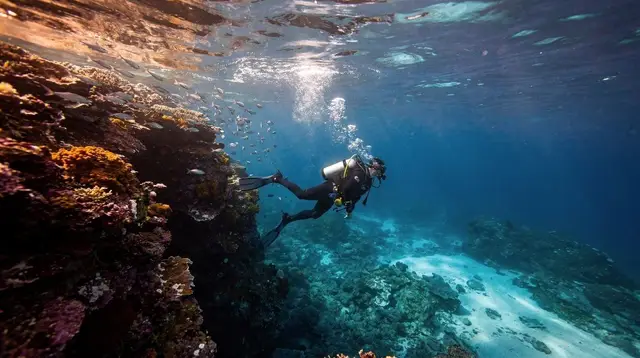
GetYourGuide does not provide a product photo for this activity — the image shows the meeting point, photographed by us.