Frankland Islands Day Trip: The Rainforest River Route to Five Coral Cays
What makes a Frankland Islands day trip different from other Cairns reef trips?
You don't leave from Cairns Marina by open sea. Small groups drive south, board a boat on the Mulgrave River, and cruise through rainforest and mangroves before reaching open water and the five Frankland Islands. The river run is part of the day, not a transfer to get through.
Most reef boats out of Cairns do one thing: pull away from the marina and point out to sea. A Frankland Islands day tour does something else first, and it’s worth understanding before you book, because it changes what kind of day you’re signing up for.
Why the journey itself is the point
The five Frankland Islands sit off the coast south of Cairns, but the standard access route doesn’t start at Cairns Marina. It starts inland, on a jetty on the Mulgrave River, a tidal waterway that winds through cane country, rainforest fringe and mangrove banks before it opens into the sea. Small groups board a boat there, and the first thirty to forty minutes of the trip is a river cruise — flat water, closed-in green banks, birdlife, and a very different rhythm from the open-ocean run most Cairns reef trips make.
Only after the river widens into its mouth does the boat cross open water to reach the islands. That crossing is short compared with the run to the outer Great Barrier Reef, but the whole shape of the day — river first, sea second — is the actual product, not an inconvenience on the way to snorkelling.
If you’re expecting a straight marina-to-reef transfer like Green Island or Fitzroy Island, recalibrate: this is closer to a small expedition than a shuttle, and that’s exactly why people who’ve done both keep choosing it. For a direct comparison of those two alternatives, see our guide to Green Island versus Fitzroy Island — neither of those trips touches a river at all.
The one safety rule that matters before you even see the islands
Say it plainly, because it’s the single most important line in this guide: the Mulgrave River is not a swimming spot. It is tidal, it connects directly to the sea, and like every estuary, river mouth and mangrove system on this coast, it is potential habitat for the estuarine crocodile (Crocodylus porosus). Nothing about the river cruise involves getting in the water.
You stay on the boat, you watch the banks go past, and swimming happens only once you’ve reached the islands and the crew has confirmed conditions. If you want the fuller picture of how crocodile safety works across Tropical North Queensland, our guide on seeing crocodiles safely covers where sightings happen and how operators manage the risk — the short version for this trip is: river for the ride, islands for the swim, never the other way round.
What the islands themselves are like
The Frankland Islands are five continental islands — granite outcrops with real vegetation, not sand cays — sitting in a cluster off the coast between Cairns and Innisfail. Day tours typically anchor at one, most often Normanby Island, since the group is compact and there’s no need to island-hop to see representative reef and beach.
What you get once you’re there:
| Element | What to expect |
|---|---|
| Beach | Small, sheltered, backed by rainforest-covered granite hills |
| Water | Calm, fringing coral reef close to shore |
| Snorkelling | Shallow bommies and coral gardens, suited to first-timers |
| Non-swimmer option | Glass-bottom or semi-submersible viewing on most tours |
| Group size | Small, limited by river-jetty capacity and permits |
| Facilities | Shaded rest areas, lunch service, guided snorkel briefings |
The coral here won’t match the scale of the reef systems further offshore, but the trade-off is calmer water, closer supervision and a much quieter beach than the bigger island destinations see on a busy day.
How it compares to an outer reef trip
It’s worth being direct about this, because the two products get confused constantly. A Great Barrier Reef day trip on a pontoon or dive boat takes you roughly ninety minutes to two hours out to sea, to reef systems like Hastings, Norman, Saxon or Flynn Reef, with a much larger area of live coral, deeper water, and often a semi-submersible or helicopter add-on. A Frankland Islands trip is shorter, closer to shore, built around continental islands rather than open-water reef, and starts with that river run instead of a straight marina departure.
Neither is “better” — they’re different products for different travellers. If you specifically want the classic outer reef experience — bigger reef systems, longer boat time, the option to add scuba — that’s the outer Great Barrier Reef, not the Franklands. If you want a calmer, more sheltered day with a genuinely different journey built in, the Franklands are the better fit, and that’s true whether you’re travelling with young children, are a nervous swimmer, or simply want to see a part of the coast most reef-day visitors never do.
Who this trip suits
Families with young kids. The calm, shallow water and close supervision make this one of the gentler reef-adjacent options near Cairns — see our notes on reef trips with young children for how operators handle life jackets, flotation aids and non-swimmers on trips like this one.
Nervous or non-swimmers. Glass-bottom viewing and shallow, sheltered bays mean you don’t need to be a confident swimmer to get real value from the day.
Travellers who’ve already done Green Island or Fitzroy Island. If you’ve ticked off the standard island day trips and want something the marina crowds don’t do, the river-and-island combination is a genuinely different day out. Our Green Island versus Fitzroy Island comparison is the place to check what those two trips actually involve before you decide which third option, if any, is worth adding.
Birdwatchers and slow travellers. The Mulgrave River cruise itself is a quiet, scenic run through mangrove and rainforest edge — worth the trip on its own terms, independent of the snorkelling that follows.
Booking the trip
Two products cover this route:
a half-day express version of the Frankland Islands trip, which keeps the river cruise and island stop but runs a shorter overall day, and a full-day, all-inclusive Frankland Islands tour with lunch, snorkel gear and more time at the island itself.
If you’re deciding between the Franklands and the more familiar island options, a full day at Green Island with a choice of snorkelling or glass-bottom boat and a combined Fitzroy Island and humpback whale watching tour (seasonal, July to September) are the two most comparable direct-from-Cairns alternatives.
As with any reef-adjacent tour out of Cairns, check whether the Environmental Management Charge — the reef tax, roughly A$8 per person per day — is included in the advertised price or added at checkout. It’s a small amount, but it catches almost everyone off guard once, and it’s worth reading up on generally in our guide to the reef tax and hidden costs.
Practical planning notes
- Departure point: a jetty on the Mulgrave River, south of Cairns — most operators include hotel pickup from Cairns and the northern beaches, so check this before arranging your own transport.
- Duration: a half-day express option and a full-day option both exist; the full-day version gives meaningfully more time on the island itself, not just a longer river cruise.
- Season: the trip runs year-round, but conditions and visibility are generally best in the dry season, May to October. See best time to visit Cairns for the broader seasonal picture, and stinger season explained if you’re travelling November to May, since stinger suits are standard kit on the boat regardless of season.
- What’s provided: snorkel gear, flotation vests, lunch and a guided briefing are standard on full-day tours; check inclusions carefully on the express option.
- Photography: the river cruise section is genuinely photogenic — mangrove reflections, rainforest banks, occasional birdlife — worth having a camera ready before you even reach the islands.
A day on the water, step by step
It helps to picture the shape of the day before you book. You are collected from your accommodation or meet the crew at the departure point, then travel south by road towards the Mulgrave River. The drive itself passes through sugar cane country, a reminder of how much of the coast around Cairns is working farmland rather than resort strip. From the jetty the boat slips downriver, and the pace is deliberately slow: guides point out mangrove species, birds and the way the tide shapes the banks.
Once the river opens to the sea, the mood changes. The boat picks up speed across the open water, the coastal ranges of the Wooroonooran National Park rise behind you, and the islands appear as low, green humps on the horizon. After anchoring you get a briefing, fit your gear and head into the shallows with a guide. Lunch is taken on board or on the beach, and there is usually free time to swim, walk the sand or simply sit in the shade before the return crossing and river run.
Because the day depends on tide and sea conditions, operators keep a loose hold on the timetable. If the wind is up, the crew may choose the most sheltered bay rather than the one advertised. That flexibility is a feature of small-boat operations, and it is one reason the sheltered side of a continental island is such a reliable choice.
Snorkelling and what you will actually see
The fringing reef around the islands is made of hard coral plates, branching colonies and rubble slopes that drop gently into the bay. Expect small reef fish in good numbers, giant clams on the bottom and the occasional turtle. It is the sort of snorkelling where you can stay in shallow water and still be surrounded by life, which is exactly what first-timers need. If you want to understand the technique and the kit before you go, our guide to snorkelling the Great Barrier Reef walks through masks, fins, breathing and etiquette.
Visibility changes with weather and tide, and nearshore reefs are more affected by wind and run-off than the outer reef. After heavy rain, water can be cloudier. That is another reason the dry season tends to give the best results, and why checking the forecast on the morning of travel is worth a minute. If you are weighing the sheltered islands against deeper, clearer water, outer reef versus inner reef sets out the trade-offs clearly, and the Great Barrier Reef from Cairns gives the wider picture of every way to reach the coral.
Respect the reef while you are in it. Do not stand on coral, keep fins well clear of the bottom, and never touch or feed marine life. Use reef-safe sunscreen, or better still a rash vest, so less lotion ends up in the water. Is the Great Barrier Reef dying? is a sober read on why these small habits matter.
Seasickness, sun and comfort
The sea crossing is short, and the islands shelter much of the route, but anyone prone to motion sickness should still plan ahead. Sit towards the middle and rear of the boat, keep your eyes on the horizon and take remedies before departure rather than after. Our guide to seasickness on reef trips covers what tends to help. The river section is flat and rarely troubles anyone.
Sun is the bigger risk for most visitors. The tropical sun reflects off the water, and a day outdoors without cover leads to burns that ruin the rest of a holiday. Wear a hat, a long-sleeve rash vest and plenty of sunscreen, and drink water regularly. Our Cairns packing list pulls together the rest of the kit worth carrying, including a dry bag and a light layer for the boat ride back.
Choosing between the Franklands and other island days
Cairns has several island options, and each answers a different question. Green Island is a vegetated coral cay with a resort, boardwalks and a broad range of activities, while Fitzroy Island offers hiking, a lighthouse walk and a beach with coral washed up on the sand. The Franklands trade facilities for quiet and for that river approach. If you are building a longer stay, how many days in Cairns and the reef and rainforest in three days itinerary show how to slot a day like this between rainforest and city time.
For travellers who want to stay with the sand-cay style of reef visit, Michaelmas Cay and the sand cays is the natural comparison, and reef pontoon versus small boat explains why a small-group day feels so different from a large pontoon platform. If you are still unsure how to pick an operator, the blog piece on how to choose a reef boat lists the questions worth asking.
Where this fits in a wider Cairns itinerary
If you’re weighing up which single-day reef or island trip to prioritise, it helps to see this alongside the other options in one place: our best day trips from Cairns guide lines up the Franklands against the outer reef, Green Island, Fitzroy Island and the Daintree so you’re not choosing blind. And if a river-and-island day like this is exactly the kind of thing that appeals, the wider category of reef island trips rounds up every option departing from Cairns and Port Douglas.
Frankland Islands day trip: frequently asked questions
Do the Frankland Islands boats really leave from a river, not the ocean?
Yes. Departures are typically from a small jetty on the Mulgrave River south of Cairns. Boats travel down the river through rainforest and mangrove banks before reaching the river mouth and crossing open water to the islands, a route unrelated to the direct Cairns Marina departures used for Green Island or Fitzroy Island.
Is it safe to swim in the Mulgrave River before reaching the islands?
No. The Mulgrave River is tidal and connects to the sea, which makes it potential estuarine crocodile habitat like every coastal river, estuary and mangrove system in this region. Swimming happens only once the boat reaches the islands and the operator confirms the water; never in the river itself.
How many Frankland Islands can you visit in a day?
There are five Frankland Islands in total, but a standard day tour anchors at just one or two of the group, most often Normanby Island, since the islands are close together and small-group operators keep the day focused rather than island-hopping through all five.
Is the snorkelling at the Frankland Islands as good as the outer Great Barrier Reef?
It’s a different experience. The Frankland Islands are fringing reef around continental islands, calmer and more sheltered, which suits nervous swimmers and families, while the outer reef pontoons and dive boats reach the more extensive coral systems further offshore.
Do I need to be a strong swimmer for a Frankland Islands trip?
No. The bays are typically calm and shallow near shore, flotation vests are provided, and guides supervise snorkellers closely, which is part of why small-group operators favour this destination for families and first-time snorkellers.
Are the Frankland Islands trips crowded?
Generally not. Access depends on the river departure and a limited number of permits, so operators run in small groups rather than the larger vessels used for some outer reef pontoons.
What should I bring on a Frankland Islands day tour?
Reef-safe sunscreen, a hat, a light long-sleeve rash vest for sun and stinger protection, and a dry bag for the boat. Most tours include lunch, snorkel gear and a glass-bottom or semi-submersible viewing option for non-swimmers.
Green Island and Fitzroy Island trips on GetYourGuide
Verified deep-linked GetYourGuide tours. Book through these links and we earn a small commission at no cost to you.
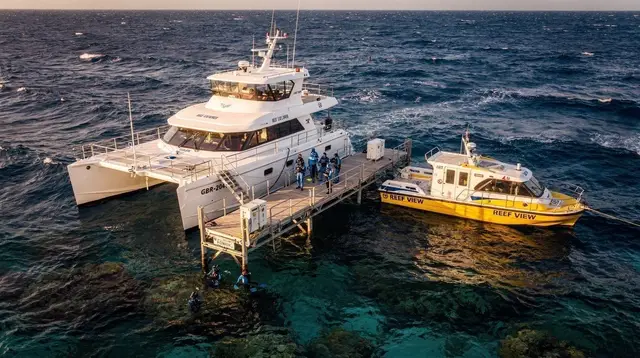
GetYourGuide does not provide a product photo for this activity — the image shows the meeting point, photographed by us.